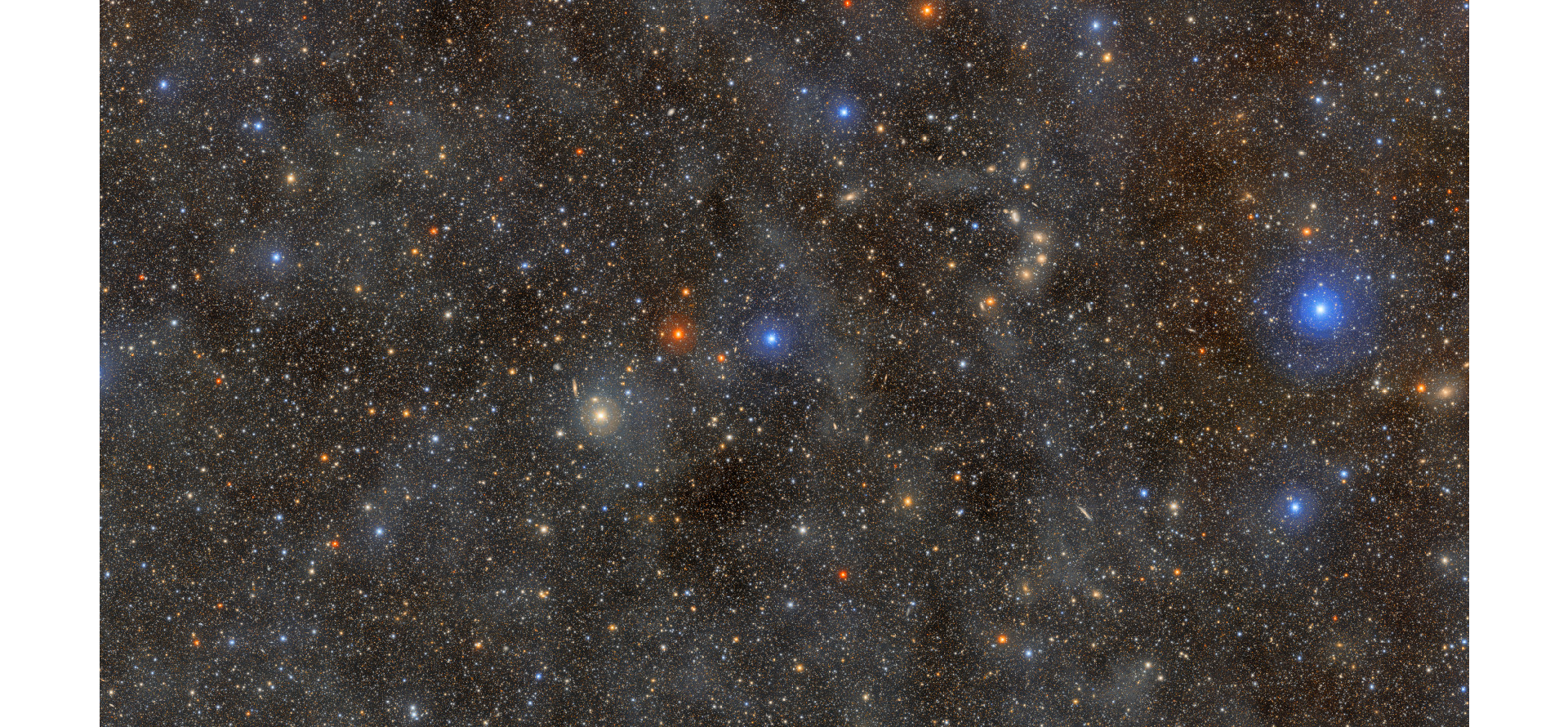
Your phone camera shoots maybe 200 megapixels. The camera now bolted to a mountaintop telescope in Chile shoots 3,200. That’s 3.2 gigapixels — a sensor array roughly the size of a small car, weighing about twice as much as one. On June 23, 2025, the Vera C. Rubin Observatory released its first images from this unprecedented piece of engineering, and the Legacy Survey of Space and Time (LSST) is now underway.
Hardware That Makes Your DSLR Look Like a Disposable
Built at SLAC National Accelerator Laboratory and installed on an 8.4-meter telescope, the LSST Camera generates Netflix-scale data every single night.
Completed in 2024 at SLAC, then mounted on the Simonyi Survey Telescope atop Cerro Pachón in Chile, the camera cycles through six optical filters to capture multi-color images of every accessible patch of southern sky. Every three to four nights, the whole sky gets rescanned. The data output hits about 20 terabytes nightly — roughly equivalent to streaming 10,000 hours of HD video. Over ten years, that accumulates to half an exabyte, hosted at SLAC’s U.S. Data Facility.
What Rubin is actually hunting:
- Dark matter and dark energy — the invisible ~95% of the universe, probed through gravitational lensing and supernova patterns
- Roughly 100,000 near-Earth asteroids relevant to planetary defense, plus millions of other solar-system objects
- 37 billion total astronomical objects over the survey lifetime: about 20 billion galaxies and 17 billion stars
Rubin already streams around 100,000 alerts nightly to astronomers worldwide — a number expected to climb to millions as the survey deepens. Think of it as a cosmic push-notification system, operating like a real-time newsfeed for the universe. “We’re going to see large numbers of scientists across the world working with this data set, studying the universe in a way that they haven’t been able to before,” said deputy director of operations Phil Marshall, as reported by AP News. Machine learning systems will triage the flood.
For context: the Sloan Digital Sky Survey — the previous gold standard — cataloged hundreds of millions of objects. Rubin expects tens of billions, with each sky patch imaged roughly 800 times over the decade. The observatory honors astronomer Vera C. Rubin, whose galaxy rotation curve work provided foundational evidence for dark matter. Her legacy is literally built into the mission.
Ten Years, Half an Exabyte, and One Very Big Question
LSST data could determine whether cosmic acceleration stems from dark energy or from cracks in General Relativity itself.
That’s the genuine scientific tension here. Astronomer Željko Ivezić notes that every major sky survey produces unexpected discoveries, and expects Rubin to “reveal many unanticipated results,” according to SPIE. Space telescopes Euclid and Roman will complement — not compete with — Rubin’s ground-based breadth and time coverage.
If you’ve ever wanted skin in the cosmic discovery process, Rubin’s Comet Catchers program invites volunteers to classify survey data. The deep images will be publicly accessible. An $810 million, two-decade engineering effort just handed you a front-row seat to the changing universe.