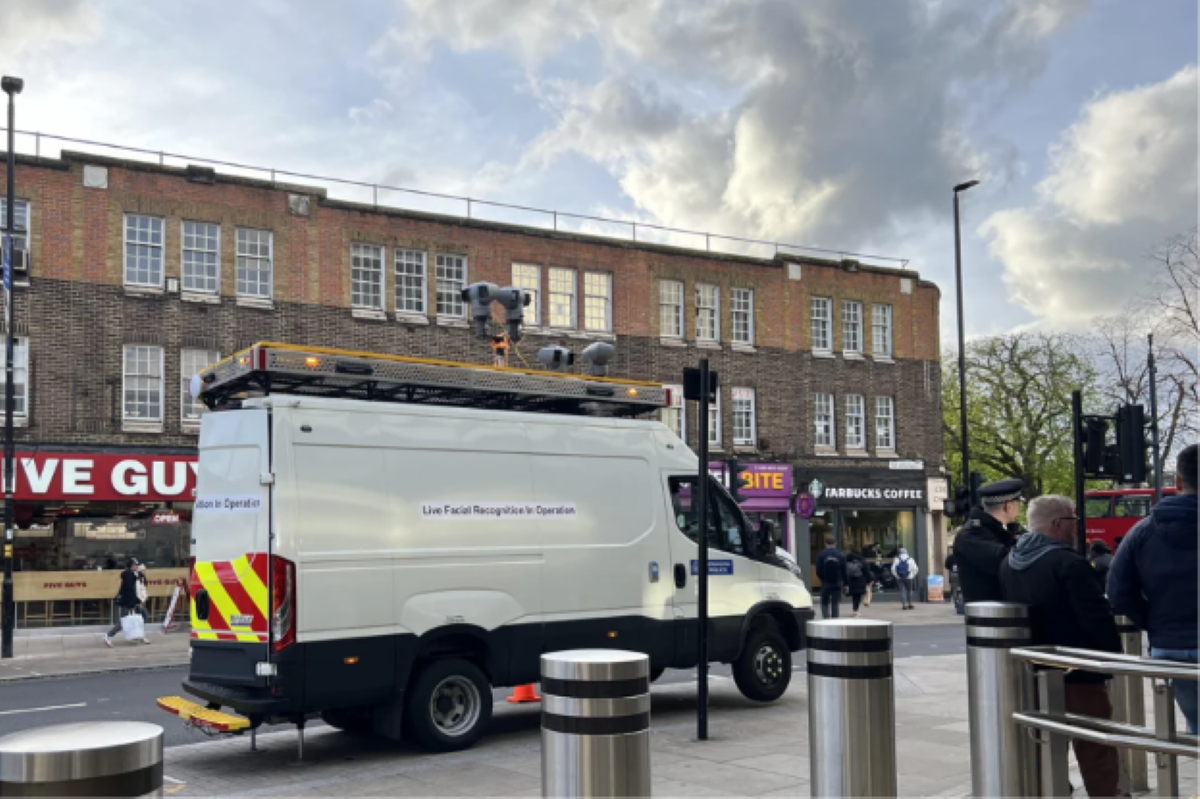
On a Friday night in Soho, crowds spill past neon signs and rainbow flags onto Old Compton Street — and, bolted to a lamppost above them, a surveillance app-era debate made physical: a camera is already scanning faces against a police watchlist. That is not speculation. It is the Metropolitan Police‘s plan for before December 2026. The force’s Croydon pilot produced 173 arrests and only one false alert. Crime dropped roughly 10.5%. Civil liberties groups say it marks the end of anonymity in public space. Both things can be true at once.
What the Croydon Pilot Actually Showed
Six months, 470,000 faces scanned, and an arrest rate that got the Met’s attention.
Across 24 static deployments between October 2025 and roughly March 2026, the Met scanned approximately 470,000 faces in Croydon, according to police figures — one arrest every 35 minutes. Among those arrested: a registered sex offender who had been communicating with a child under 16 and was later sentenced to two years in May. Non-matching images were deleted immediately, and watchlists were compiled no more than 24 hours before each deployment, then wiped. Commissioner Sir Mark Rowley says the technology “supports officers — not replacing them.”
Across 24 static deployments, the Met scanned roughly 470,000 faces, logging 173 arrests and a single false alert, while crime fell approximately 10.5%. Since early 2024, live facial recognition has generated over 2,000 arrests across London, with the West End and Soho rollout now targeted for late 2026.
Nationally, the Home Office is funding 40 additional LFR vans, bringing the fleet to about 50 across England and Wales, according to Statewatch. Key developments by force include:
- Cambridgeshire is already citing Croydon to justify its own deployments.
- Essex reportedly paused over bias concerns.
- A forthcoming Police Reform Bill would create a dedicated statutory framework and a single expert regulator.
Jack Coulson of Big Brother Watch argues that “permanent biometric surveillance of the public square is incompatible” with policing by consent.
The Part That Doesn’t Disappear With the Data
Lawful on paper, but one misidentification case keeps haunting the conversation.
The Met says its approach is lawful and non-discriminatory — a recent judicial review agreed, finding its LFR policy contained “clear and effective safeguards.” Big Brother Watch lost its High Court challenge in April. Still, there is Alvi Choudhury: a Southampton man reportedly held for ten hours after a retrospective facial recognition system used by Thames Valley Police misidentified him for a crime in Milton Keynes, a city he says he has never visited. Different system, different force — but it remains the case critics return to when accuracy claims get too tidy.
Rowley is assembling something larger:
- Static LFR cameras
- A city-wide emergency services drone network
- AI analysis of roughly one million existing CCTV cameras
A city that watches back — and, unlike a streaming algorithm, one you never consciously opted into. The Met cites 80% public support among Londoners. Critics argue that figure reflects incomplete understanding of what these systems actually do once they become permanent urban infrastructure — a concern echoed by those who have documented cases of secretly tracking users without meaningful consent.
Soho has long been a place people go to be anonymous — to be themselves outside ordinary social surveillance. Cameras are indifferent to that history. The Police Reform Bill will eventually draw some lines. Until then, the West End is both a test case and a preview.