Shooting down a $500 quadcopter with a interceptor missile is the defense equivalent of swatting a fly with a Rolex. Drone swarms make that math catastrophically worse. Israeli startup Esh-Tech Systems thinks it has a better answer: DroneLight, a compact pulsed-laser weapon that reportedly neutralizes drones in under two seconds, runs on less power than a domestic kitchen appliance, and costs a fraction of legacy laser systems. The catch? Almost everything known about it comes from the manufacturer, and independent validation remains pending.
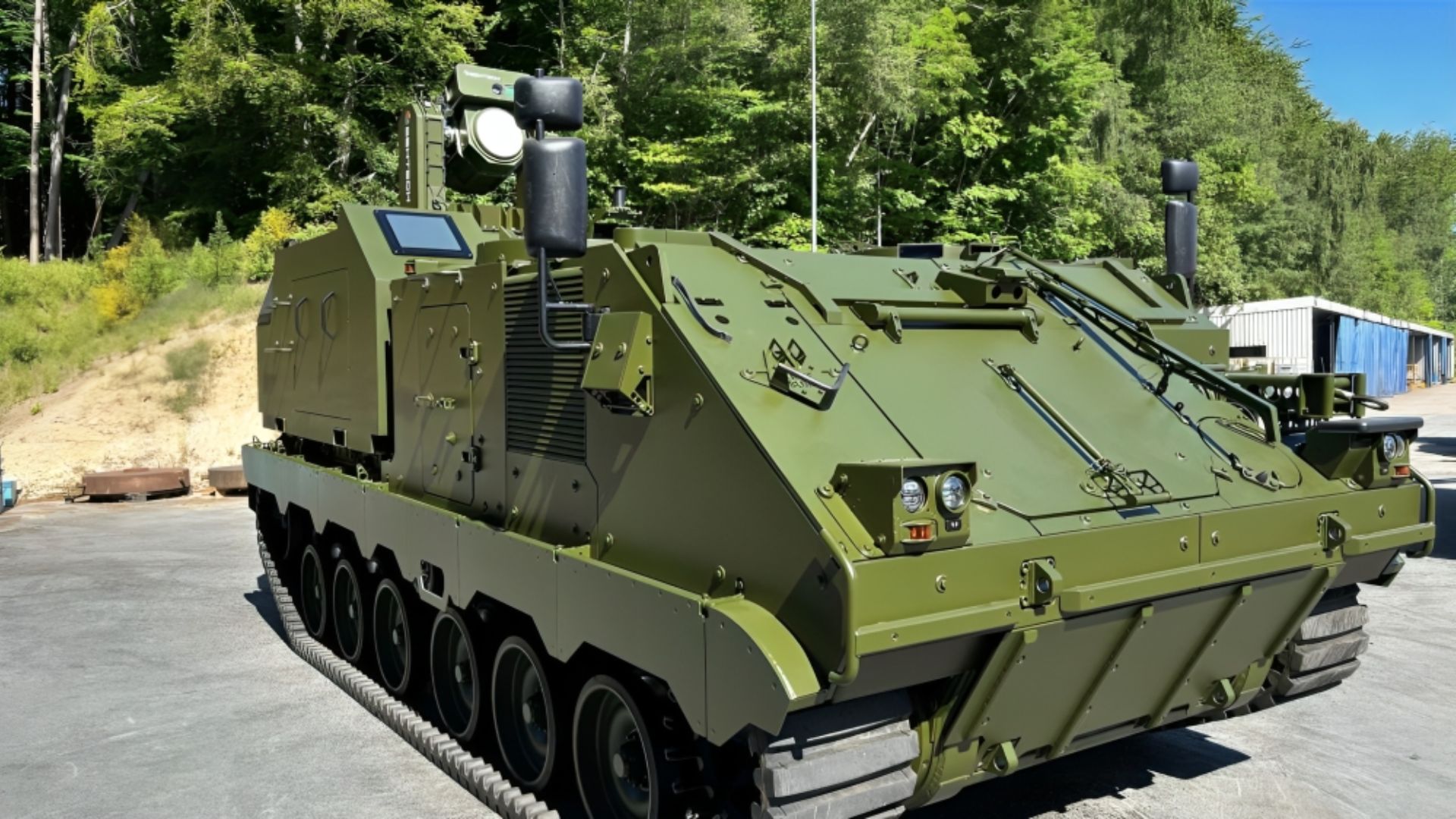
[IMAGE PLACEHOLDER: DroneLight prototype mounted on a test vehicle during Israeli field trials, June 2026. (Esh-Tech Systems)]
Pulse, Don’t Burn
DroneLight abandons the slow-cook approach and opts for precision drilling — a fundamentally different engagement philosophy.
Most high-energy laser weapons hold a continuous beam on a drone for 10 to 15 seconds, slowly heating it until something fails. DroneLight fires 10-millisecond pulses at five per second, physically drilling holes through the airframe instead. “We do five pulses per second and create multiple holes in a drone, which allows us to kill it efficiently,” CEO Erez Riahi told Breaking Defense, comparing the effect to shooting with light rather than heat.
The spec sheet, if accurate, is striking:
- Kill time: 5–10 holes per drone; roughly 1–2 seconds per engagement
- Engagement rate: approximately 30 neutralizations per minute (company claim)
- Power draw: around 4 kW, versus 20-plus kW for conventional continuous-wave systems
- Coverage: 360 degrees at roughly 1 km range, cueing from radar, acoustic, and electro-optical sensors
- Cost: reportedly 25% of legacy laser defenses; 3–4× cheaper than Rafael’s LiteBeam
Think of it less like a flamethrower and more like a sniper waiting for the wind to die before squeezing the trigger. DroneLight detects millisecond-long atmospheric windows — brief moments when turbulence, humidity, and particulates clear the laser’s path — then fires precisely during those gaps. Esh-Tech claims this approach boosts effective range 50 to 100 percent over naive continuous firing, letting a smaller laser punch well above its weight class.
Promising Hardware, Unproven at Scale
DroneLight arrives near the finish line on paper, but the most important tests haven’t happened in public yet.
DroneLight reportedly destroyed around 20 drones in Israeli field trials and sits at Technology Readiness Level 8 — near-operational prototype territory, one step below full production readiness. Customer evaluations are underway across unnamed markets, with orders reportedly secured. But as Techtime notes, Esh-Tech remains a young company whose performance claims lack large-scale independent validation. Every published figure traces back to the manufacturer, with no independent defense analysts or peer benchmarks yet available to corroborate them.
“DroneLight was developed in order to improve the readiness and effectiveness of forces in the face of the drone threat.” — Erez Riahi, CEO, Esh-Tech Systems
The mobility argument is where the system’s pitch gets genuinely interesting. DroneLight fires only about 5% of engagement time, keeping its 4 kWh battery alive for roughly one minute at maximum rate — rechargeable directly from standard vehicle power. No dedicated generator truck required. That positions it as organic counter-swarm protection for moving armored columns, not a fixed-site luxury. First operational systems target September–October 2026, according to Riahi.
The unanswered question worth watching: how does DroneLight perform against simultaneous multi-target swarms rather than sequential single engagements? One minute of battery at maximum rate sounds capable until a coordinated wave of 40 drones arrives from three directions at once. That specific scenario — and the recharge rate under sustained pressure — will define whether this system genuinely changes frontline economics or remains an impressive but situational tool. That answer should emerge when the first systems deploy this fall.