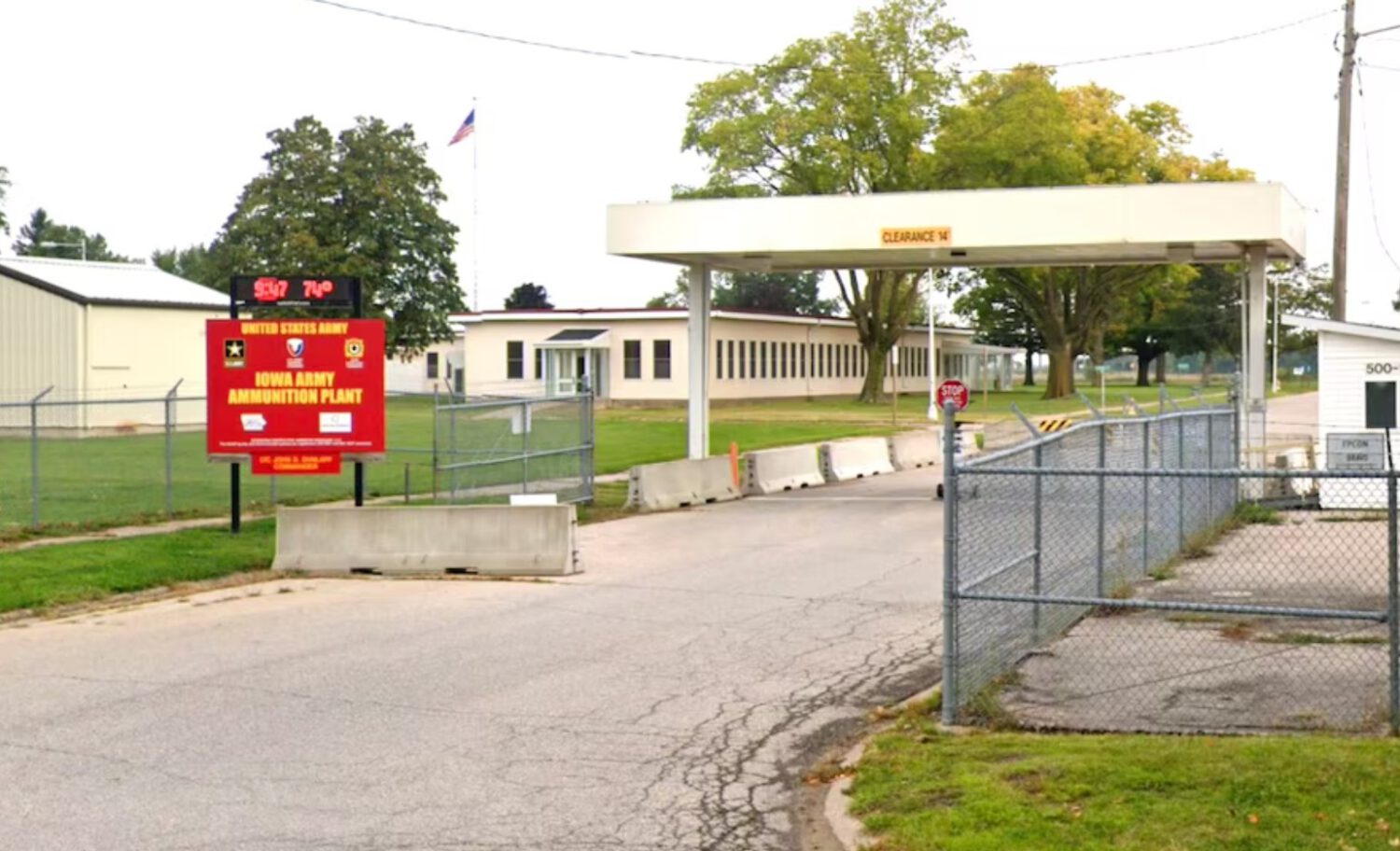
A 20-year-old stockpile of increasingly unstable explosive, a federal appeals court stepping in, and communities across two states still waiting for answers
Approximately 9,700 pounds of lead azide, stored in 68 drums at the Iowa Army Ammunition Plant in Middletown, Iowa, has become increasingly sensitive to shock, friction, static electricity, and heat over more than two decades in storage, according to Army and EPA materials. Both agencies characterized the stockpile as an imminent safety and environmental threat.
A controlled detonation, the agencies argued, would allow officials to establish precautions and warn nearby communities before any blast. That differs from an accidental explosion, where no such preparation would be possible.
Acting Army Secretary Adam Telle announced a postponement of the originally scheduled Friday detonation to Monday, Nov. 23. Telle cited public safety and a forecasted temperature drop that could further destabilize the material, according to reporting.
A Lawsuit Filed Before the First Countdown Ended
Earthjustice argues the permit skips essential safeguards and leaves communities without adequate notice.
Earthjustice, representing the Iowa Environmental Council and Sierra Club Iowa Chapter, filed an emergency lawsuit challenging the EPA’s permit in the Eighth Circuit Court of Appeals. The groups asked the court either to rule before the original detonation date or issue a temporary stay while it considered the motion.
The lawsuit alleged the permit failed to evaluate less dangerous alternatives. It also claimed the permit did not adequately assess environmental risks, protect soil and water from contamination, or provide sufficient public notice.
Earthjustice argued in the filing that lead exposure is particularly dangerous for children and pregnant people. Once lead dust is dispersed, the groups contended, the resulting contamination cannot be reversed.
Guidance Sent to Residents and Farmers
The recommended steps differed depending on whether you live near the plant or operate a farm.
State health officials advised people in potentially affected areas to stay indoors, use air purifiers where available, and turn off heating and cooling systems during the dispersion period. Officials also recommended cleaning outdoor surfaces after any dust settled.
Agriculture officials separately advised livestock producers to move animals indoors or away from the area when possible and to cover or relocate feed and water supplies to reduce contamination risk. The guidance reflected Army modeling, which projected that lead-containing particles could travel beyond the immediate plant area and potentially reach communities in both Iowa and Illinois.
The Court Steps In
The legal intervention is the most significant development since the Army announced its postponement.
The Eighth Circuit issued an administrative stay temporarily blocking the EPA permit while it considered the emergency request. That order means the detonation cannot proceed under the stayed permit unless the stay is lifted or otherwise modified by the court.
Reporting also noted that the Army’s plume projections shifted as atmospheric modeling was updated. The changes contributed to public uncertainty about how far lead dust might actually travel.
The Core Question Remains Open
Independent researchers plan to monitor air, soil, and surfaces if the detonation eventually proceeds.
The Army’s postponement and the court’s stay do not resolve the central legal argument: whether the EPA permit adequately investigated alternatives to detonation. That question now sits before the Eighth Circuit.
University of Iowa researchers planned independent air, soil, and surface monitoring to supplement official sampling. Their data could provide an additional record against which Army and EPA results might be evaluated, should the detonation ultimately move forward.
Open questions include whether the Eighth Circuit extends the stay, whether the Army identifies an alternative disposal method, and whether independent monitoring detects lead contamination beyond the plant boundary.