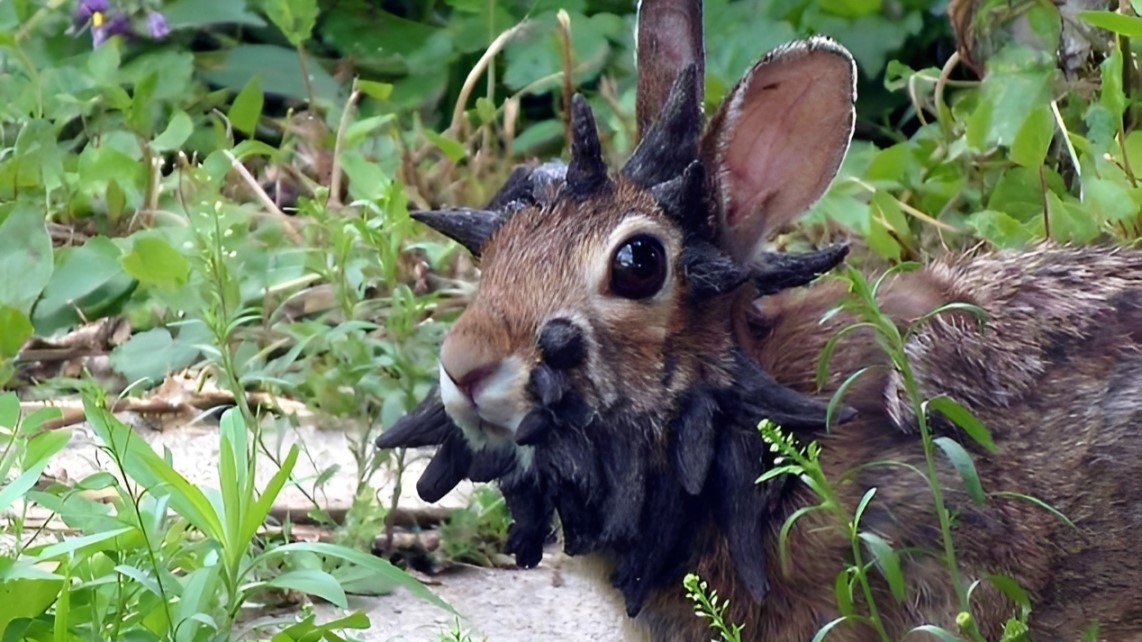
You scroll past it on Reddit and do a double-take. A cottontail rabbit in Colorado with dark, twisted growths erupting from its skull like something from a Guillermo del Toro storyboard. Similar images have surfaced from Wisconsin, Minnesota, and New York, flooding feeds with alarm and disbelief. Wildlife agencies, however, aren’t sounding alarms. What you’re looking at is Shope papillomavirus — a rabbit-specific disease that scientists have known about since the 1930s. The virus just got a social media moment.
What’s Actually Growing Out of These Rabbits?
The horror-movie visuals have a surprisingly boring medical explanation: warts.
Shope papillomavirus, also called cottontail rabbit papillomavirus (CRPV), is a DNA virus that triggers dark, wart-like skin growths on rabbits’ heads, ears, necks, and faces. In severe cases, multiple growths cluster together into something resembling a keratinized crown. Colorado Parks and Wildlife spokesperson Kara Van Hoose described them as “really more like warts,” according to Fox Weather. Those roadside jackalope souvenirs lining gift-shop shelves across the Southwest? Scientists suspect SPV-infected rabbits inspired that entire mythology.
Most infected cottontails survive. Colorado Parks and Wildlife states that “most infected cottontails can survive the viral infection, after which the growths will go away.” Severe cases, however, tell a different story. Papillomas can transform into squamous cell carcinoma. Large growths can seal a rabbit’s eyes or mouth shut, leading to starvation or serious functional impairment.
The virus itself doesn’t cause pain. The consequences do.
Should You Worry – About Yourself or Your Pets?
SPV is a rabbit problem, not a human one — but domestic rabbit owners should still pay attention.
SPV infects rabbits and hares. Full stop. No documented cases of human transmission exist — not through insect bites, not through contact — according to PetMD and The Open Sanctuary Project. The virus spreads between rabbits primarily via mosquitoes, ticks, and fleas rather than direct contact. Nothing about this is new. Social media just handed a 90-year-old wildlife disease a megaphone.
If you keep a domestic rabbit, sharpen up. Pet rabbits can contract SPV from wild carriers or shared insect vectors, and the disease tends to hit them harder, with a higher risk of malignant transformation, according to PetMD. To reduce your rabbit’s exposure:
- Keep pet rabbits indoors or in screened enclosures in affected regions
- Control mosquitoes and ticks around your yard
- Avoid any contact between your rabbit and wild cottontails
- Consult a vet if you notice suspicious wart-like growths on the head or neck; surgical removal is a straightforward option, and some growths regress on their own
Here’s the plot twist worth sitting with: Shope papillomavirus was the first DNA virus ever proven to cause tumors in animals. That discovery helped connect papillomaviruses to cancer and directly informed the development of human HPV vaccines. The rabbit that looks like a horror meme helped protect millions of people from cervical cancer through advances in cancer vaccine research.