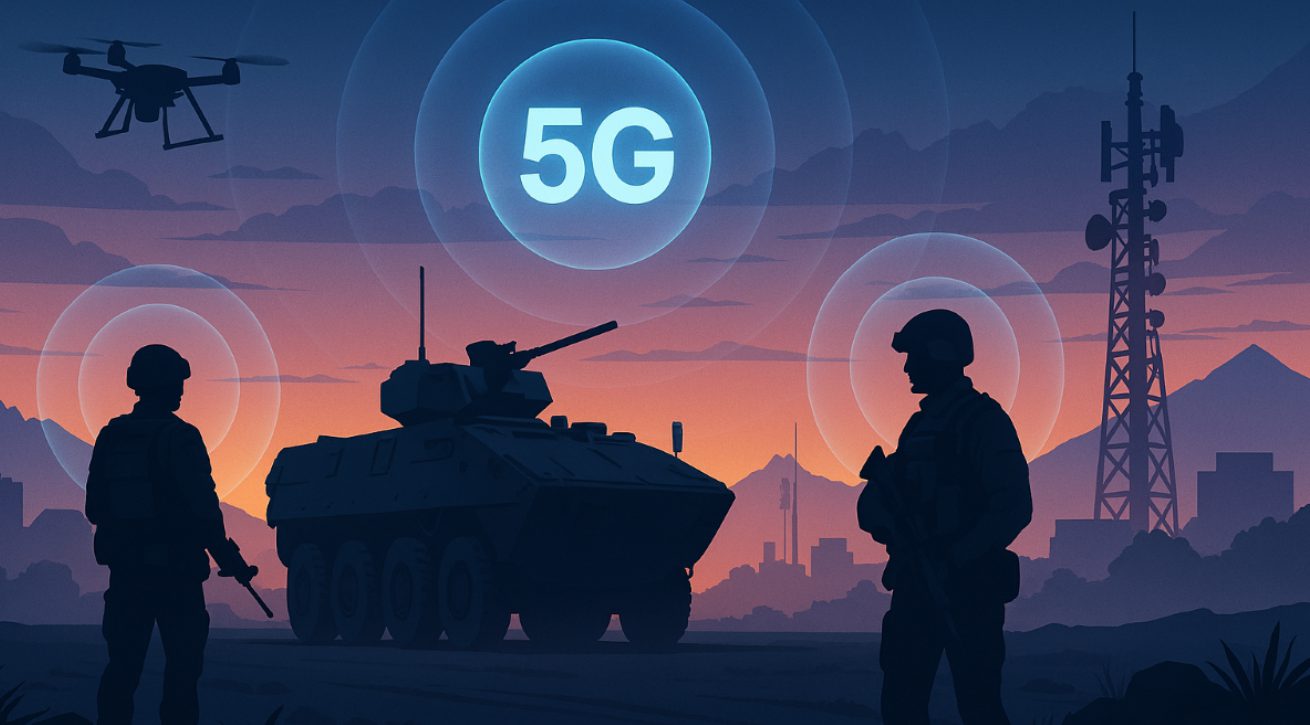
While most 5G deployments chase consumer speed tests, Spain just turned battlefield communications into a strategic weapon. The Spanish Ministry of Defense is integrating NATO’s first permanent tactical 5G network into the Lešť training area in Slovakia, where Spain leads a multinational battlegroup. This isn’t another lab experiment or limited trial—it’s a fully operational private 5G infrastructure supporting hundreds of allied troops, platforms, and systems in a live military environment.
Battle-Tested Architecture
Spain brings proven multi-domain 5G experience from air, sea, and cyber operations.
Spain brings serious credentials to this deployment. Through its Joint Cyber Command and Telefónica partnership, they’ve already proven 5G tactical bubbles across all domains: airborne 5G systems on military aircraft, four-month operational deployments on NATO naval vessels, and a dedicated 5G Cyber Defense Center protecting communications between radars, drones, and weapon systems.
The Lešť network leverages private 5G with isolated cores, edge computing co-located with radios, and hybrid architectures bridging tactical radios, SATCOM, and legacy systems. Your typical corporate private 5G deployment looks quaint compared to ruggedized hardware designed to survive electromagnetic warfare while maintaining zero-trust security protocols.
The system enables Command, Control, Communications, Cyber, Intelligence, Surveillance, and Reconnaissance integration—connecting intelligence and command systems with autonomous platforms through deterministic, low-latency links. Think coordinating drones, sensors, and anti-drone systems through a single digital architecture that treats connectivity as mission-critical infrastructure.
Strategic Infrastructure Blueprint
Defense 5G validates resilient network architectures that civilian critical infrastructure needs.
This deployment serves dual purposes beyond military applications. Defense 5G validates architectures that civilian critical infrastructure desperately needs—isolated networks with edge AI processing, multi-layer redundancy, and cyber-hardened security. Think Netflix’s content delivery network, but for keeping the lights on during actual emergencies.
NATO’s Pilot Project 5 framework positions Lešť as a template for alliance-wide adoption. If successful, these technical patterns could standardize tactical 5G across member nations while simultaneously reshaping how ports, energy grids, and logistics hubs approach private network resilience.
Network Effect Reality
The defense 5G market grows as militaries recognize connectivity as fundamental infrastructure.
Spain’s operational approach—combining permanent installations with portable tactical nodes—demonstrates how modern warfare increasingly depends on information superiority through superior networking. Your smartphone‘s 5G connection suddenly seems pedestrian when military variants coordinate autonomous systems, process intelligence data at the edge, and maintain communications under active jamming.
This is 5G growing up, moving from consumer convenience to mission-critical operations where network failure means operational failure. As NATO validates these architectures for multi-domain operations, the same resilience patterns will likely reshape civilian critical infrastructure networks across energy, transportation, and logistics sectors.