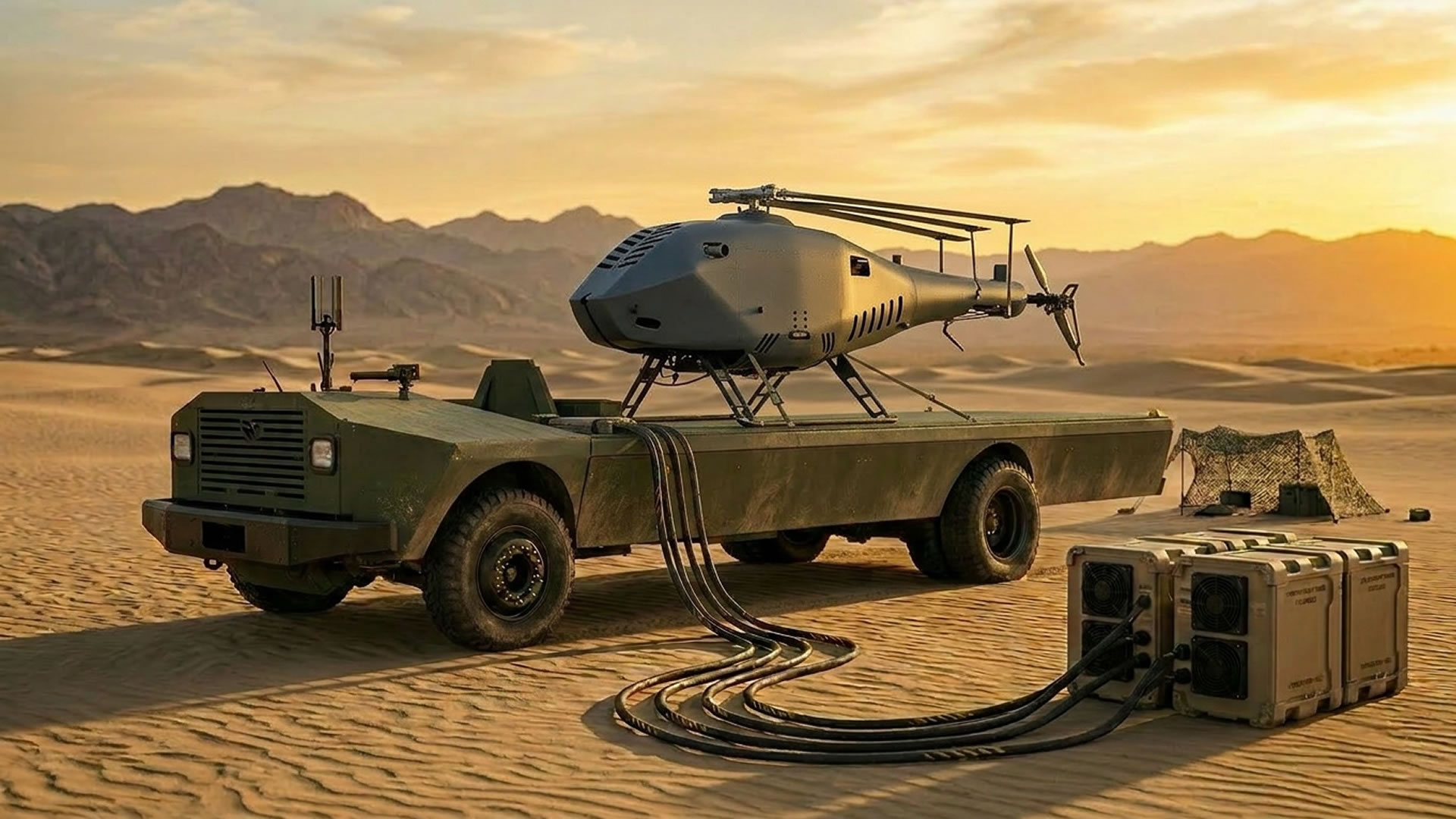
Supply runs in hostile territory usually mean rolling the dice with human lives. American Rheinmetall and EV startup Harbinger just announced they’re changing those odds with autonomous hybrid trucks that can haul cargo 500 miles without a driver—or a fuel stop.
The partnership, revealed in May 2026, combines Harbinger’s fully drive-by-wire electric chassis with Rheinmetall’s combat vehicle expertise. Their “Praesidia” prototype promises something military logistics has never seen:
- Silent electric operation
- 100kW of exportable power for weapons systems
- Enough range to complete extended missions without charging infrastructure
Think Tesla’s Cybertruck, but designed to survive IED attacks while powering counter-drone systems.
This isn’t just about fancy tech—it’s about “attritable mass,” Pentagon speak for systems cheap enough to lose in combat. Traditional military trucks cost millions and require trained drivers who become targets. These robotic mules flip that equation entirely.
According to Harbinger CEO John Harris, the goal is “keeping service men and women out of harm’s way” while delivering supplies under fire. If insurgents destroy one, you’ve lost hardware, not lives—a calculus that fundamentally changes how military logistics operates in contested areas.
The technology hinges on Harbinger’s drive-by-wire architecture, where steering, braking, and acceleration happen electronically rather than through mechanical linkages. No cab, no steering wheel, no human vulnerability.
Electronic controls mean autonomous software can command these trucks without complex retrofitting.
American Rheinmetall’s Matthew Warnick calls it “one of the most autonomy-ready commercial chassis ever built in the United States”—basically plug-and-play robotics for military missions. The hybrid powertrain offers tactical advantages beyond just range:
- Silent battery-only operation for stealth missions
- Reduced heat signatures
- Massive onboard power generation for electronic warfare systems
Joint demonstrations begin this summer, targeting rapid prototyping programs that could field these trucks within years, not decades. The real test isn’t whether they work in controlled environments—it’s whether they survive the chaos of contested logistics where every supply run becomes a potential ambush.
If they do, you’re looking at the future of military transportation: ghostly quiet, expendably cheap, and refreshingly human-free.