GM’s $900 million gamble on its new Battery Cell Development Center isn’t just another corporate facility—it’s a declaration of war against Chinese battery dominance. While EV prices stay stubbornly high and charging infrastructure crawls forward, this Warren, Michigan facility represents Detroit’s most serious attempt to crack the code that’s kept electric vehicles expensive and out of reach for most buyers.
The Chemistry That Could Change Everything
LMR batteries promise to deliver premium range at budget prices.
The secret weapon is lithium-manganese-rich chemistry, or LMR for short. Think of it as the battery world’s holy grail: delivering energy density close to expensive nickel-manganese-cobalt cells while costing about the same as cheap lithium-iron-phosphate batteries. For a Chevrolet Silverado EV, that translates to maintaining its 400-plus mile range while cutting battery costs by at least $6,000 per vehicle.
Suddenly, that $75,000 electric truck starts looking a lot more like its $55,000 gas-powered sibling.
Kurt Kelty, GM’s vice president of battery and sustainability, calls LMR the company’s future “bread and butter” product line. Coming from a Tesla battery veteran, that’s not casual optimism—it’s strategic positioning for survival.
Building the Bridge Between Lab and Factory
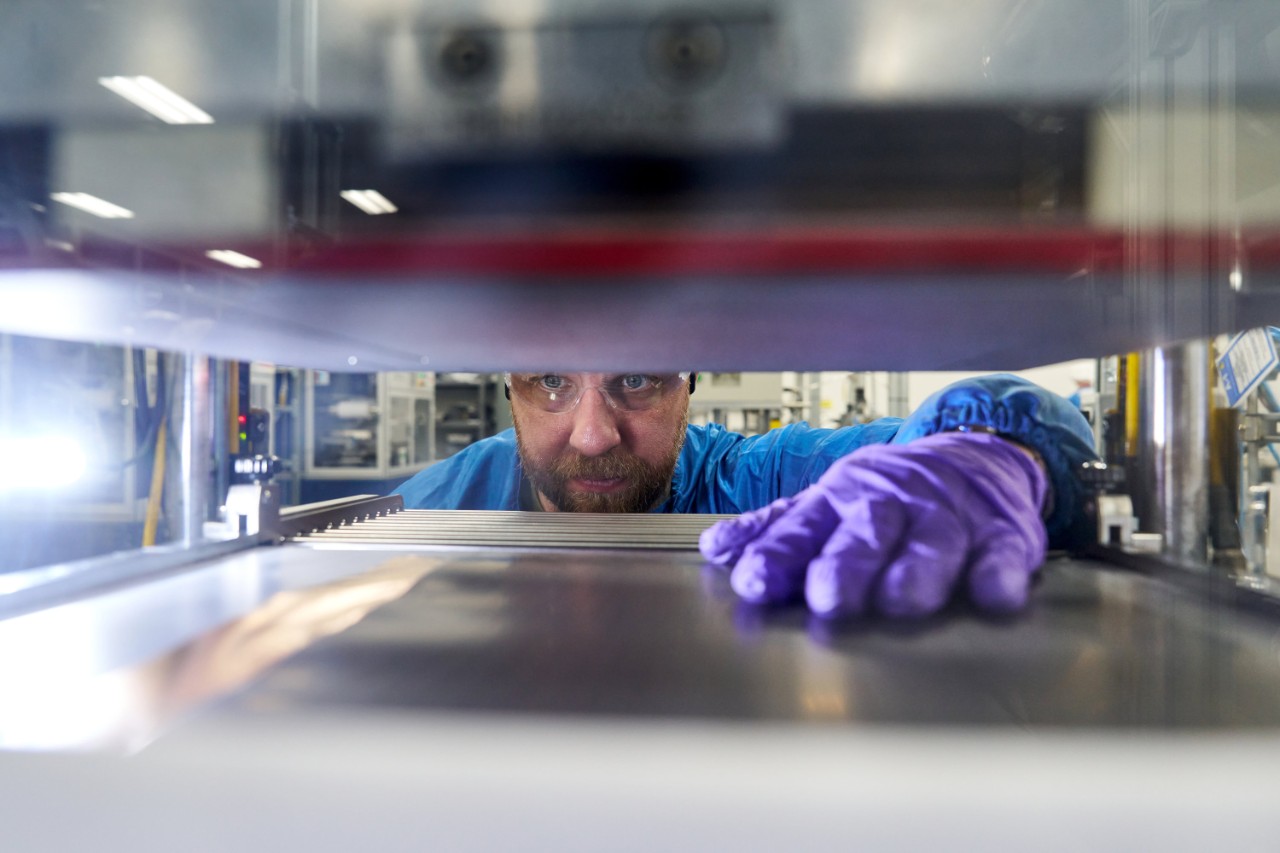
The 500,000-square-foot facility tackles the industry’s biggest challenge: scaling up.
Here’s where the BCDC gets interesting. GM’s Wallace lab cranks out 30 to 50 experimental cells daily—coin-sized prototypes perfect for proving chemistry concepts. The massive Ultium gigafactory in Tennessee produces 300,000 full-size cells annually using 2,000-liter mixing tanks.
The BCDC splits the difference: 2,500 cells per day using 40-liter tanks that mirror gigafactory processes without gigafactory costs. A single test run costs about $200,000 at the BCDC versus potentially millions at full scale.
Mo Gallegos, who heads the facility, describes it simply: “The BCDC is intended to bridge the gap.”
Digital Twins and Silicon Solutions
GM logged 150 million CPU hours developing LMR—more than most engine programs use entirely.
The facility exists as much in cyberspace as physical space. GM built a complete digital twin of the BCDC, modeling everything from control boards to mixing blade angles. Teams walk through the virtual facility using VR headsets, rehearsing operations and catching problems before real equipment gets installed. This computational muscle has already saved millions in commissioning costs.
The timeline is aggressive: first LMR cells should roll off the BCDC line later this year, targeting 2028 for actual vehicles. If GM hits that mark while achieving its 85% yield threshold—the industry standard for commercial viability—Detroit’s electric ambitions could finally deliver meaningfully cheaper EVs. If not, Detroit faces another expensive reset while Chinese manufacturers continue their relentless march toward global battery supremacy.