Honda just flew its 7,000-pound hybrid eVTOL demonstrator for 90 seconds in California, and the air taxi industry should pay attention. While startups like Joby and Archer race toward late-2020s launches with battery-only aircraft, Honda took the long road—400 subscale flights before committing to full-scale testing.
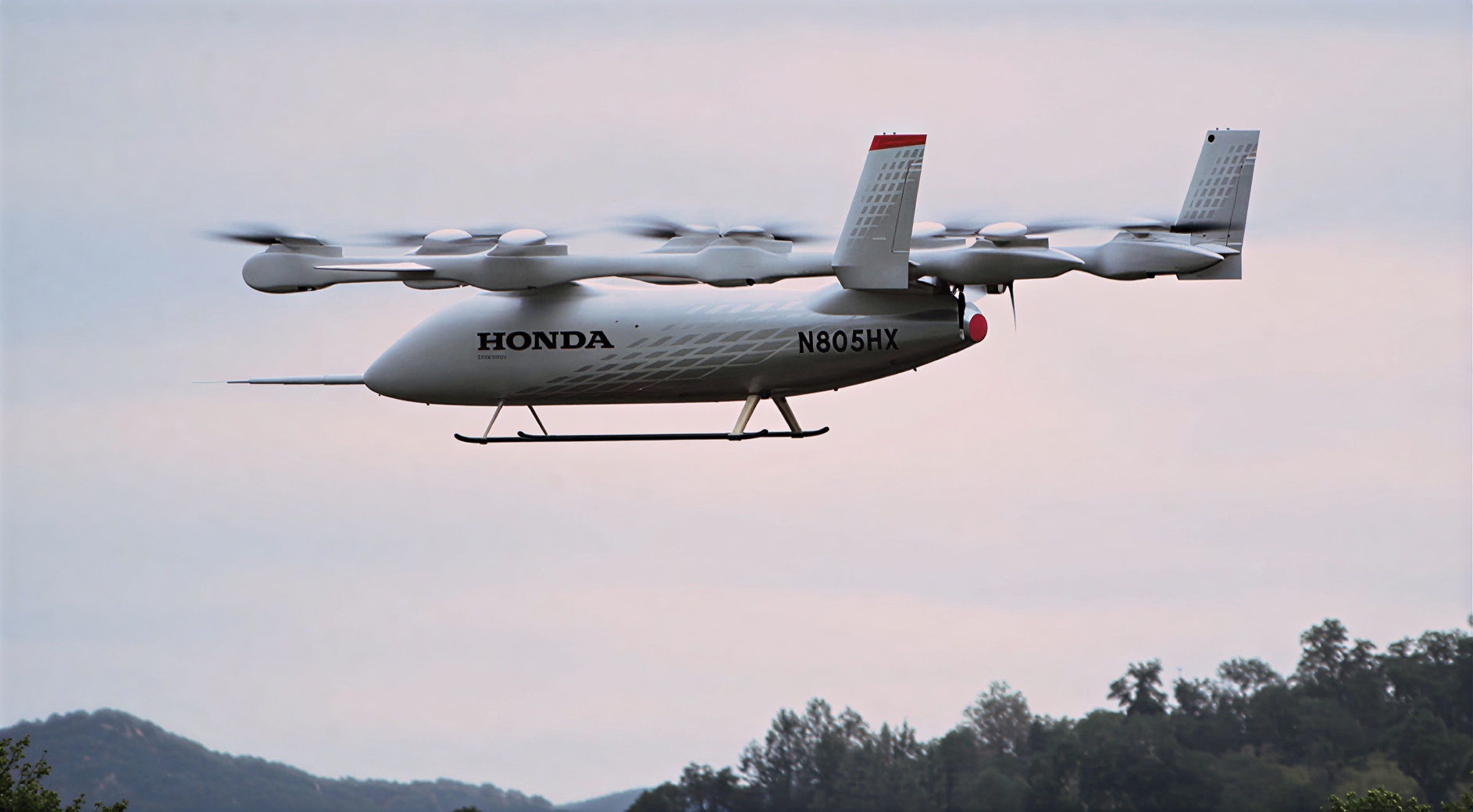
That methodical approach paid off on April 1, 2026, when the F1 demonstrator lifted off at San Luis Obispo. The aircraft doesn’t look like your typical flying car concept. Eight vertical lift propellers mounted on curved booms handle takeoff and landing, while two rear pushers provide forward thrust.
No tiltrotors here—Honda argues that combining lift and cruise functions in single mechanisms creates dangerous failure points. You want redundancy when you’re 1,000 feet up.
The Hybrid Advantage
Gas-turbine generator plus batteries target 400-kilometer range—four times typical all-electric designs.
Honda’s secret weapon sits under the hood: a compact gas-turbine generator working alongside batteries to power ten electric motors. While pure-electric eVTOLs typically manage 100-kilometer hops between charges, Honda targets 400 kilometers per flight.
That’s the difference between airport shuttles and actual intercity travel—think Manhattan to Boston rather than Manhattan to Newark. The hybrid system operates as a series configuration where the turbine generates electricity for the motors.
During energy-intensive vertical phases, both the turbine and the battery contribute power. In cruise flight, the generator can recharge the batteries. You get electric-motor efficiency with gas-turbine range, though you’re back to burning fossil fuels (Honda frames this as a bridge until battery technology improves).
Playing the Long Game
Early 2030s service target acknowledges certification reality while competitors promise late-2020s launches.
Honda isn’t trying to win the race to market. While competitors target commercial operations in the late 2020s, Honda openly accepts an early-2030s timeline for FAA certification. That conservative approach reflects both the hybrid system’s added complexity and Honda’s safety-first philosophy.
The company’s progression from stealth mode to public demonstrations suggests they’ve learned from automotive electrification: overpromise on timelines, and you end up explaining delays to disappointed customers. Better to underpromise and overdeliver when people’s lives depend on your aircraft staying airborne.
This milestone validates hybrid eVTOL concepts just as the industry debates all-electric limitations. Honda’s betting that range beats racing to market—and this successful hover flight suggests they might be onto something significant for regional air transportation.