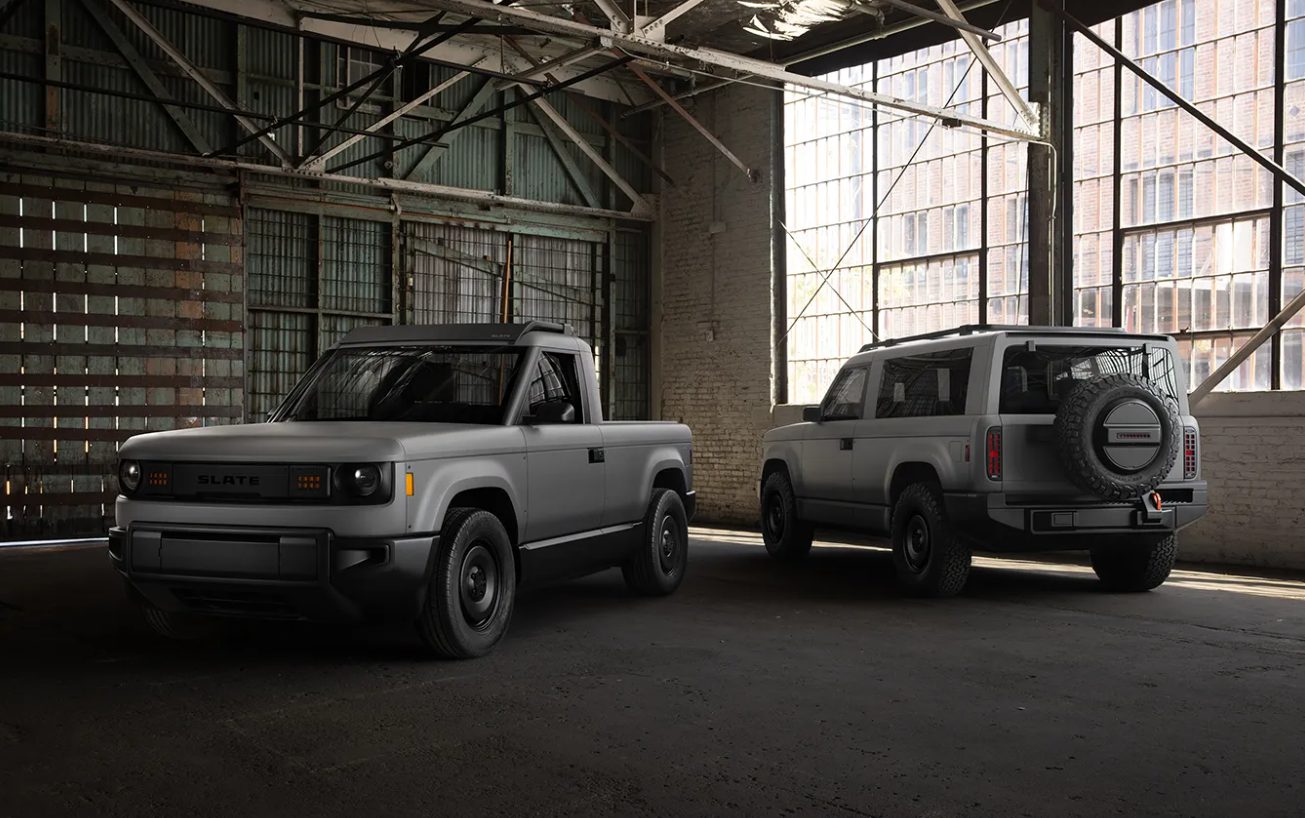
June 24 marks decision day for 160,000 reservation holders weighing startup risk against affordable EV promise. Dead federal tax credits killed Slate’s $20k promise, but the “mid-twenties” price might still work for budget buyers. June 24 transforms those comfortable $50 refundable reservations into serious business: $300 non-refundable deposits that lock in delivery windows for the startup’s bare-bones electric pickup.
You’ll discover actual pricing when logging into your Slate account next week, with the company dropping its original “$20,000 effective price” marketing after the Trump administration eliminated the $7,500 EV tax credit. Expect somewhere between $25,000-$27,500 before any remaining state incentives—still aggressive for electric trucks, but no longer the headline-grabbing bargain that generated buzz.
Modular Design Comes with Modular Pricing
Base “Blank Slate” includes heat and AC, but power windows and stereo cost extra.
The entry model lives up to its “Blank Slate” name with crank windows, basic heating and air conditioning, then hands you a catalog of 100+ accessories to build the truck you actually want. That modular SUV conversion everyone’s talking about? Budget another $5,000 to transform your two-seat pickup into five-seat family hauler.
Slate’s specs stay practical rather than impressive:
- 201 horsepower rear-wheel drive
- 150-240 miles of range depending on battery choice
- 1,000 pounds of towing capacity
This compact pickup stretches two feet shorter than a Ford Maverick while maintaining a useful 5-foot bed—perfect for urban spaces where full-size trucks feel like driving aircraft carriers.
Startup Reality Check
Jeff Bezos backing can’t guarantee execution as production targets late 2026 start.
That $300 deposit disappears forever if Slate stumbles, joining the graveyard of ambitious EV startups that couldn’t bridge the gap between prototype and production line. The company secured backing from Jeff Bezos (though he recently lost board representation) and boasts 160,000 reservations, creating pressure to deliver on promises made in Warsaw, Indiana’s planned manufacturing facility.
Your biggest gamble isn’t the money—it’s whether this no-frills approach resonates enough to sustain a new automaker through the inevitable growing pains, service network development, and parts supply challenges that established brands handle routinely.