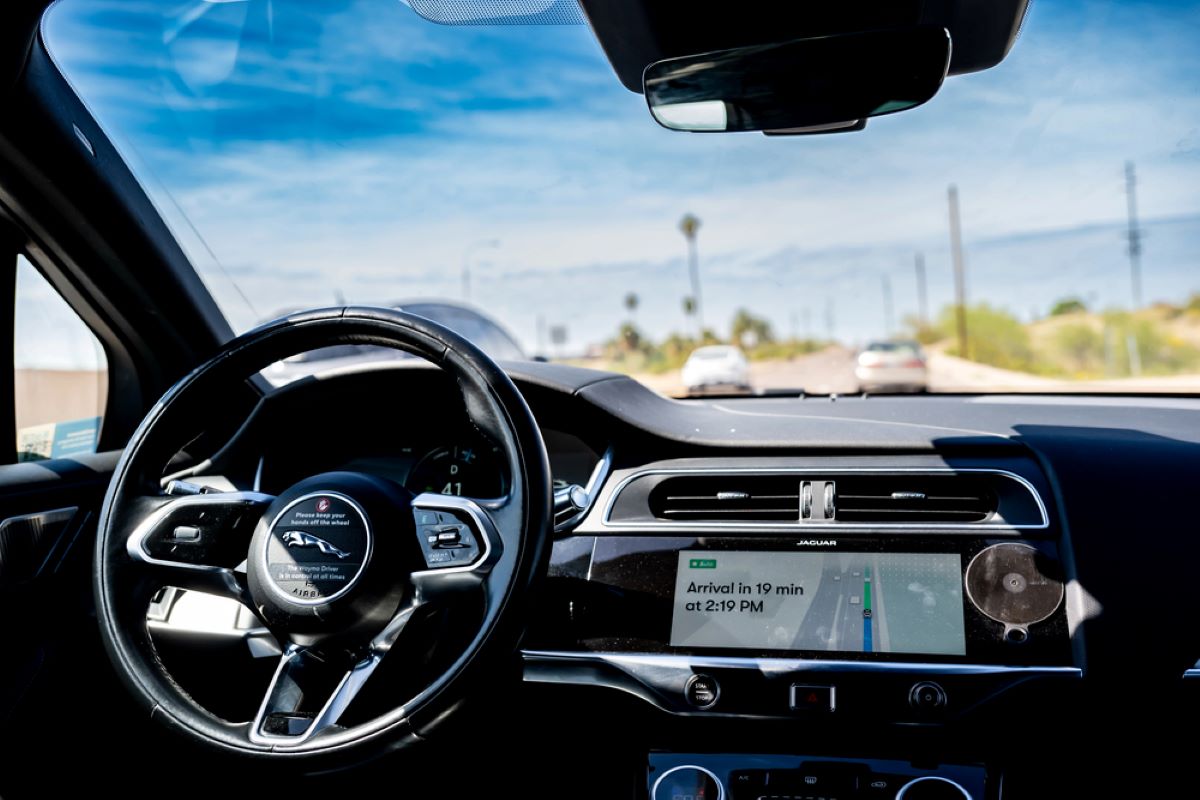
Remove the human driver from a taxi and something predictable happens: passengers act like nobody’s watching. Austin emergency responders now have a word for it — “sleepers.” These are Waymo robotaxis riders who pass out, nod off, or simply refuse to exit when the ride ends. Waymo’s remote staff can’t confirm whether an unresponsive passenger is napping or experiencing cardiac arrest, so dispatchers default to sending fire trucks and paramedics. In Waymo’s first nine months in Austin, that protocol triggered 99 welfare-check calls, according to Austin-Travis County EMS Commander Roger Patterson, speaking at an April city council meeting. Roughly 3% required hospital transport. Patterson’s own characterization: most were simply intoxicated passengers sleeping it off.
No Driver, No Problem – Until Someone Won’t Wake Up
Waymo’s remote monitoring system works well enough to spot trouble — just not well enough to avoid calling 911.
Waymo equips every vehicle with interior cameras and speakers. U.S.-based support agents monitor for problems and attempt to rouse unresponsive riders by voice. When that fails and breathing status remains unclear, company protocol requires a 911 call. In Los Angeles, rider Ditto Kasendar fell asleep during a six-minute trip. Firefighters opened the car. They found a sleeping man. He now rides Waymo four to five times a week — more confident in the service, not less.
- Austin logged 99 sleeper-related 911 calls in Waymo’s first nine months of operation
- Only ~3% of those calls required hospital transport
- Austin EMS Commander Roger Patterson: “These calls are very resource-heavy” — dispatchers treat every unresponsive rider as a potential cardiac emergency until proven otherwise
- Waymo has logged over 100 crashes in Austin since June 2025; Tesla’s robotaxi program logged 14 crashes, with one resulting in hospitalization
Without a human up front, passengers treat robotaxis like hotel rooms. People drink, eat, and vomit. At least two babies have been delivered mid-ride — one in Phoenix, one in San Francisco. Waymo charges $50 to $100 for messes. Tesla charges $150 for biowaste. Fleet partners now hire cleaners trained in OSHA bloodborne pathogen protocols, complete with full PPE. Somewhere, a Waymo cleaner is suiting up to deal with your fellow passenger’s choices.
Who Actually Picks Up the Tab?
Legal scholars argue cities are quietly subsidizing billion-dollar AV companies every time a fire truck rolls for a sleeping passenger.
Legal scholar Bryant Walker Smith has warned that local governments are “massively subsidizing the research and development and operation of automated driving” by absorbing welfare checks and crash responses. Waymo counters with data showing 73% fewer injury-causing crashes than human drivers. Both claims coexist uncomfortably — like a hotel concierge who handles every guest crisis but sends the invoice to the city.
NHTSA has formally warned autonomous vehicle (AV) companies about robotaxis driving through emergency scenes and ignoring flares. Austin documented 19 instances of Waymo cars illegally passing stopped school buses, prompting a voluntary software recall. Tesla’s California permit still requires a human safety driver despite its “robotaxi” marketing — a distinction safety advocates call misleading. A viral Reddit video caught that safety driver asleep three times during a single ride. Tesla never responded to the passenger’s complaint about these major traffic violations.
Cities are expected to push toward standardized AV emergency interfaces and may eventually bill companies for non-essential 911 responses. Until then, the tab for sleepers and frozen robotaxis runs through your local fire department budget. The cars are driverless. The costs aren’t.