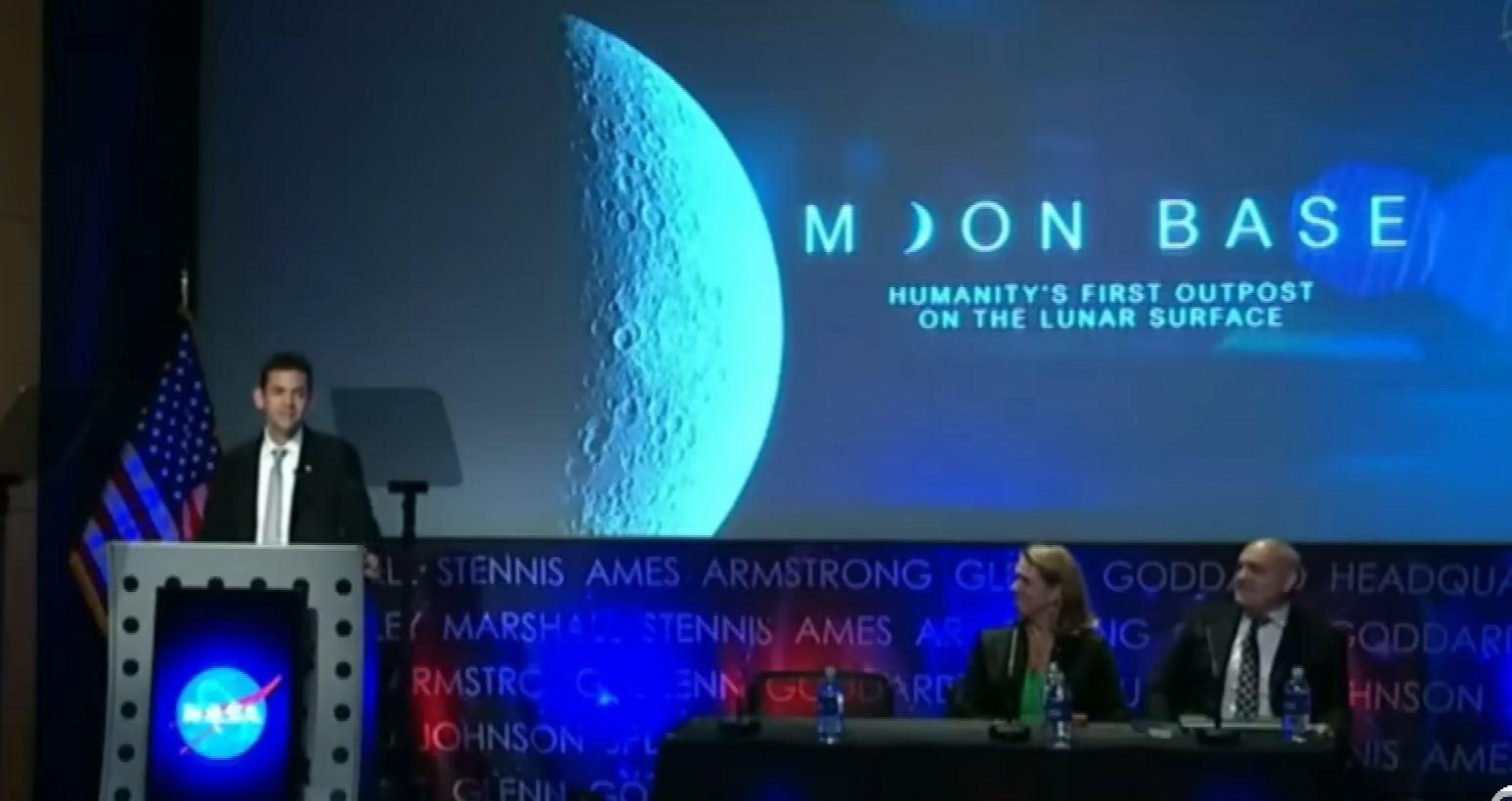
SpaceX isn’t the only billionaire-backed company getting serious lunar contracts. NASA just handed Blue Origin a $188 million deal to deliver rovers to the Moon’s lunar south pole, part of a sweeping plan to build humanity’s first permanent off-world outpost by the early 2030s.
The Three-Phase Reality Check
NASA’s timeline spans a decade, not a single mission.
NASA’s Moon Base architecture breaks down into digestible phases that make the “permanent city” headlines less breathless. Phase 1 runs through 2029 with 25 robotic missions and 21 landings, testing everything from power systems to those “MoonFall” hopper drones that will mark the base’s eventual perimeter.
Phase 2 (2029-2032) brings semi-permanent infrastructure—nuclear reactors, pressurized habitats, and roughly 60 tons of cargo deliveries. Phase 3, starting around 2032, enables what NASA calls “enduring human presence” with routine crew rotations. That’s when the base transitions from construction site to operational outpost spanning hundreds of square miles.
Bezos Gets His Moon Shot
The company will deliver lunar terrain vehicles using its Endurance cargo lander.
Blue Origin’s contract covers more than basic delivery service. The company’s uncrewed Blue Moon Mark 1 “Endurance” lander will transport rovers built by Astrolab and Lunar Outpost to the lunar south pole, with an optional $280 million extension for additional missions. This positions Jeff Bezos’ company as a key logistics provider in NASA’s commercial strategy, alongside Firefly Aerospace’s drone-carrying missions.
The nearly $1 billion in total contracts signals NASA’s commitment to outsourcing lunar infrastructure rather than building everything in-house—a marked shift from Apollo-era government control.
Want your moon base news without the hype? NASA’s own documents reveal a measured progression toward permanent lunar presence, not an instant space city. The south pole location offers water ice for life support and fuel production, but success depends on each phase hitting its ambitious cargo delivery and technology demonstration targets. If it works, you’re looking at humanity’s first serious attempt to live somewhere other than Earth.