Making beloved fictional characters walk, talk, and fist-bump in your living room used to require Hollywood budgets and teams of animators. Now one dedicated engineer has cracked that code using a Raspberry Pi, some servo motors, and months of determined tinkering.
Rocky Gets Real Through Accessible Tech
Leviathan Engineering transforms Andy Weir’s alien protagonist into a conversational tabletop companion.
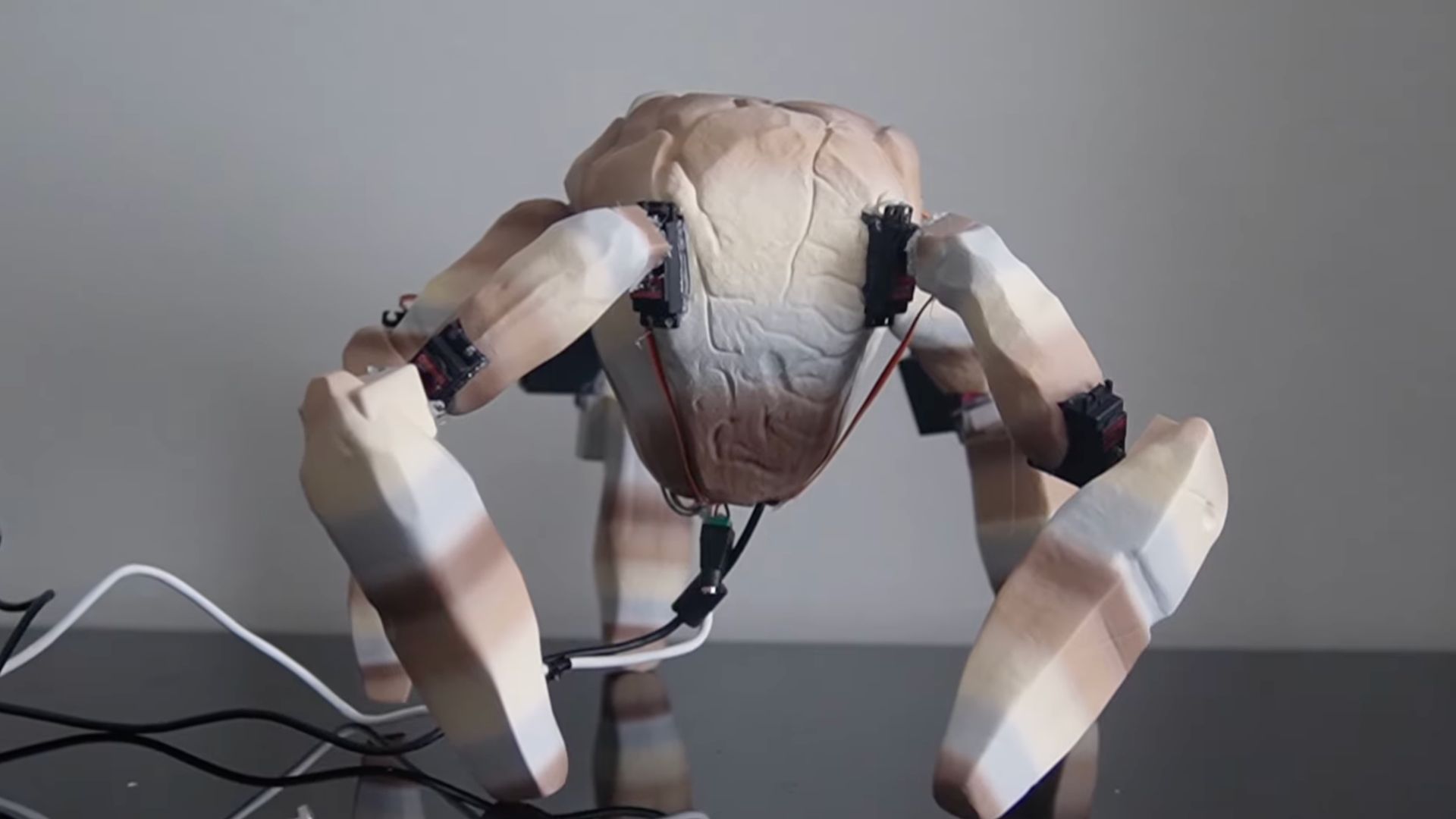
Leviathan Engineering’s tabletop-sized Rocky robot brings Andy Weir’s lovable alien from Project Hail Mary into conversational reality. The spider-like creation doesn’t just look the part—it captures Rocky’s enthusiastic personality through real-time AI responses that trigger matching physical gestures. When you ask for a fist bump, Rocky extends its arm while chirping “fist bump yes much happy” in its signature staccato delivery.
Consumer Components Enable Professional Results
Standard maker hardware combines to create personality-driven robotics previously requiring specialized equipment.
The technical foundation reads like a shopping list from any maker’s toolkit:
- Ten metal-geared servo motors handle articulation
- PCA9685 driver board prevents the Raspberry Pi 5 from getting overwhelmed
- Google’s Gemini AI generates both dialogue and corresponding movements using “tool-calling” features
- Vosk handles speech recognition locally
- Piper synthesizes that distinctive Rocky voice pattern
The entire 3D-printed body, crafted from color-shifting filament, required several months of iterative design to handle repeated movement stress.
Beyond Pre-Programmed Puppetry
AI-driven behavior replaces traditional scripted responses for genuinely dynamic character interaction.
This approach flips traditional robotics on its head. Instead of scripted animations triggered by keywords, Rocky’s responses emerge from contextual understanding. The AI doesn’t just recite lines—it actively chooses gestures that match the conversation flow. According to Hackster.io, this represents a meaningful shift from conventional hobby robotics toward personality-driven interaction that feels genuinely dynamic rather than mechanically predetermined.
The Maker Revolution Hits Character Creation
Converging accessible technologies enable hobbyists to create conversational entertainment characters at consumer price points.
Rocky’s success signals something bigger than one impressive build. The convergence of accessible AI APIs, affordable single-board computers, and mature 3D printing has reached a tipping point where character embodiment becomes achievable for dedicated hobbyists. While Project Hail Mary’s film production relied on human puppeteers controlling a full-scale Rocky through traditional techniques, this fan-built version inverts that relationship—using AI to drive authentic character expression through consumer-grade hardware.
The implications stretch beyond science fiction nostalgia. Entertainment IP holders might soon discover fan communities creating conversational versions of beloved characters, potentially opening new licensing models. More importantly, the technical barriers that once separated casual makers from personality-driven robotics are rapidly dissolving.