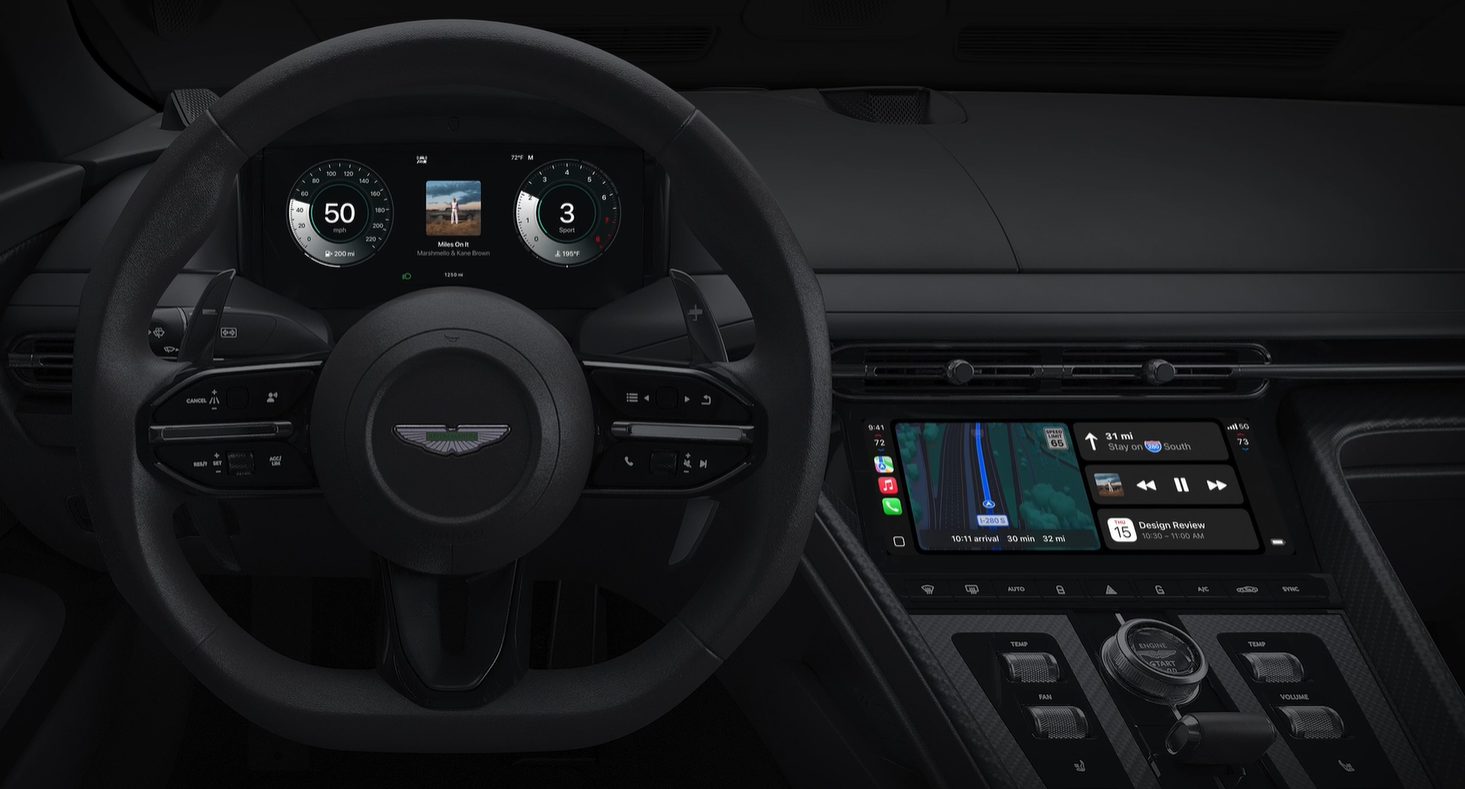
Apple’s CarPlay Ultra promised to transform your iPhone into a vehicle’s brain, controlling everything from climate to speedometer displays. The reality? You can still only experience this automotive nirvana if you’re driving a new Aston Martin. Nearly twelve months after its May 2025 debut, Apple’s next-generation infotainment platform remains trapped in a very exclusive club of one.
This isn’t exactly the automotive revolution Apple teased at WWDC 2022. Back then, the company paraded partners: Ford, Mercedes-Benz, Honda, Porsche, and others supposedly racing to integrate CarPlay Ultra. Fast-forward to today, and you’d have better luck finding affordable concert tickets than a CarPlay Ultra vehicle that isn’t British and doesn’t cost six figures.
Who’s Still Playing Ball
Apple’s confirmed partner list reads like a luxury car brochure.
The survivors tell an interesting story about automotive politics. Apple’s current confirmed partners include:
- Acura
- Aston Martin
- Ford
- Genesis
- Honda
- Hyundai
- Infiniti
- Jaguar
- Kia
- Land Rover
- Lincoln
- Nissan
- Porsche
Notice the pattern? These brands either compete directly with Tesla’s tech-forward approach or cater to car buyers already embedded in Apple’s ecosystem.
Bloomberg’s Mark Gurman reports that Hyundai’s IONIQ 3 EV could bring CarPlay Ultra to more attainable territory by late 2026, potentially starting around $33,700. That would mark the platform’s first escape from luxury pricing, assuming Hyundai doesn’t join the growing list of defectors.
The Great Automotive Exodus
Major automakers are backing away from Apple’s vision faster than drivers fleeing a traffic jam.
Mercedes-Benz abandoned ship entirely in 2024, followed by Audi, Volvo, and Polestar despite earlier commitments. GM took the nuclear option, rejecting CarPlay altogether for its EVs in favor of proprietary systems. Even Ford CEO Jim Farley, while maintaining commitment, expressed dissatisfaction with “round 1 execution” of Ultra.
The automotive industry’s cold shoulder reflects deeper tensions about data control and customer relationships. Automakers increasingly view infotainment as competitive territory, not something to outsource to Cupertino.
What This Means for Your Next Car
CarPlay Ultra availability should factor into premium vehicle decisions, but don’t hold your breath for rapid expansion.
If you’re shopping for a luxury vehicle and live deeply in Apple’s ecosystem, factor CarPlay Ultra availability into your decision timeline. But temper expectations about widespread adoption. The automotive industry moves like continental drift compared to Silicon Valley’s sprint pace.
Your current CarPlay works fine, and CarPlay Ultra’s killer features—instrument cluster integration, deeper vehicle data access—remain theoretical for most buyers. The system requires iPhone 12 or later models, operating on iOS 18.5 or newer. Unless you’re already Aston Martin shopping, this particular piece of Apple magic stays tantalizingly out of reach.