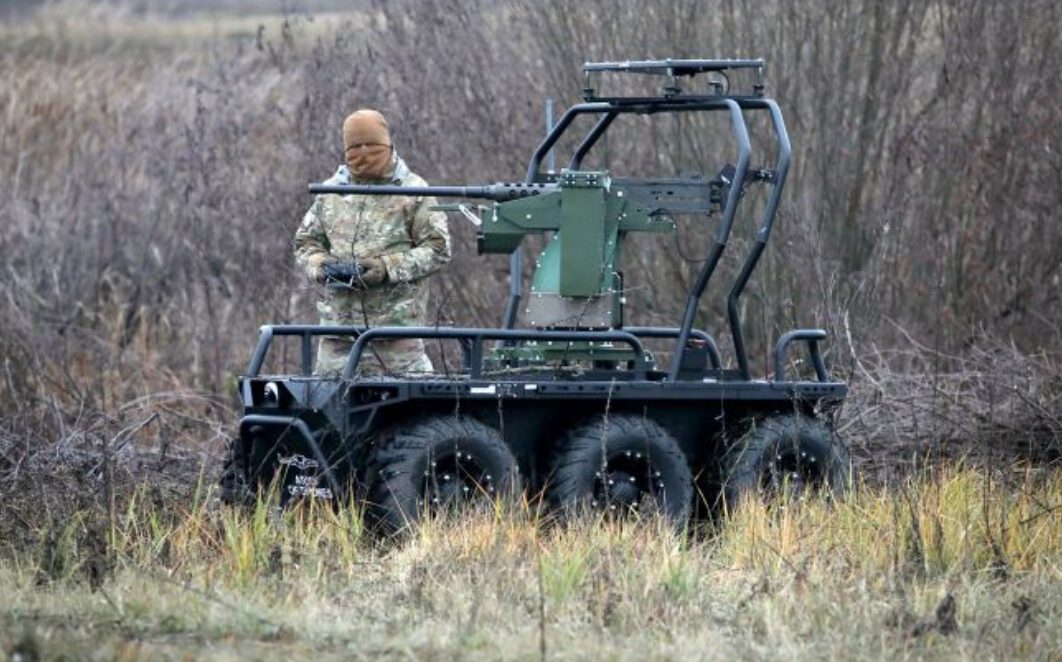
Robot warfare just crossed from science fiction into reality. Ukrainian forces captured a Russian position using only unmanned ground vehicles and drones—no human soldiers, zero casualties, complete success. If you thought your Roomba was impressive, these robotic war machines just redefined what autonomous systems can accomplish.
The Machines That Made History
Ukrainian UGVs proved autonomous warfare works in real combat conditions.
The April 13 operation deployed an arsenal that sounds like a Call of Duty loadout:
- Ratel units equipped with 7.62mm machine guns and AI-assisted targeting
- Termit units equipped with 7.62mm machine guns and AI-assisted targeting
- Rys units equipped with 7.62mm machine guns and AI-assisted targeting
These aren’t remote-controlled toys—they’re sophisticated platforms that identify, track, and engage targets independently. The Rys model uses AI to make split-second targeting decisions that once required human judgment. Russian forces actually surrendered to the robots, some communicating through camera messages.
The Numbers Tell a Bigger Story
Ukrainian forces completed over 22,000 robotic missions in three months alone.
These systems performed 22,000+ missions in the first quarter of 2026, with March alone seeing 9,000 operations—a 50% spike from February. Ukrainian UGV units mushroomed from 67 to 167 between November and spring 2026. Manufacturer Tencore delivered 2,000 units in 2025 but projects 40,000 for 2026. President Zelenskyy captured the significance: “Lives were saved more than 22,000 times when a robot went into the most dangerous areas instead of a warrior.”
Beyond the Battlefield
Combat robotics innovations will reshape rescue operations and industrial automation.
This breakthrough accelerates development across autonomous systems. The same AI that guides military UGVs will power search-and-rescue robots navigating disaster zones, industrial platforms maintaining dangerous infrastructure, and logistics systems operating in hazardous environments. We’re witnessing the iPhone moment for robotics—battlefield-tested technology that will transform civilian applications within years, not decades.
The future arrived faster than anyone expected. Your next delivery drone might trace its lineage to these Ukrainian war machines that just proved robots can handle humanity’s most complex challenges.