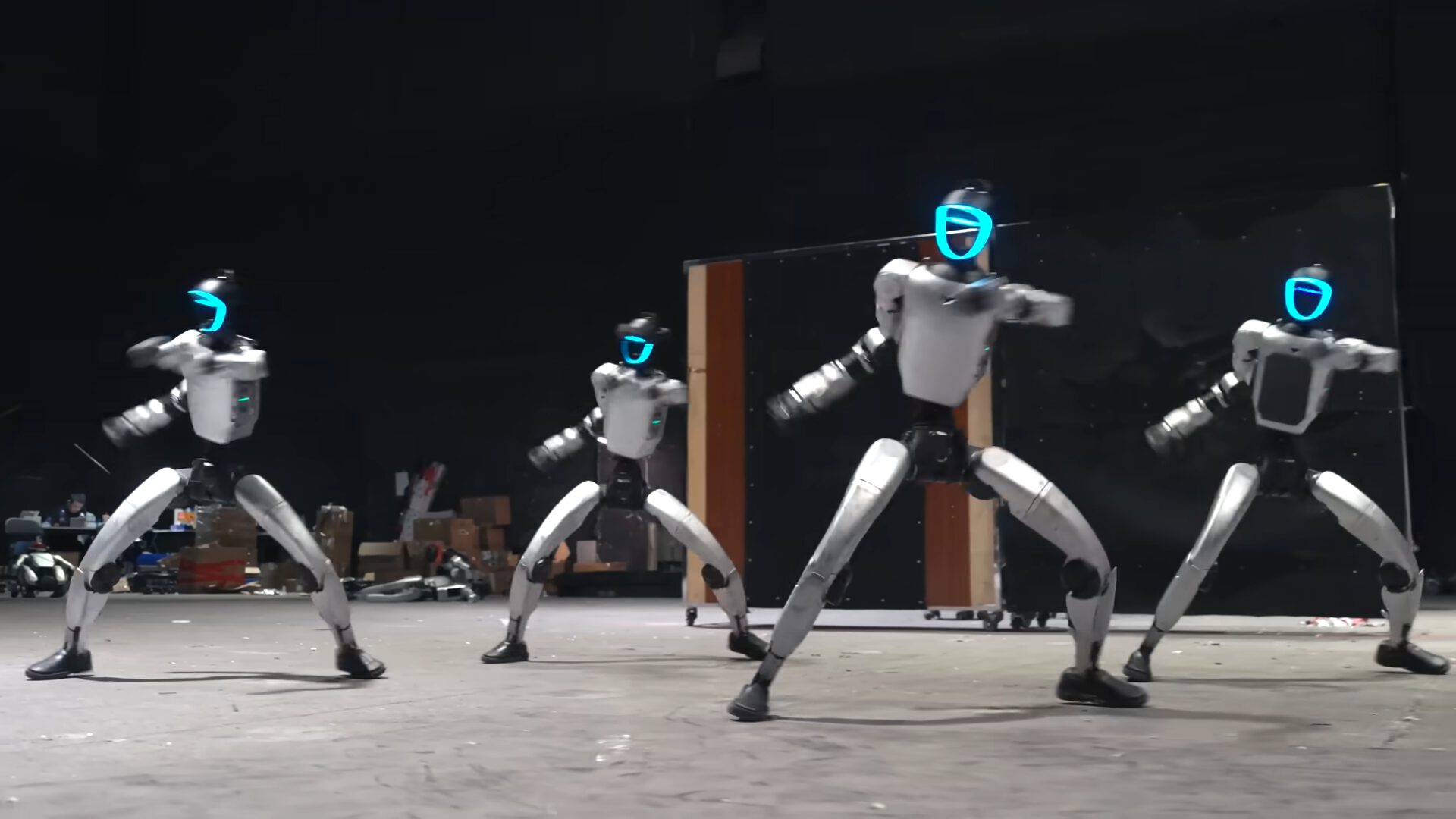
Last year’s robotic folk dancers look quaint compared to what China just unleashed on its biggest television stage. Dozens of Unitree G1 humanoid robots executed autonomous kung fu routines during the 2026 Spring Festival Gala, performing backflips, sword choreography, and the technically demanding “Drunken Fist” style without any human intervention. These 4-foot-tall machines moved with the fluid precision of martial arts masters, launching themselves 3 meters off trampolines while maintaining perfect coordination.
From Dance Steps to Death-Defying Stunts
The progression tells the real story here. Unitree’s 2025 performance featured 16 robots executing basic synchronized arm movements in traditional folk dance—impressive but clearly scripted choreography. Fast-forward twelve months, and you’re watching autonomous robots handle nunchucks, execute complex martial arts sequences alongside human children, and demonstrate running capabilities that push the boundaries of humanoid mobility. The G1 models maintained balance through cartwheels and directional changes that would challenge gymnasts, showcasing genuine autonomous operation without human teleoperation.
Commercial Reality Behind the Spectacle
The entertainment value masks serious commercial ambitions. Unitree plans to ship 20,000 humanoid robots in 2026—a fourfold increase from 2025’s 5,500 units. At a $16,000 starting price, the G1 makes humanoid robotics accessible beyond research labs and wealthy collectors. The company’s post-gala demonstration reinforced this commercial focus: over 40 robots coordinated to spell out New Year greetings in formation, showcasing their “Cluster Cooperative Rapid Scheduling System” for multi-robot coordination tasks.
China’s Robotics Arms Race Heats Up
Unitree shared the Spring Festival stage with competing Chinese robotics companies, including MagicLab, Galbot, and NOETIX—turning the cultural celebration into an unofficial capability showcase. The timing feels pointed given Elon Musk’s recent admission that no Tesla Optimus robots perform “useful work” in Tesla factories, despite earlier forecasts of 1,000 operational units by 2025. While Western companies debate timelines, Chinese manufacturers are demonstrating autonomous humanoids on billion-viewer broadcasts and planning IPOs on the Shanghai Stock Exchange.
The 2026 gala performances mark humanoid robotics crossing from research curiosity to commercial reality. When entertainment demonstrations involve autonomous weapon handling and coordinated multi-robot systems, you’re witnessing the foundation for applications far beyond television spectacles.