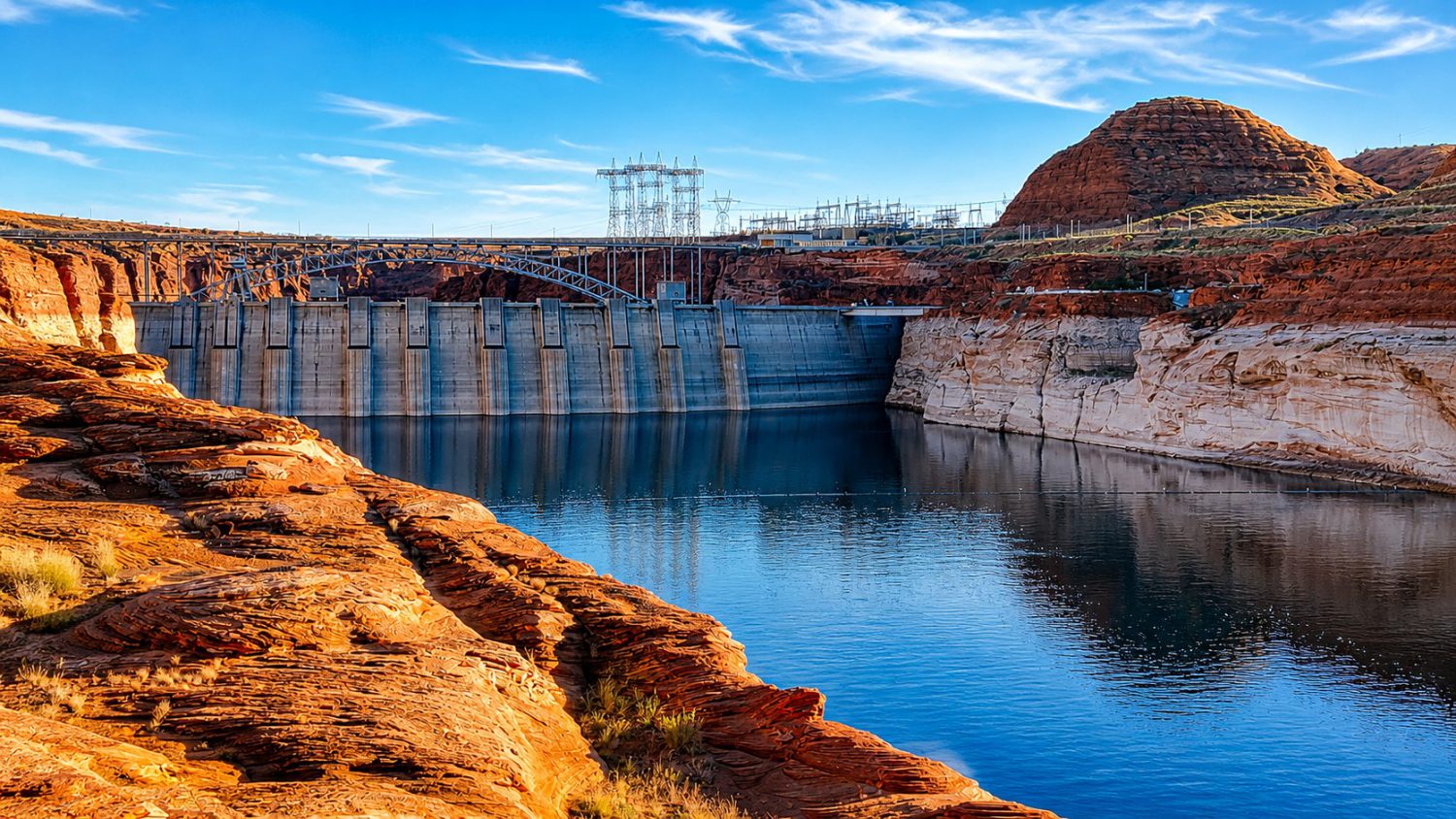
Nine trillion gallons. Gone from the American West’s April snowpack over the last decade. That’s roughly the entire maximum capacity of Lake Mead — drained, not by drought alone, but according to a new peer-reviewed study, by the emissions of 122 specific, named companies. BP. Chevron. ExxonMobil. Shell. The Carbon Majors database has been tracking these producers since 1950. Now researchers have connected their emissions to something you can measure in your kitchen faucet.
What the Numbers Actually Say
The study doesn’t just describe climate damage — it assigns a measurable share of it to a specific list of corporate emitters.
Published in Communications Earth & Environment, the study used observational data and climate modeling to trace hydrological damage across the West directly to corporate emission records. The findings are not subtle:
- Western snowpack shrank by more than one-third between 2014 and 2024
- Warm-season streamflow dropped roughly 13% — nearly 4 trillion gallons annually, comparable to California’s four largest reservoirs combined
- Irrigation demand climbed 4.3% overall, with 2.4% attributable directly to carbon-major emissions
- The Pacific Northwest and California took the hardest hits: Middle Columbia, San Joaquin, and Sacramento basins all register as hot spots
- Between 40% and 64% of these impacts trace back to emissions from those 122 producers since 1950
That last figure is the one that matters. Climate damage has always been easy to describe as diffuse, systemic, nobody’s fault in particular. This study hands you a spreadsheet instead.
From Science to Courtroom Is a Different Fight
Quantifying who caused the damage and proving it in court are two very different problems.
The Union of Concerned Scientists describes the study’s core finding as a “widening seasonal gap between supply and demand” — which sounds technical until you remember that Arizona, California, and Nevada are currently under a federal operating plan requiring combined cuts of roughly 400 billion gallons of Colorado River water per year. Nevada has already filed a federal lawsuit challenging that plan. States are fighting over a shrinking pie while researchers argue a finite list of companies helped shrink it.
Attribution in a climate model and causation in a courtroom are not the same thing. Standing, evidentiary standards, jurisdiction — if litigation follows, it will be brutal and slow.
But that conversation has a new document in it now. Farmers absorbing cuts, cities rationing, states suing each other — and somewhere in the evidence pile, a peer-reviewed study with 122 names attached.