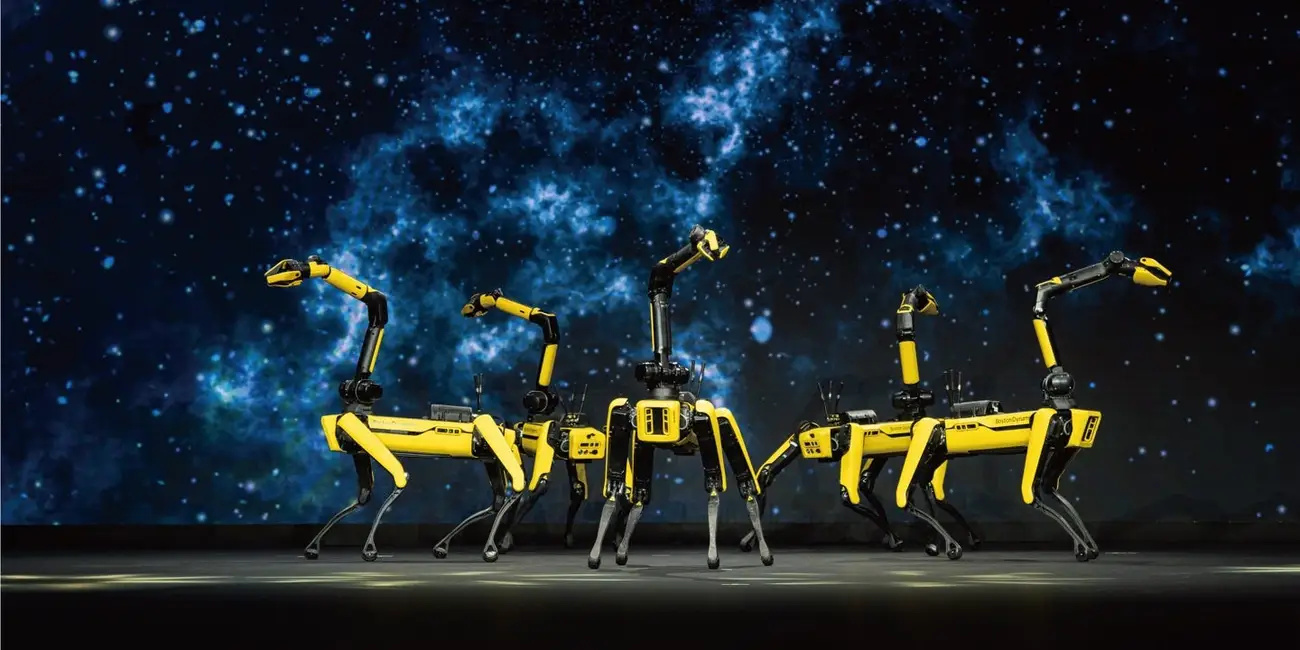
Your typical security guard costs $150,000 annually and needs vacation time. A robot dog costs $165,000 to $300,000 upfront and works 24/7 without sick days, benefits, or overtime pay. Do the math—these quadrupedal machines are achieving payback in 18 months while the AI infrastructure boom creates thousands of acres of facilities that need constant surveillance.
The Economics Finally Make Sense
Boston Dynamics and Ghost Robotics are seeing a massive uptick in data center interest as operators discover compelling ROI metrics.
“We’ve seen a huge, huge uptick in interest from data centers in the last year,” says Merry Frayne, senior director of product management at Boston Dynamics. The company’s Spot robots are delivering what facility managers actually care about: “Typically, our customers have a payoff within two years. It’s usually more like 18 months of hard savings.”
Ghost Robotics frames the value proposition even more bluntly. “Instead of having two guards at $300,000, you can have one guard and a robot,” explains chief growth officer Michael Subhan. “And the robot obviously doesn’t get sick or go on vacation and things like that.” When you’re managing sprawling campuses that operate around the clock, the economics become irresistible.
Market Timing Meets Massive Scale
With 5,000 existing US data centers and 1,000 more under construction, robotics companies see their moment.
The convergence is almost too perfect. North America is constructing 35 gigawatts of new data center capacity to support the AI computing frenzy, creating unprecedented demand for security solutions that can scale with facility complexity. “There are 5,000 data centers in the US alone, 800 to a thousand new data centers being built currently,” notes Subhan. That’s a potential multi-billion-dollar addressable market for companies that have spent years proving their robots in military and industrial applications.
Novva Data Centers provides concrete evidence this isn’t just pilot-program theater. Their 1.5 million square-foot Utah facility deploys Spot robots equipped with:
- Thermal sensors
- Facial recognition
- ChatGPT integration for natural voice interactions and threat detection
The robots patrol predetermined routes, monitor equipment for anomalies, and generate time-stamped incident logs that human security teams could never match for consistency.
Augmentation Reality Check
Companies emphasize robots complement human guards, but economic pressure tells a different story.
Both manufacturers insist they’re “augmenting” rather than replacing security personnel, with humans monitoring robot feeds from control rooms. This messaging reflects practical necessity—complex threat assessment still requires human judgment—and smart public relations in an automation-anxious economy.
But when your robot investment pays for itself in under two years while providing surveillance coverage that never gets tired, takes breaks, or calls in sick, the long-term workforce implications become obvious. Data center operators are cost-focused businesses operating on thin margins. The robots aren’t coming for security jobs immediately, but they’re definitely redefining what those jobs look like.