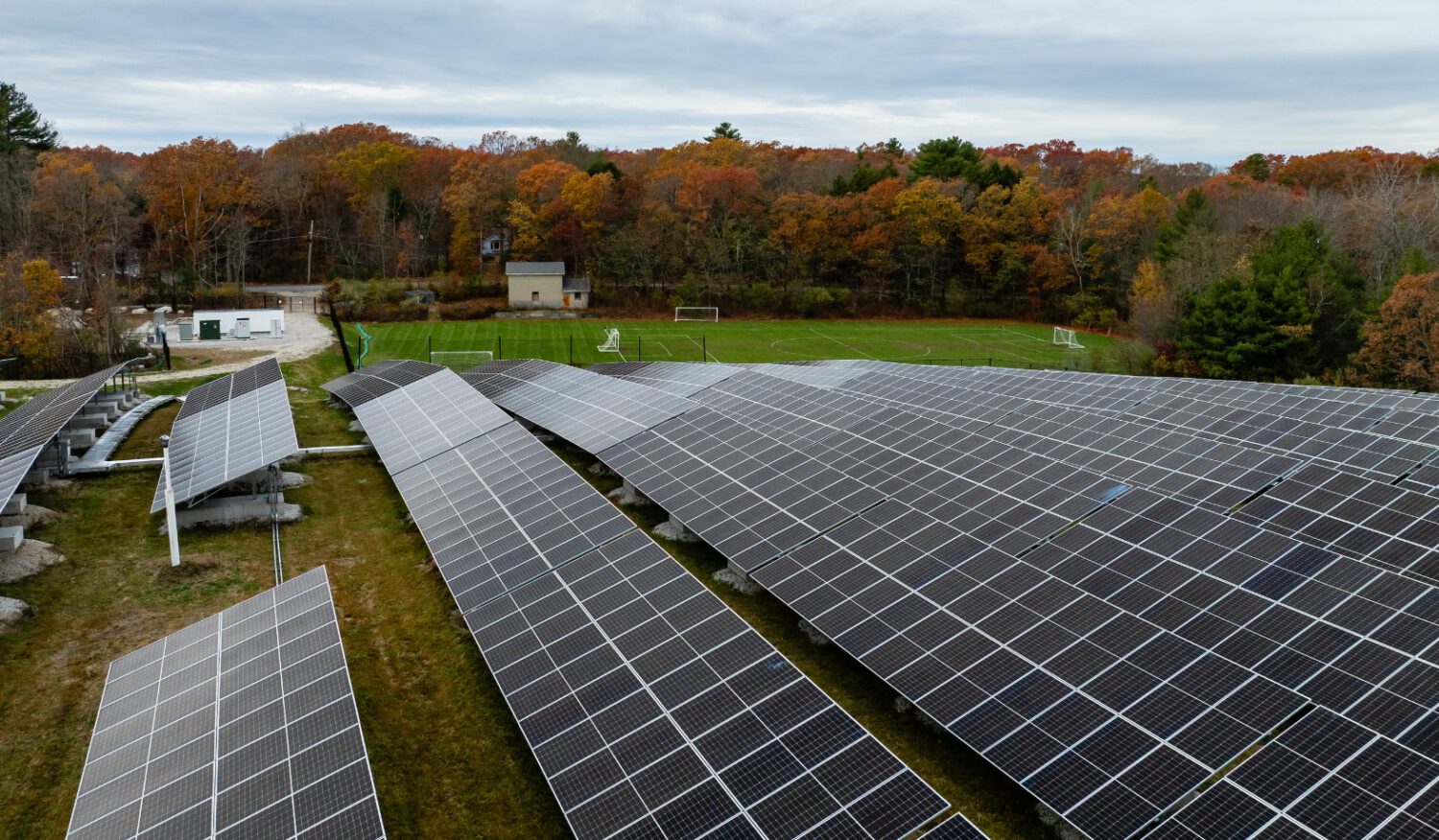
A site built to bury waste is now generating electricity. Holliston, Massachusetts has activated the Marshall Street solar-plus-storage project on its capped municipal landfill, pairing nearly 5,700 solar panels with a 2.75-megawatt-hour battery system.
A capped landfill is a closed disposal site sealed with a protective containment layer over buried waste. That design makes it poorly suited for housing or conventional construction, but structurally compatible with solar infrastructure.
Nearly 5,700 panels sit on a ballasted mounting system, meaning the equipment is anchored with weight rather than driven stakes, so the protective cap beneath stays intact. Keeping that layer undisturbed is essential: penetrating it would risk compromising the containment separating buried waste from the surrounding environment.
Onyx Renewables developed, owns, and operates the project. Town Meeting approval set off roughly seven years of permitting, utility interconnection reviews, financing, and construction before the facility reached activation.
The battery carries a 2.75-megawatt-hour rating, a measure of stored energy capacity. That figure is distinct from the array’s 3.4-megawatt generation rating, which describes how much power the panels can produce at a given moment. Storage allows electricity generated during daylight to be dispatched later, adding flexibility to when and how the power reaches the grid.
Holliston will receive lease payments and payments in lieu of taxes under agreements running up to 25 years. PILOT, as the latter arrangement is known, is a negotiated fee that replaces standard property taxes on the facility. Specific revenue figures have not been disclosed in the cited project materials.
The project sits beside the town recycling center and soccer fields. Closed landfills can become difficult-to-use parcels in communities with limited available land, and placing solar development on them avoids competing with undeveloped forests, farmland, or recreational space.
Six completed U.S. landfill-solar projects totaling more than 14 megawatts DC across Connecticut, New York, and Massachusetts make up the company’s current portfolio, according to Onyx. Project cost, annual municipal revenue, power pricing, and participation in Massachusetts’ SMART incentive program were not disclosed in the cited project materials.
Holliston Town Manager Frank Gervasio called the installation “a meaningful contribution to our community’s environmental goals,” according to Resource Recycling. The project illustrates how Massachusetts communities can redirect closed waste sites toward productive municipal use, a model that may apply to dozens of similarly capped parcels across the state.