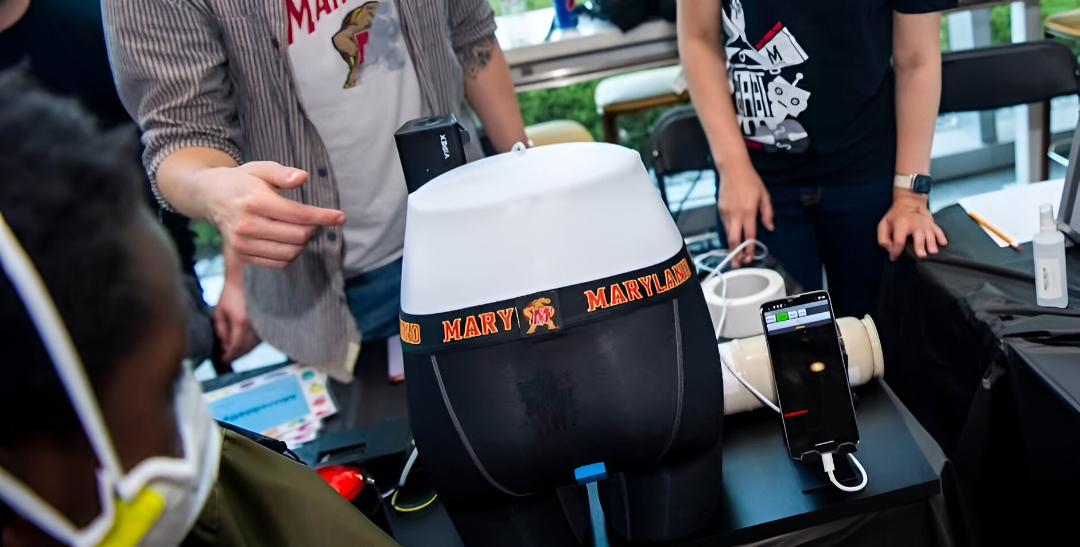
Tracking your gut health usually means awkward stool samples or unreliable food diaries, but University of Maryland researchers just made it as simple as getting dressed. Their “Smart Underwear” clips a coin-sized sensor to your regular underwear, measuring hydrogen gas from bacterial fermentation for up to seven days. It sounds like something from a medical device comedy sketch, yet this device achieved 94.7% accuracy in detecting dietary changes, making it more reliable than most health tracking methods you currently use.
The Science Behind Fart Tracking
Electrochemical sensors detect gut bacteria activity with medical-grade precision.
Published in Biosensors and Bioelectronics: X, the one-inch square device measures hydrogen gas produced exclusively when gut bacteria ferment undigested carbohydrates. Assistant professor Brantley Hall and research scientist Santiago Botasini validated their sensor against traditional methods—stool samples only capture snapshots, breath tests measure low concentrations, and questionnaires rely on faulty memory. Their continuous monitoring revealed something striking: participants averaged 32 flatulence events daily, more than double the 10-20 events that people typically self-report.
Real-World Performance Surprises Users
Week-long comfort testing reveals gaps in how we track digestive patterns.
The GUMDROP validation study tracked 38 participants who consumed either fiber-rich inulin gumdrops or sugar controls while wearing the device. Within 3-4 hours, hydrogen levels spiked dramatically for those who ate the fermentable fiber. Meanwhile, sugar-gumdrop participants showed minimal gas production despite one-third reporting digestive discomfort—highlighting how placebo effects skew traditional symptom tracking. During extended wear testing, 95% of users reported no discomfort wearing the device 11 hours daily, with only one dropout during high-intensity activities.
Commercial Ambitions Meet Research Reality
If you’re serious about personalized gut health, this technology points toward the future.
Hall and Botasini founded Ventoscity LLC to commercialize their patent-pending device for food intolerance diagnosis and microbiome interventions. However, the company has not announced a consumer release date—this remains a research prototype. Their Human Flatus Atlas study, currently recruiting 500 participants nationwide, aims to establish baseline “normal” ranges that don’t exist in current medical literature, creating percentile rankings like those familiar from fitness trackers.
While most health wearables track your heart or sleep, continuous monitoring could revolutionize how we understand digestive wellness. Like CGMs transformed diabetes management by replacing finger pricks with constant glucose data, smart underwear might make gut health optimization as routine as checking your step count. The future of personalized nutrition may literally be in your pants.