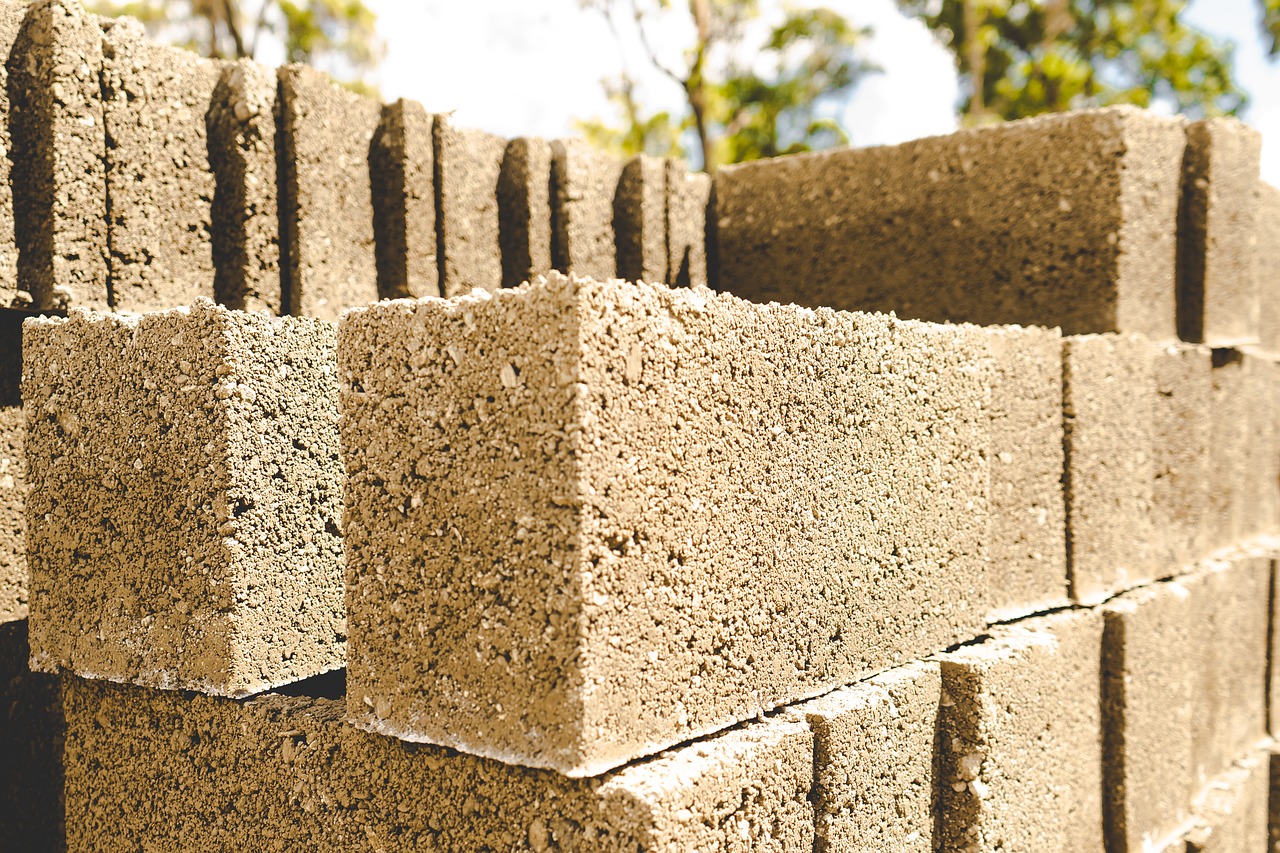
Construction crews are literally dredging rivers dry while sitting next to infinite piles of worthless sand. That paradox might finally have a solution, thanks to researchers who figured out how to turn desert dust and wood scraps into pavement-grade concrete blocks.
The Sand Problem Nobody Talks About
Desert sand covers 19 million square miles but can’t bond with cement like construction sand.
The construction industry devours massive quantities of sand annually, strip-mining riverbeds and pulverizing quarries to feed concrete plants worldwide. Meanwhile, desert sand—despite being everywhere—remains construction kryptonite.
Ren Wei, the postdoctoral fellow leading breakthrough research at Norway’s University of Science and Technology, cuts through the technical jargon: “The challenge is that desert sand is so fine-grained that it is not suitable as a fastener in concrete. In other words, the concrete will not be hard enough to be used in construction projects.”
Those smooth, wind-polished grains simply won’t grip cement the way rough river sand does. Think trying to build a sandcastle with flour instead of beach sand—the binding just isn’t there.
Heat, Pressure, and Tree Chemistry Create the Magic
Researchers bypassed cement entirely by harnessing lignin from wood as a biological adhesive.
The Norwegian-Japanese research team, publishing their results in the Journal of Building Engineering, cracked the problem by abandoning cement altogether. Their “Botanical Sand Concrete” combines equal parts desert sand and powdered wood, then applies serious heat (356°F) and pressure using industrial pressing equipment.
Under these conditions, lignin—the natural polymer that makes trees sturdy—softens and binds the sand particles together like biological superglue. The resulting blocks meet Japanese Industrial Standards for pavement applications.
Early tests show promise, though Wei acknowledges significant gaps remain: “The production process is relatively simple, so in principle the material can be made in many places. But we need to test more, including how it can withstand cold, before it can be used in Norway.”
Desert Regions Could Flip the Script
Localized production transforms environmental liabilities into construction assets.
This breakthrough works best where desert sand is abundant and transportation costs minimal—think Middle East, North Africa, and the American Southwest. Hauling sand across continents defeats the environmental purpose, but regional production could fundamentally shift resource economics.
Currently, desert communities import construction sand from distant sources while their local sand remains classified as geological waste. Successful scaling could transform that dynamic, turning environmental burdens into economic assets while reducing pressure on depleted river systems.
The material remains prototype-stage, requiring extensive cold-weather testing before broader deployment. But the core innovation—reimagining waste streams as construction materials—points toward a construction industry that finally works with abundance rather than against it.