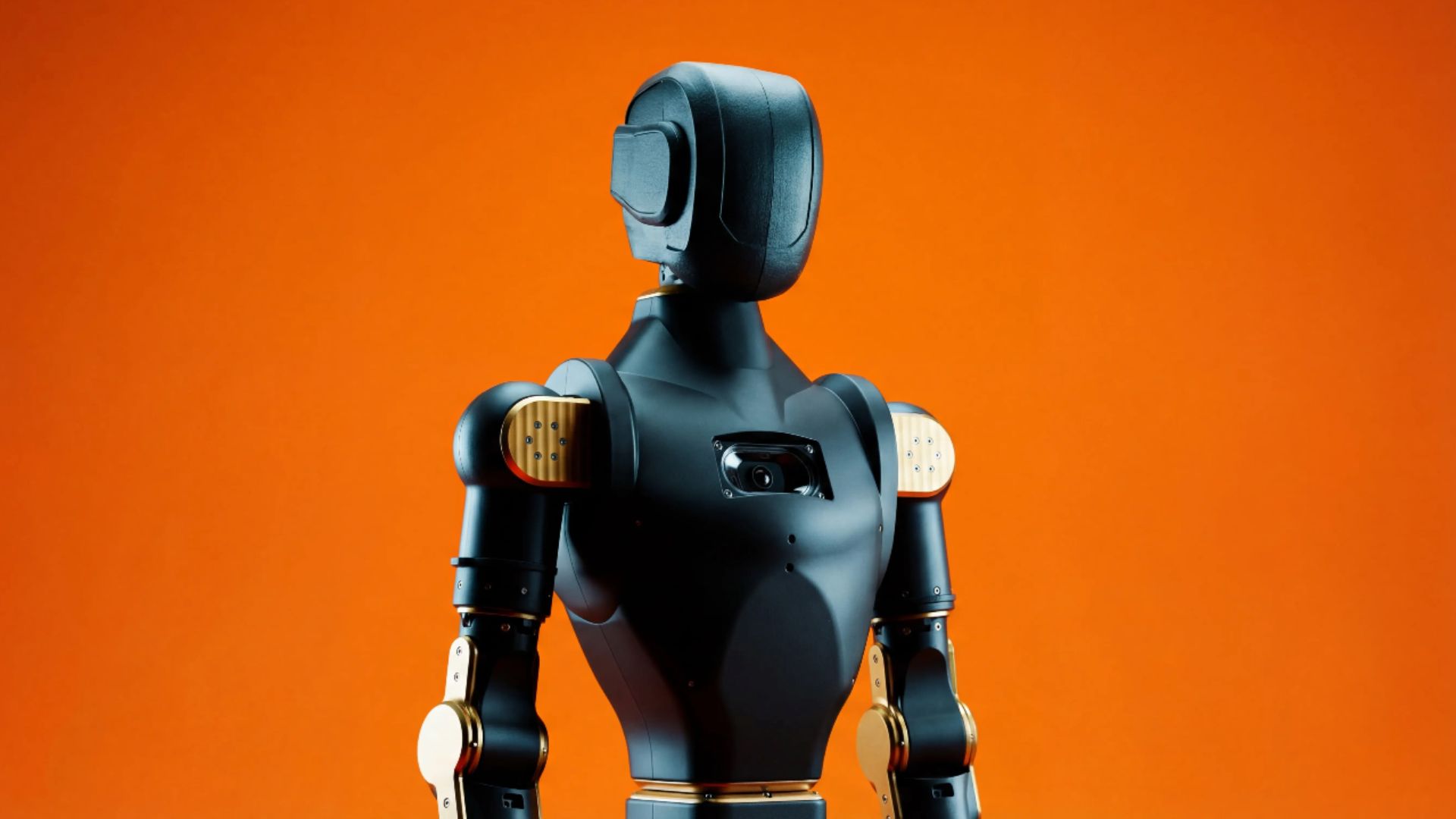
Humanoid robotics used to require million-dollar budgets and university-level resources, but Menlo Research’s Asimov kit democratizes the field for $15,000. This isn’t your typical consumer gadget—it’s an unassembled research platform designed for developers, advanced hobbyists, and robotics labs ready to build walking machines from scratch.
Modular Design Meets Real-World Engineering
Universal components and 3D printing optimization make customization accessible.
Standing 1.20 meters tall and weighing 35 kilograms, Asimov delivers over 25 degrees of freedom through a cleverly modular architecture. You can swap legs, arms, torso, and head components thanks to universal motor mounting fixtures—no complete redesigns required when you want to upgrade or experiment.
The structural parts optimize for Multi Jet Fusion 3D printing, reducing dependence on expensive CNC machining while making replacement components more accessible. Smart engineering choices include:
- A parallel Revolute-Spherical-Universal ankle mechanism for better torque distribution
- Passive articulated toes that simplify locomotion while improving traction and balance
Software That Simulates Real-World Messiness
Training algorithms account for hardware imperfections before deployment.
Asimov’s “Processor-in-the-Loop“ simulation deliberately adds realistic flaws rather than perfect physics—think CANBus delays up to 9 milliseconds and sensor noise through I2C emulation layers. The system trains using asymmetric actor-critic reinforcement learning, where the critic gets privileged simulation data while the actor receives only noisy, delayed inputs that mirror actual hardware conditions.
This approach reportedly enables forward walking, backward movement, and push recovery without additional calibration when transitioning from simulation to physical hardware.
Open Source Accessibility Changes Everything
Published bill of materials lets builders source components independently.
Beyond the kit itself, Menlo Research publishes the complete bill of materials on GitHub, allowing determined builders to source parts independently and potentially reduce costs further. This transparency reflects the project’s mission: making humanoid robotics accessible to teams that can’t afford traditional development cycles.
While $15,000 remains substantial for individual makers, it’s transformative for university programs and small research teams previously locked out of bipedal robotics development. You’re not just buying hardware—you’re joining an ecosystem designed to lower barriers in one of robotics’ most complex domains.