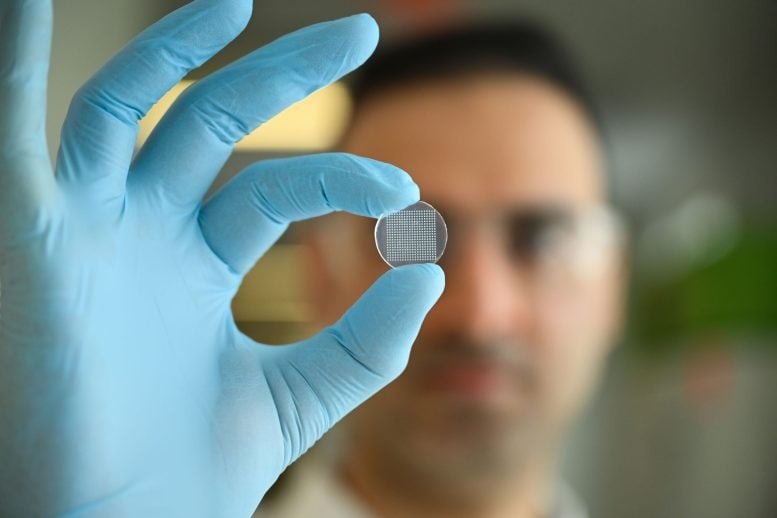
Getting a skin biopsy to check your immune system feels medieval—scalpels, stitches, and permanent scars just to see what’s happening in your tissue. But researchers from The Jackson Laboratory and MIT just cracked the code on painless immune monitoring with a quarter-sized patch that does the job in minutes, no scarring required.
How This Bandage-Like Device Actually Works
Microscopic needles sample immune cells without hitting nerves or blood vessels.
The microneedle patch contains hundreds of FDA-approved polymer needles coated with seaweed-derived hydrogel—think of it as a smart Band-Aid that actively hunts for immune information. These microscopic needles penetrate only the skin’s surface layers, avoiding the painful stuff entirely. Here’s the clever part: the patch briefly reactivates tissue-resident memory T cells with a small amount of antigen, causing them to release signals that recruit additional immune cells from your bloodstream directly to the patch site. The hydrogel then absorbs these cells and inflammatory markers for analysis. You get results that previously required surgical biopsies, but the whole process takes 15 to 30 minutes for basic inflammatory signals and just hours for specialized immune cells.
From Lab Mice to Human Patients in Record Time
First successful human immune cell sampling marks unprecedented speed from research to clinical testing.
Most biotech breakthroughs languish in mouse studies for years before touching human skin. Not this one. Sasan Jalili’s team at JAX achieved something remarkable: “This study marks the first demonstration of live human immune cell sampling using a microneedle patch,” Jalili noted. The human validation at UMass Chan Medical School collected thousands of live immune cells per patch, including the hard-to-reach tissue-resident memory T cells that blood draws completely miss. Meanwhile, Darrell Irvine from Scripps Research emphasized the timeline breakthrough: “Moving new technologies from the lab to testing on patients often takes years.” This patch jumped that gap faster than expected.
Real-World Applications Already Underway
Current research spans aging, autoimmune diseases, and future vaccine monitoring.
Researchers aren’t waiting around—they’re already using patches to study immune monitoring in aging adults and autoimmune skin conditions like vitiligo and psoriasis. The applications extend far beyond current capabilities:
- Vaccine response tracking
- Infection monitoring
- Cancer immunotherapy assessment
- Home-based immune surveillance for patients with unpredictable flare-ups
This matters especially for vulnerable populations who struggle with traditional diagnostics—frail elderly patients, young children, and anyone dealing with sensitive facial areas where surgical scars aren’t acceptable.
The patch won’t replace blood tests or eliminate all biopsies, but it fills a massive diagnostic blind spot that’s plagued immunologists for decades. You finally get access to the immune cells that actually live where diseases happen—in your tissue, not your bloodstream.