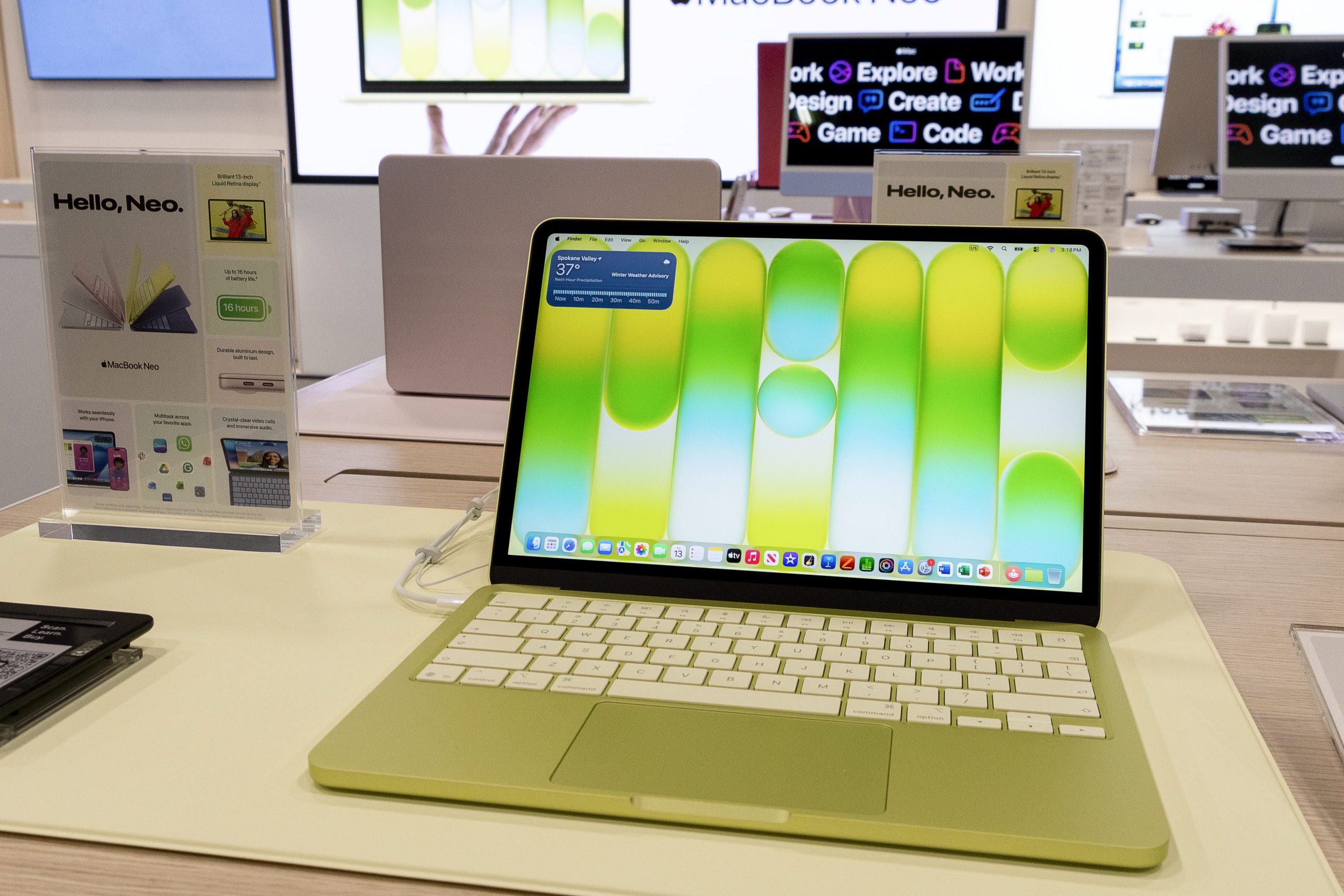
Your laptop shopping just got more complicated. Microsoft commissioned Signal65 to produce a “Value Advantage Report” directly targeting Apple’s $599 MacBook Neo—a defensive move that screams competitive anxiety louder than a dropped MacBook on concrete. The study claims Windows laptops deliver double the RAM and up to 56% better battery life for similar money. But here’s where things get messier than your desktop after a software update.
The Numbers Game Gets Complicated
Independent testing reveals the sponsored research’s selective storytelling
Signal65’s headline claims sound impressive: 16GB RAM versus the Neo’s 8GB, superior battery endurance, and comparable pricing. Tom’s Guide’s independent testing tells a more nuanced story. Their MacBook Neo lasted 13 hours and 28 minutes, while some Windows competitors like the Lenovo IdeaPad Slim reached 16+ hours. Plot twist: the HP OmniBook X Flip managed only 8 hours and 32 minutes—substantially worse than Apple’s offering.
The battery advantage often comes from larger 15-inch Windows laptops versus the Neo’s compact 13-inch design. It’s like comparing a Tesla Model S to a Mini Cooper and declaring victory based on trunk space.
Build Quality Reveals the Real Story
Specs don’t capture the experience gap that matters most
Fstoppers compared the $600 MacBook Neo directly against a similarly priced Asus Vivobook and found the Windows machine “feels cheap and flimsy by comparison.” The Neo delivered superior keyboard, trackpad, display quality, and USB-C speeds—twice as fast as the competition. As one reviewer noted, the Neo provides “better experience in almost every way; at least until you run out of storage.”
This highlights what MacSparky identified as the PC industry’s fundamental challenge: “You can match the price, or you can match the experience, but the economics of the PC industry make it nearly impossible to do both at once.”
What This Actually Means for Your Wallet
Sponsored research aside, your buying decision comes down to priorities
Microsoft’s commissioned study reveals genuine competitive concern about Apple’s budget market entry. The research isn’t wrong about specifications—Windows laptops do offer more RAM and storage at similar prices. But sponsored research always deserves skeptical reading, especially when it conveniently ignores build quality, user experience, and the reality that some Windows models significantly underperform Apple’s battery life.
Your choice ultimately depends on whether you prioritize raw specs or refined experience. Just remember: when a company pays for research attacking its competitor, the conclusions deserve the same scrutiny you’d give a restaurant review written by the owner’s cousin.