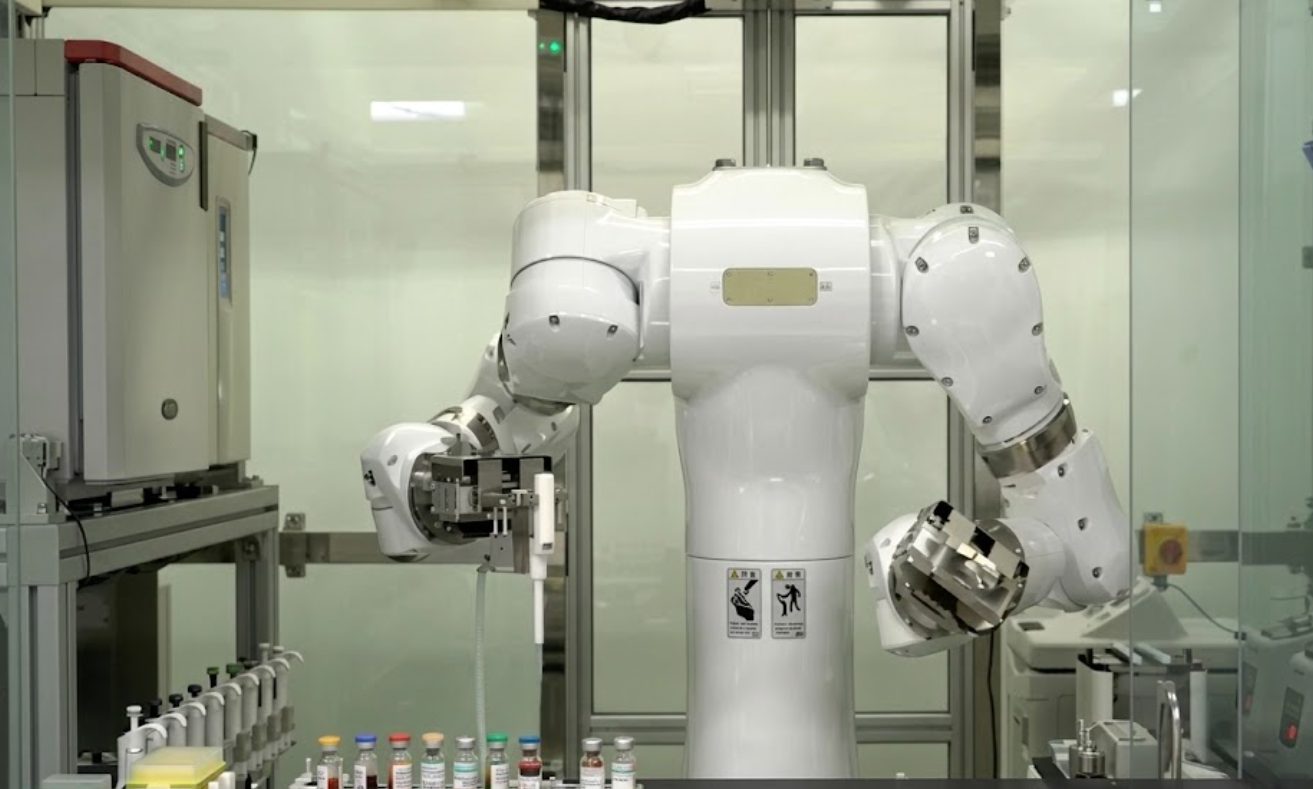
Japan just cracked the code on 24/7 medical research. Ten robots at Tokyo University of Science’s new Robotics Innovation Center handle complex experiments while human researchers sleep at home. This isn’t another tech demo gathering dust—it’s the world’s first fully unmanned medical lab, where humanoid machines pipette reagents and cultivate cells without supervision.
Precision Meets Persistence in Automated Research
The star performer, Maholo LabDroid, sports dual robotic arms that make human lab techs look clumsy by comparison. These machines handle temperature-controlled equipment, measure precise reagent volumes, and manage cell cultivation with the kind of consistency that would make a Swiss watchmaker jealous. Kobe Eye Hospital already uses these robots for stem cell research, proving this technology works beyond university walls. When you consider how many medical breakthroughs get delayed by simple scheduling conflicts, having machines that never take coffee breaks becomes game-changing.
From Lab Bench to Global Laboratory Revolution
Director Keiichi Nakayama wants to “utilize AI and robots to make Japanese science the world’s best”—and the numbers back up that ambition. The lab operates continuously, enabling experiments that would take months to complete with traditional 9-to-5 human schedules. By 2040, Japan envisions 2,000 robots conducting everything from hypothesis formation to final validation. Think of it like the autonomous vehicle revolution, except instead of driving cars, these machines are discovering your next medication.
Solving Real Problems While Others Talk Innovation
Japan’s approach tackles genuine industry pain points rather than chasing flashy headlines. Research labs worldwide face chronic staff shortages, while repetitive wet-lab work leads to costly human errors (anyone who’s ever pipetted the same solution 200 times knows this struggle). The humanoid design works with existing equipment—no need to rebuild entire facilities. Meanwhile, U.S. companies like Insilico Medicine deploy similar “Supervisor” robots for drug discovery, confirming this trend spans continents.
Your Future Health Tech Starts Here
This robot revolution extends far beyond university labs. Accelerated research timelines could slash drug development from decades to years, while AI-driven medical research insights might power the next generation of home health gadgets. When medical experiments never sleep, breakthrough treatments reach your medicine cabinet faster than ever before. You’re looking at the foundation for everything from personalized medicine apps to smart diagnostic devices that could eventually sit in your bathroom cabinet.