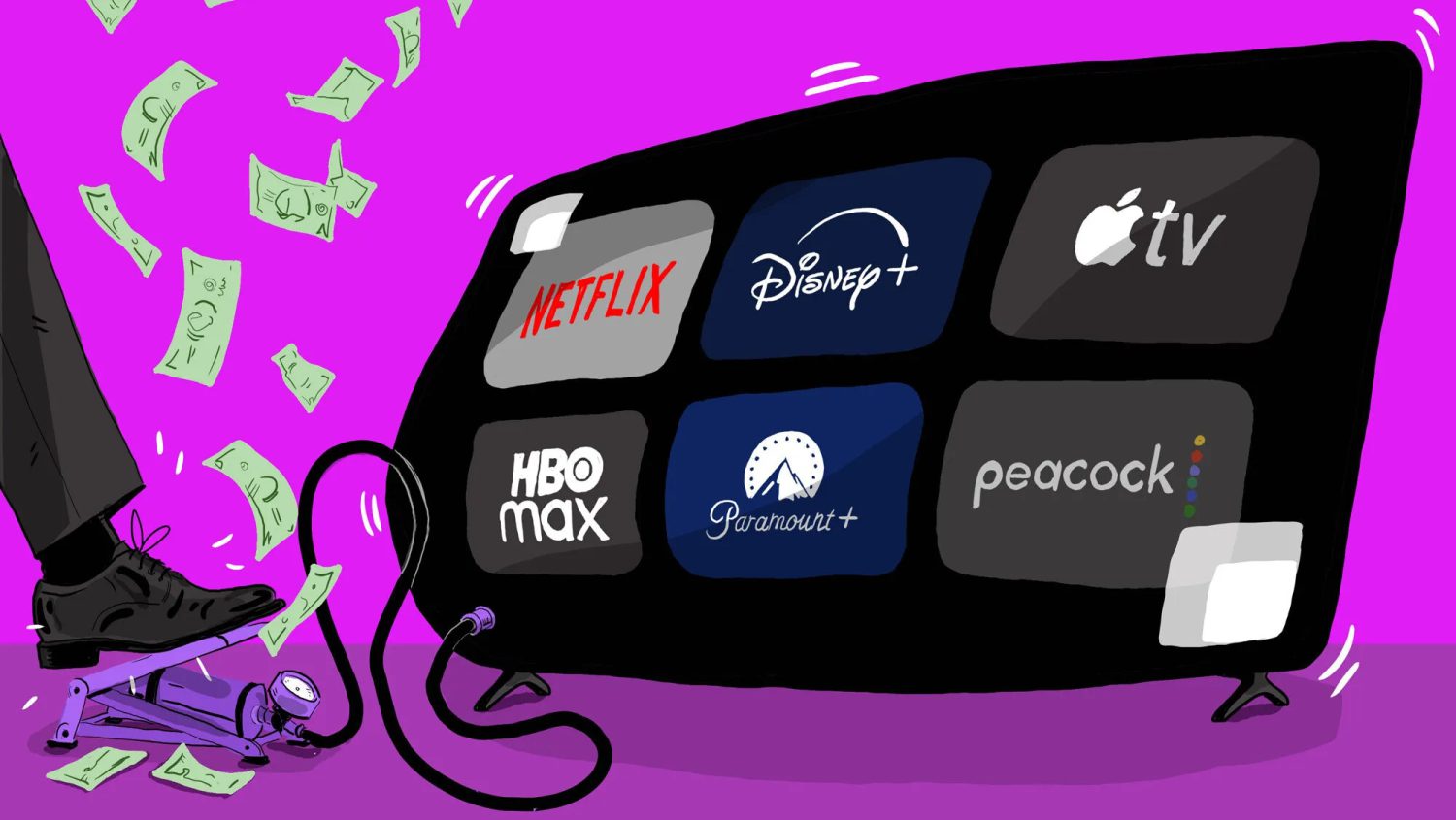
You cut the cable cord to escape a bloated bill and a company that treated you like a captive. Now your streaming stack costs roughly $151 a month if you want eight major services without ads, up from about $90 just four years ago, according to The Hollywood Reporter. That is not liberation. That is cable with a better interface.
The Streaming Price Index, which tracks 18 plans across eight major U.S. services, puts cumulative streaming price inflation at about 72% since 2019. General consumer prices rose 33% over the same period, and cable and satellite rose about 29 to 30%. Since 2022, streaming prices have risen more than three times as fast as inflation, a pace the old cable companies never managed.
The Numbers Don’t Lie
The service-by-service increases are blunt, and no single platform has been shy about them.
- Apple TV+ launched at $4.99 in November 2019 and now costs $14.99, a 200% increase in under seven years
- Disney+ opened at $6.99 ad-free; its ad-free plan hit $18.99 in October 2025, a 172% jump
- Netflix Standard ad-free sits at $19.99, with Premium at $26.99, roughly 150% above the $7.99 streaming-only plan from 2011 (according to Fortune and Apprupt price history data)
- Paramount+ Premium climbed from $9.99 to $13.99; its cheapest tier is up about 50% from the CBS All Access era
- Peacock raised its plans roughly 50% in the past year alone, according to Hollywood Reporter analysis
Even cable, which everyone treated as the villain, grew at about 3.9% annually, according to Bureau of Labor Statistics data analyzed by The Hollywood Reporter. Full cable packages from providers like Spectrum or DirecTV can still exceed $170 a month, but they got there gradually. Streaming got here in a sprint.
What You’re Actually Getting for It
More platforms, higher prices, and longer waits are the three things subscribers have reliably received in return.
Rights are split so aggressively across platforms that no single service covers what you want to watch. Many households find that rotating subscriptions is the practical answer, cycling through platforms based on marquee shows rather than keeping everything active year-round. That is a reasonable workaround, but it is also an admission that the original promise of streaming, one affordable service covering most of your viewing, is gone.
Then there is the wait. Services charge you every month, year-round, and then deliver two-plus year gaps between seasons of the shows that convinced you to subscribe. It is the streaming equivalent of paying a restaurant a monthly retainer and being told the kitchen is closed indefinitely. The business logic is real: studios face real cost pressure, production timelines are long, and investor patience for losses has expired.
The structural shift is not hard to trace. Services launched cheap to grab subscribers and spent heavily on originals and infrastructure. Now they answer to investors who want profits. The levers they pulled include higher ad-free prices, ad-supported tiers that trade your attention for a lower bill, bundles, and crackdowns on password sharing. Every one of those moves serves Hollywood actors and advertisers. The subscriber gets the invoice.
What Should Actually Change
The industry has a workable path forward, but it requires honesty about what subscribers are being asked to pay for.
Transparency is the starting point. Subscribers deserve straightforward pricing without constant promotional-rate bait-and-switch cycles, and content release cadences that justify a continuous monthly charge. Any service raising its ad-free price by double digits in a single year should publish a corresponding content calendar so subscribers can judge the value themselves. Bundles need to deliver real savings, not just obscure how much you are spending.
Your move in the meantime: run a bundle audit, consider an ad-supported tier, and rotate subscriptions around the shows you actually want. Streaming still beats cable on flexibility. The industry just needs to remember that flexibility was the whole point.