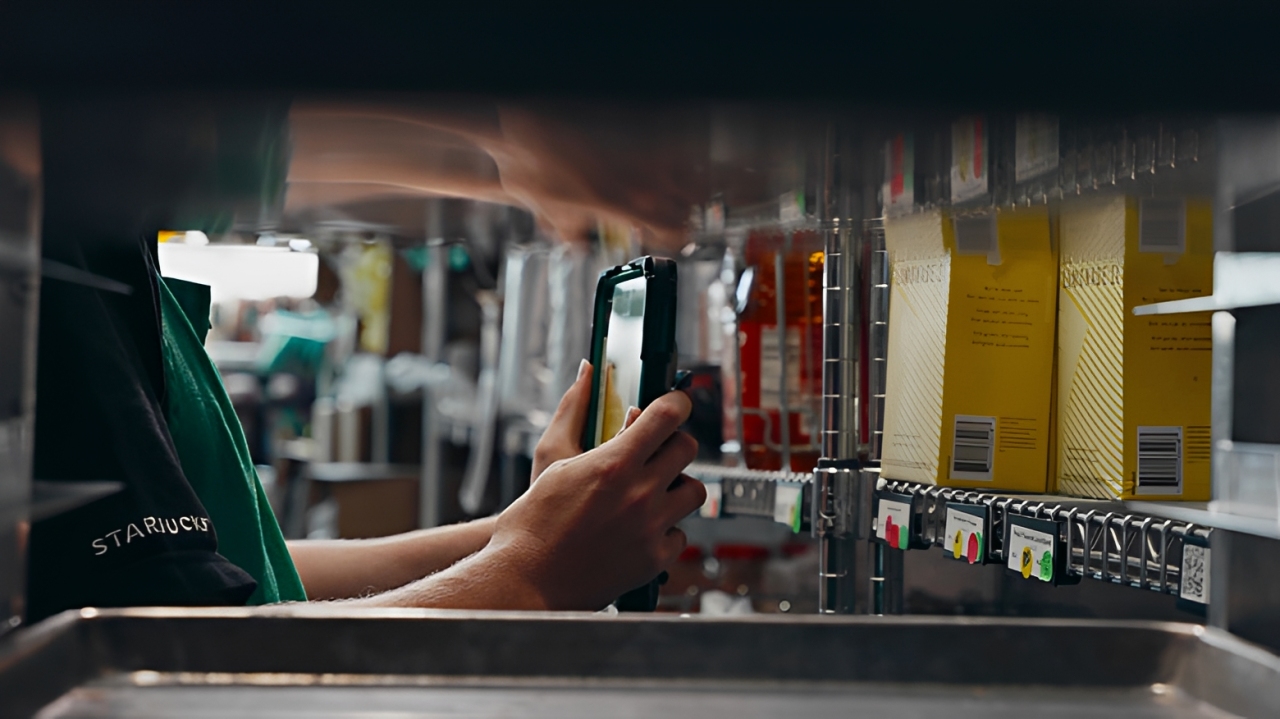
Your morning latte depends on accurate inventory counts, but Starbucks just discovered that AI can’t tell oat milk from regular milk—a problem that sounds minor until it cascades through an entire supply chain. After nine months of trying to make computer vision work for inventory management, the coffee giant quietly pulled the plug on its “Automated Counting” tool, sending baristas back to clipboards and manual tallies.
When Demo Videos Become Cautionary Tales
The AI system’s failure was visible from day one, literally.
The writing was on the wall—or rather, missing from the shelf. In Starbucks’ own promotional video last September, the Automated Counting system visibly failed to register a bottle of peppermint syrup as an employee scanned it. That awkward moment, meant to showcase seamless inventory management, instead foreshadowed exactly what would go wrong at scale.
Developed with computer vision startup Nomad Go, the system promised to liberate baristas from tedious back-room counting. Scan shelves with a handheld device, let AI identify syrups and milk cartons, and spend more time with customers.
The reality? Workers found themselves double-checking the AI’s work more often than trusting it.
The Domino Effect of Digital Miscounts
Wrong inventory numbers trigger expensive real-world consequences.
Computer vision struggling with similar-looking dairy products isn’t just a technical hiccup—it’s a supply chain nightmare. When your AI can’t distinguish between oat milk and whole milk, it triggers automatic reorders for products you don’t need while leaving you short on what customers actually want.
According to Reuters, employees celebrated the tool’s discontinuation. “Thanks for discontinuing Automatic Counting!” one worker wrote in an internal feedback channel. “The thought behind it was great, but the execution was proving difficult.”
Translation: this “smart” technology made their jobs harder, not easier.
Silicon Valley Meets Coffee Shop Reality
Retail environments expose AI’s brittleness in ways labs never could.
Starbucks isn’t alone in discovering that retail floors aren’t controlled laboratory conditions. Walmart scrapped its shelf-scanning robots in 2020 after concluding humans handled the job better. Amazon has been quietly pulling back from its cashierless “Just Walk Out” technology, replacing it with smart shopping carts that still require human oversight.
The pattern becomes clear: AI that works brilliantly in demos often crumbles when confronted with cluttered shelves, varied lighting, and the general chaos of real commerce. For front-line workers, a system that’s wrong even 10% of the time creates more problems than it solves.
The irony? While Starbucks abandons visible AI tools that baristas could blame for their failures, the company’s behind-the-scenes AI—forecasting demand, scheduling shifts—continues quietly doing what it does best: staying invisible until it works perfectly.