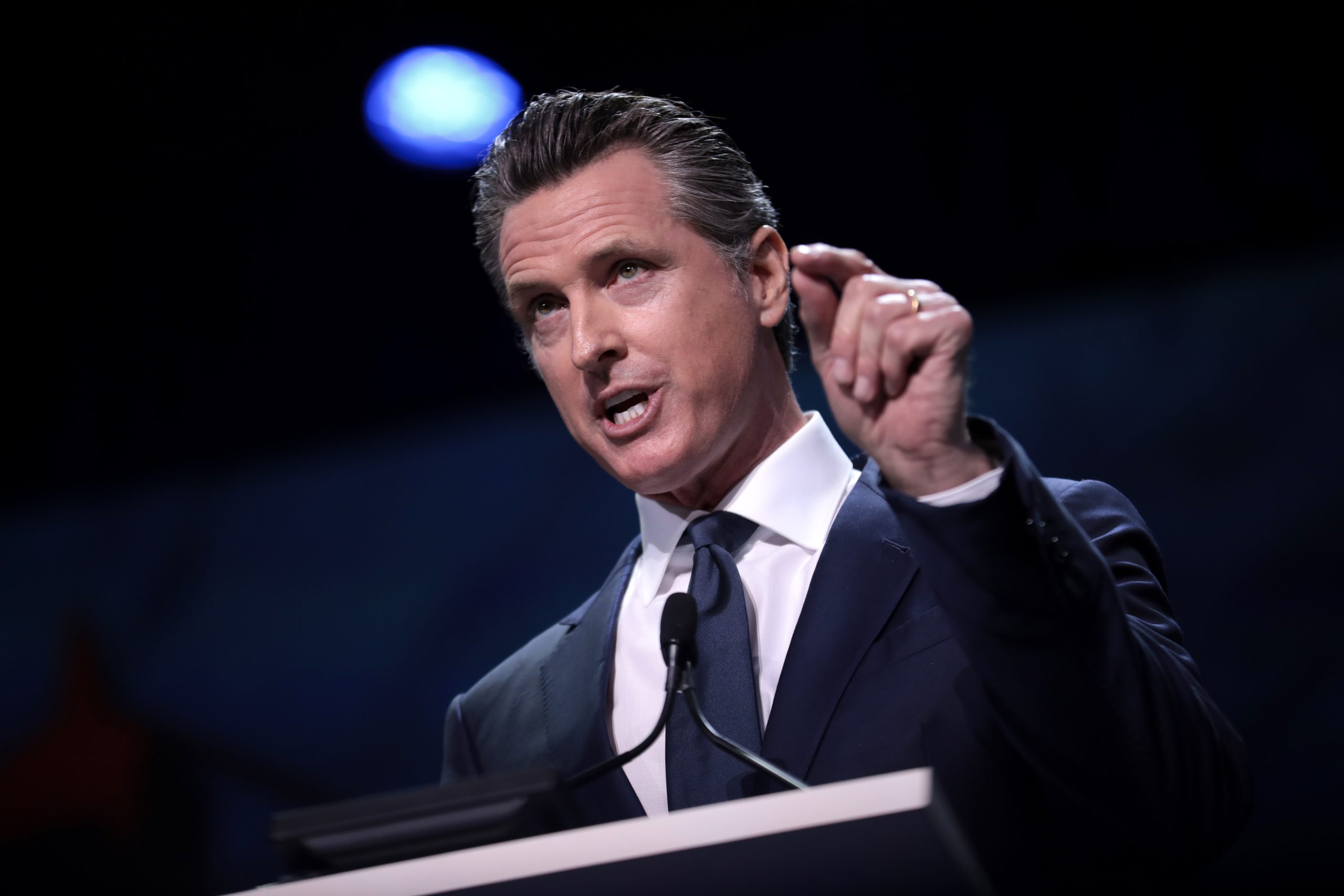
Your job security concerns about AI aren’t unfounded paranoia—they’re smart pattern recognition. Gov. Gavin Newsom just signed an executive order directing California agencies to study how artificial intelligence reshapes employment and identify concrete support for displaced workers. California’s filling a policy vacuum while tech companies simultaneously trumpet AI investments and announce layoffs, creating the exact contradiction workers fear most.
180-Day Safety Net Review Targets Real Worker Needs
Comprehensive policy review focuses on practical support, including severance packages and stock compensation options.
The order mandates a comprehensive review of safety-net policies within 180 days, zeroing in on severance packages and stock-based compensation for displaced workers. State officials must examine ways to strengthen temporary cash assistance and boost enrollment in California’s Work Share program—which lets employers cut hours instead of jobs while workers keep their positions and collect unemployment benefits. Within 90 days, California launches an employment dashboard tracking AI’s sectoral impact using unemployment insurance data.
Worker Ownership Models Enter the Conversation
Economic development team explores employee-owned companies as a strategy for spreading AI-generated wealth.
Newsom’s economic development team received orders to study worker-ownership models, including supporting employee-owned company formation and ownership conversions. The goal? Spreading wealth created by AI productivity gains rather than concentrating it among shareholders. The order also seeks recommendations from universities and the private sector on directing AI revenue toward beneficial deployments and research capacity—essentially asking how to make AI advancement serve the public good.
Meta and the Layoff-AI Investment Paradox
Tech giants cite AI investment while cutting headcount, reinforcing the narrative that automation directly threatens jobs.
The contradiction playing out in real time makes California’s action urgent. Companies like Meta announce AI investments in one breath and layoffs in the next, creating a narrative where artificial intelligence directly threatens employment. California’s move comes amid broader concern that AI may accelerate white-collar job disruption even as the overall unemployment rate remains relatively low. California sits at this contradiction’s epicenter—both an AI innovation leader and a tech layoff ground zero.
State Experiment Meets Policy Vacuum
Whether state-level interventions can meaningfully offset AI-driven displacement remains an unproven experiment.
Whether Work Share expansion, employee ownership, and enhanced cash assistance can meaningfully counter AI-driven displacement remains an open question. This represents a policy experiment, not a settled solution. California is betting that state-level action can bridge the gap between technological acceleration and human adaptation while federal leadership remains focused on AI race positioning rather than comprehensive worker protection strategies.