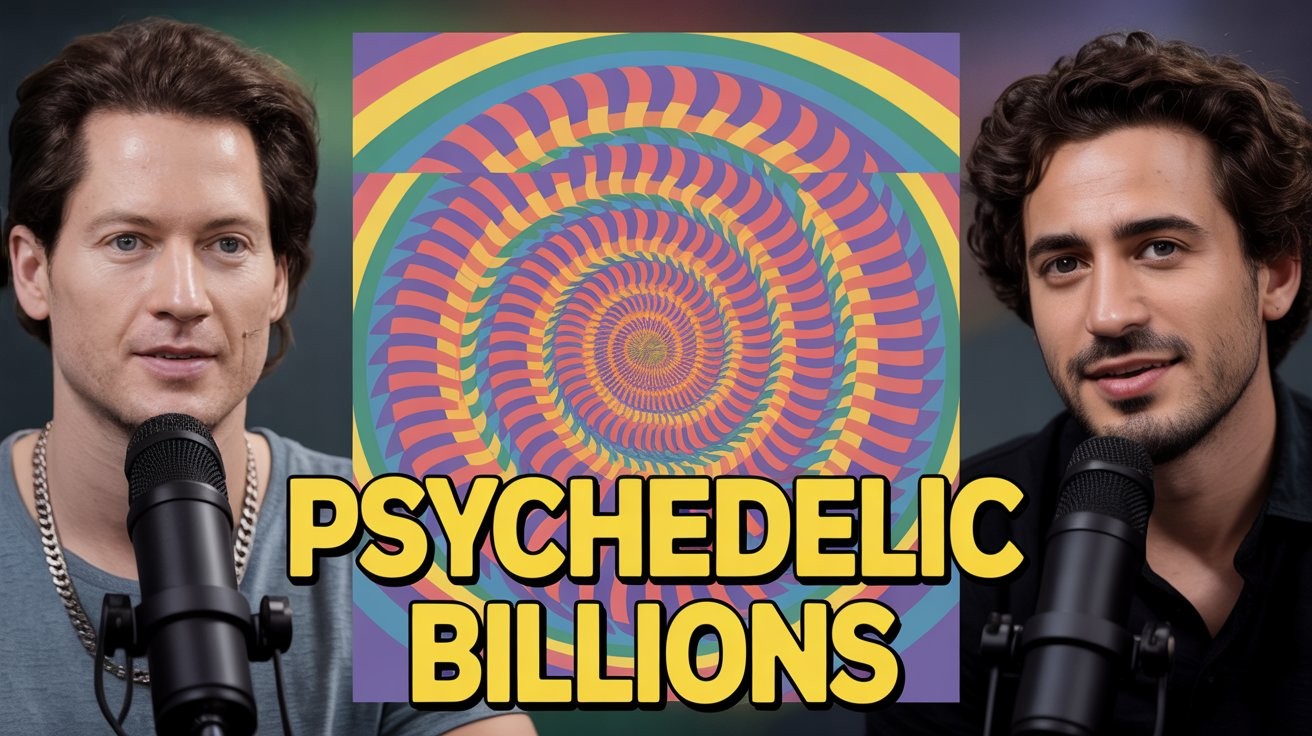
Your favorite productivity-obsessed CEO is microdosing. Your biohacking neighbor tracks everything from sleep stages to glucose spikes. Now they’re both chasing the same dragon: psilocybin as a longevity hack. But here’s the uncomfortable truth nobody wants to admit—we’re flying blind.
Research Shows Promise, Reality Shows Gaps
Laboratory breakthroughs don’t translate to your bathroom scale.
The science looks compelling on paper. Emory and Baylor researchers found psilocybin extending cellular lifespan in lab dishes and aging mice. Their findings suggest the compound activates longevity pathways similar to those targeted by proven interventions.
Yet jumping from petri dishes to personal protocols represents a gap wider than the one between your Apple Watch readings and actual health outcomes. You know that feeling when your fitness tracker congratulates you for “closing your rings” while you’re winded climbing stairs? That’s essentially where psilocybin longevity research sits right now.
The Quantified Self Meets Unquantified Risk
Biohackers are running experiments without proper controls.
Self-experimenters document everything—heart rate variability, inflammatory markers, cognitive benchmarks—with the precision of NASA mission control. The irony cuts deep: people obsessed with data are making decisions based on glorified anecdotes.
Your Oura ring can’t measure what matters most here. Without randomized controlled trials, that meticulously tracked biomarker data becomes expensive noise. It’s like trying to optimize your smartphone’s battery life by only monitoring the weather app—you’re measuring something, but not the right something.
Tech Money Chases Unproven Promises
Venture capital flows toward psychedelic startups despite regulatory uncertainty.
Silicon Valley loves disruption, especially when it involves consciousness and optimization. Psychedelic medicine companies attract hundreds of millions in funding while actual longevity applications remain theoretical.
Like blockchain before it, psilocybin research gets treated as inevitable rather than experimental. The difference? Blockchain couldn’t accidentally trigger psychosis in vulnerable users. When your investment thesis involves altering brain chemistry, maybe the “fake it till you make it” approach needs some reconsideration.
When Innovation Outpaces Evidence
The tech industry’s move-fast-and-break-things mentality doesn’t work for human biochemistry.
Your smartphone gets software updates; your brain doesn’t. The same venture-capital logic that launched a thousand failed apps now funds companies promising to hack aging itself.
Until human clinical trials specifically target longevity outcomes, enthusiasts are essentially beta-testing their own mortality. Some bugs you can’t patch with a restart—especially when the error messages show up as psychiatric episodes or unexpected drug interactions.
The psilocybin longevity story exemplifies Silicon Valley’s eternal tension between breakthrough potential and premature adoption. Real innovation requires patience—something the tech world rarely demonstrates when the next big thing beckons. You wouldn’t install beta software to run your nuclear reactor, yet here we are, treating human longevity like an app store experiment.