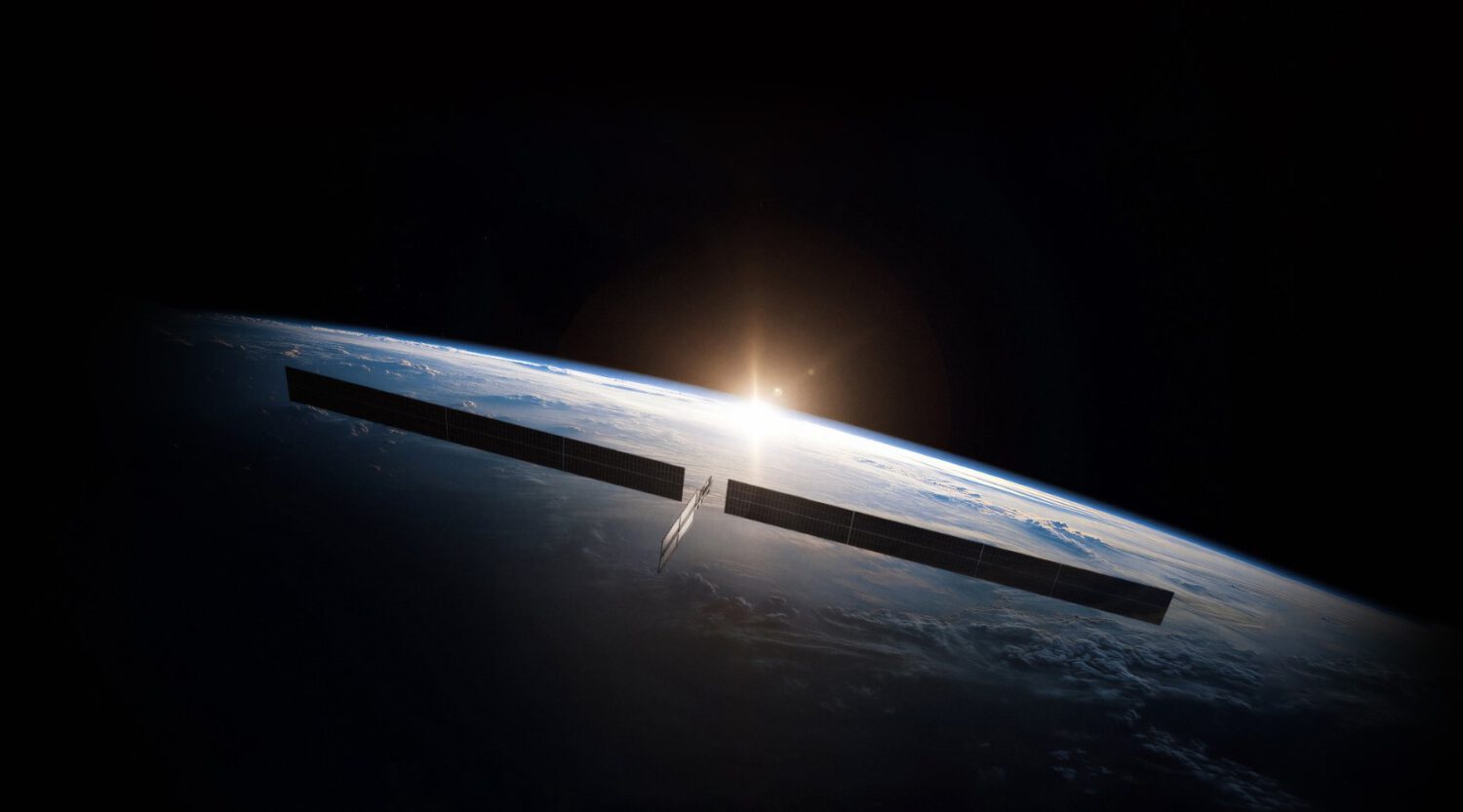
Putting data centers in orbit trades one pollution problem for a set of poorly understood ones higher up. That is the central projection of a preprint by University College London researchers Eloise Marais and Connor Barker, who modeled the atmospheric consequences of SpaceX’s reported concept for a constellation of up to one million orbital data centers. The study is awaiting peer review for publication in Earth and Space Chemistry, and its figures should be read as modeled estimates, not confirmed measurements.
Launch Cadence Nobody Has Attempted
The projected launch rate would be extraordinary compared with any existing rocket program.
Marais and Barker modeled SpaceX’s Starship Block 4 as carrying at least 200 metric tons to orbit per mission. Under that assumption, the constellation would require at least 5,000 Starship launches per year, roughly 14 every day, against a global baseline of approximately 330 orbital rocket launches recorded in the prior year.
Exhaust and Methane at Scale
Emissions from launches alone could exceed today’s total by a factor of more than 150.
The researchers estimate that this launch cadence would push total rocket-launch emissions more than 150 times above 2025 levels. Continued methane venting from Starship during fueling and after landing could release approximately 60,000 metric tons of the gas annually under the modeled scenario, assuming venting behavior similar to that observed during supersonic flight test flights.
The Reentry Problem Is Separate and Serious
Spacecraft burning up on the way back down may pose as much atmospheric risk as the launches themselves.
At the projected spacecraft replacement rate, an old unit would burn up in the atmosphere approximately every three minutes. The researchers estimate this would vaporize around 200,000 metric tons of spacecraft material per year, more than 200 times the total reentry mass recorded in 2024, assuming the relevant fraction of spacecraft does not reach higher disposal orbits.
Metal Vapors and Ozone
Vaporized aluminum and other metals may trigger chemical reactions in the stratosphere that science has not fully mapped.
Reentry releases metal-containing particles, including aluminum compounds, that researchers warn could catalyze ozone-depleting reactions. Nitrogen oxides from spacecraft reentries are projected at 70 to 150 times current baseline levels. Researchers also flagged risks to stratospheric aerosols (fine particles that reflect sunlight and affect temperatures), mesospheric nitrogen chemistry, and surface air quality.
A Structural Information Gap
Regulators cannot assess what companies will not disclose.
SpaceX has not released booster emissions data or detailed spacecraft material inventories, so Marais and Barker had to rely partly on estimates derived from NASA’s Space Shuttle program to build their models. The resulting projections are sensitive to assumptions about propellant behavior, spacecraft mass, and reentry rates, and several critical variables remain undisclosed or uncertain.
What Researchers Are Asking For
Disclosure requirements, not a ban, are the immediate ask.
Marais and Barker are calling on companies to publish propellant composition, methane-venting practices, spacecraft materials, reentry rates, and disposal plans. That information would allow regulators to conduct genuine environmental-impact assessments before deployment reaches anything close to the proposed scale.
The Concept Has Not Been Approved
The available reporting describes this as a proposal or filing, not an operating constellation.
The study documents modeled projections tied to a speculative design, not measured outcomes from an operating system. Available reporting describes the constellation as a proposal or regulatory filing; no confirmed approval or financing has been reported.
A Governance Architecture Built for Smaller Problems
Oversight responsibility is divided among multiple regulatory domains, raising serious questions about cumulative review.
Atmospheric pollution, launch licensing, orbital debris, ozone protection, and climate impacts fall under separate agencies with separate mandates. A constellation of one million spacecraft, with thousands of annual launches and continuous reentries tied to the assumed replacement rate, would stress every one of those frameworks simultaneously. No single institution is currently positioned to evaluate the cumulative effect of AI data centers and orbital infrastructure on existing regulatory systems.