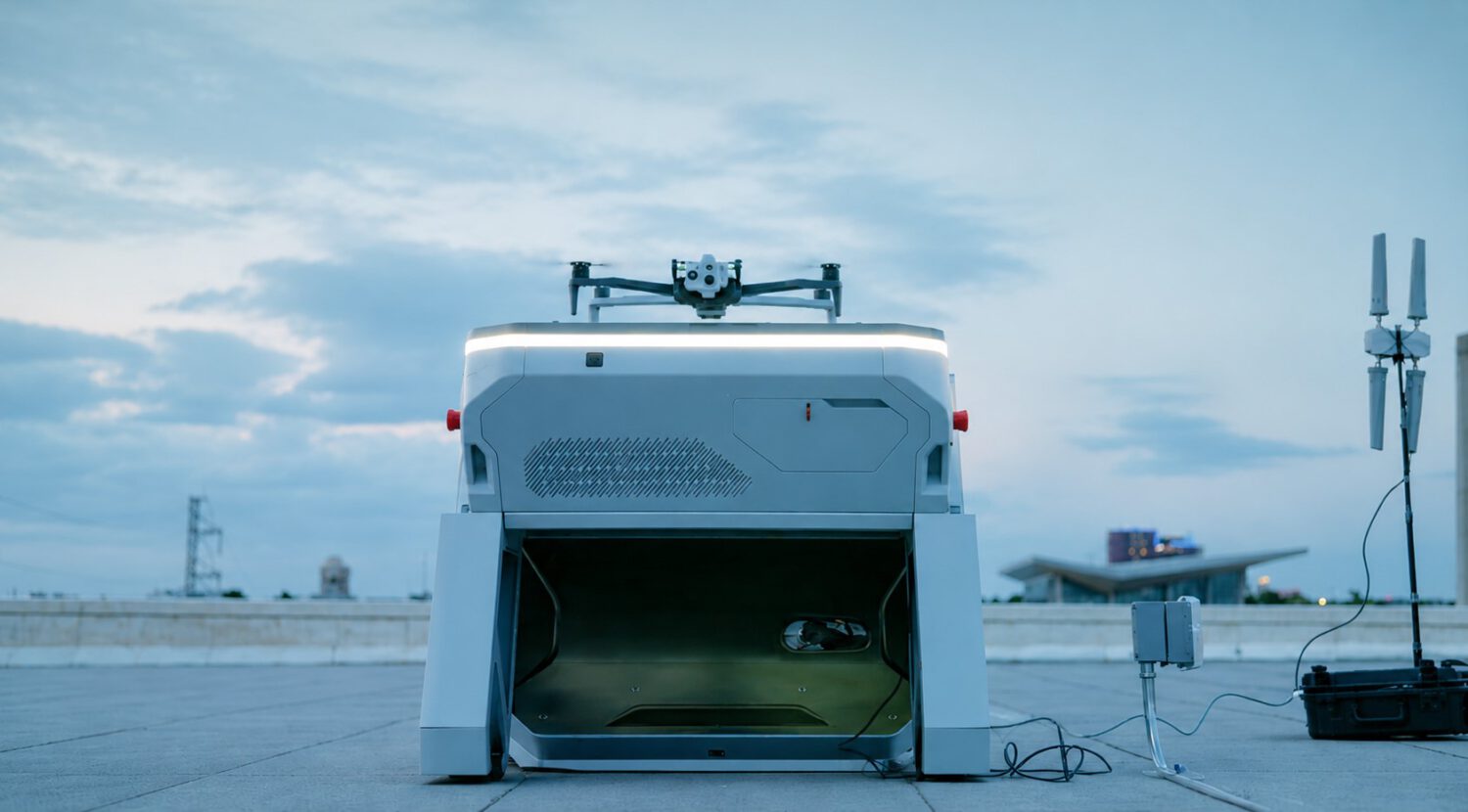
Starting November 19, 2026, the Knoxville Police Department will dispatch drones to 911 calls across the city, sending live aerial footage to officers before they reach a scene. Twelve Skydio docking stations installed at city-owned facilities can place a surveillance app-era concern into focus , a drone over almost any area of Knoxville within 90 seconds or less.
How the Network Is Built
Twelve fixed docks spread across Knoxville form the backbone of a rapid-response aerial network.
Each dock covers roughly a two-mile radius, and KPD distributed the 12 stations across the city to provide broad coverage. Pilots inside KPD’s Real Time Information Center remotely launch and operate the aircraft from those fixed locations.
Knoxville City Council approved an amended contract with Axon Enterprises in January 2026 that added Skydio hardware and software to establish the system. The project began that month, with the November 19 launch following the installation and configuration period.
The Problem KPD Is Trying to Solve
Chief Paul Noel points to inaccurate or rapidly shifting information as one of the most persistent challenges officers face when responding to calls.
The drones are designed to feed live video to field personnel before or while they arrive, giving responders a clearer picture of conditions on the ground. Planned uses extend beyond police calls; KPD says the system will also support fire responses, citywide emergencies, special-event safety, and damage assessment after severe weather.
What the Policy Permits and Prohibits
KPD’s revised Unmanned Aircraft Standard Operating Procedure sets specific boundaries on when and how the drones can be used.
Flights are limited to emergency calls for service and uses authorized under Tennessee law, and the policy prohibits random patrols and passive surveillance. The SOP also states that the aircraft will not loiter to passively gather data as part of a generalized surveillance platform.
The drones are not equipped for facial recognition and do not collect automated license-plate-recognition data, according to the SOP. Footage is purged after 15 days unless retained as evidence for an ongoing criminal investigation or prosecution.
All DFR flights are subject to internal audits. A public transparency dashboard is expected to log when and where deployments occurred, along with a basic description of why each flight was launched , raising questions similar to concerns about apps secretly tracking users without meaningful public oversight.
What Other Agencies Have Reported
KPD cites outcomes from other departments that have adopted similar programs, though those results do not predict what Knoxville will see.
KPD says departments around the country that have adopted similar programs reported faster response times and improved case-clearance rates. Those agencies also cited more incidents resolved without an officer on scene and reduced use of force. These are KPD’s characterizations of other agencies’ experience, not independently verified findings or guaranteed results for Knoxville.
Independent evaluation of this program will require tracking the city’s own data over time: drone and officer arrival times, deployment frequency, incident outcomes, and whether aerial information demonstrably changes field decisions.
The Test That Follows the Launch
KPD frames this as a targeted emergency-response tool, and the policy language supports that framing; what matters now is whether practice matches the policy.
Whether it holds depends on what the flight logs actually show and how completely the public dashboard is maintained. It also depends on whether the stated prohibitions are enforced consistently across different neighborhoods and call types , a challenge that echoes San Jose’s Flock Problem with municipal surveillance accountability. The technology goes live on November 19, and the accountability record begins the same day.