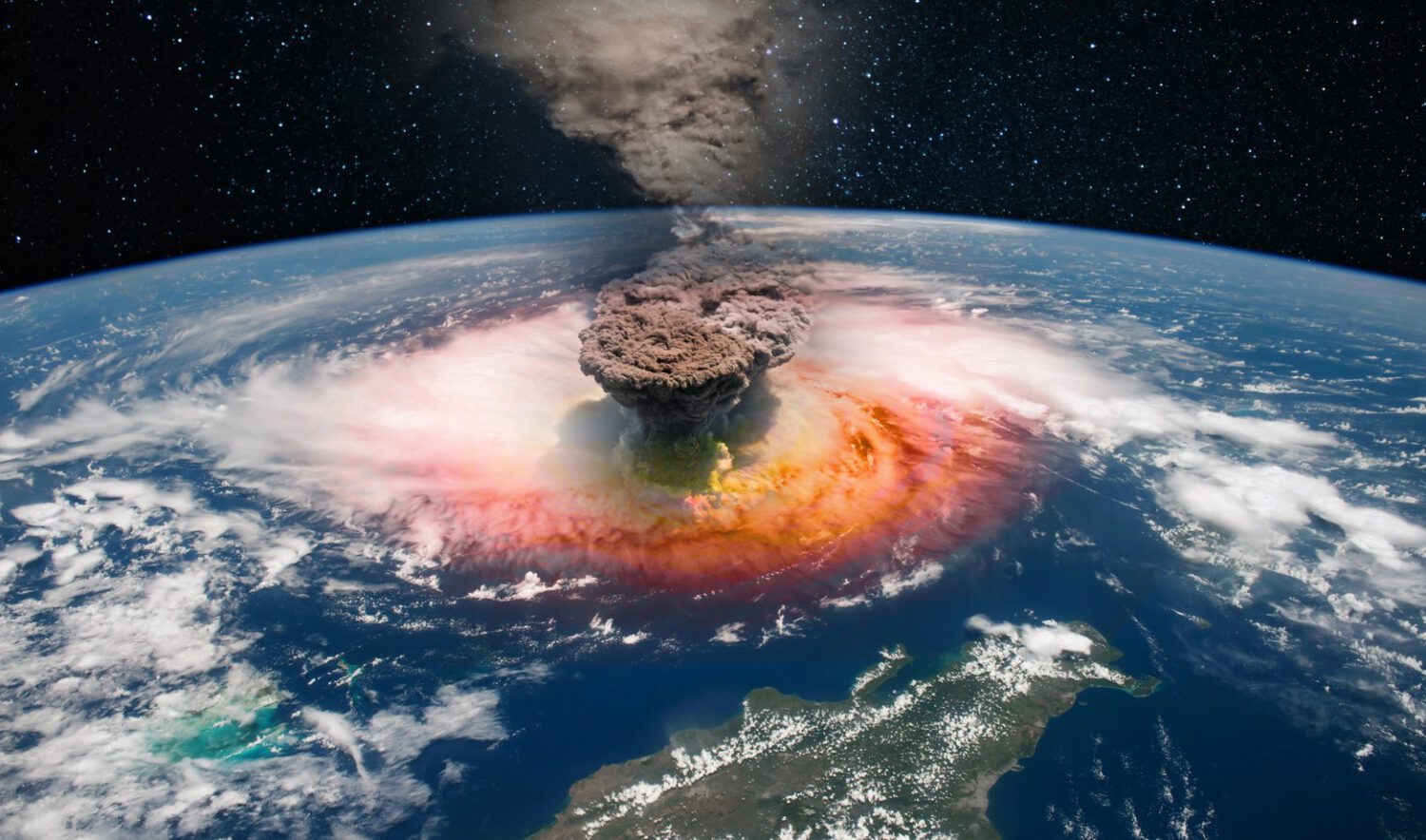
On July 8, 1962, the United States detonated a nuclear weapon roughly 400 kilometers above the Pacific in a test called Starfish Prime. The explosion produced a visible artificial aurora, disrupted Pacific radio links, and caused streetlight failures in Hawaii, according to DW reporting. Within months, seven satellites had failed, primarily through solar-cell damage, a NASA technical report states.
How the Damage Keeps Coming
The delayed radiation mechanism, not the initial flash, is what disables spacecraft.
Above Earth’s atmosphere, the first X-ray burst from a detonation hits satellite electronics without the shielding that protects people on the ground. More consequentially, the explosion releases energetic electrons that become trapped in Earth’s magnetic field. Those electrons form an artificial radiation belt that can persist for weeks, according to NASA records on the Starfish Prime event.
Satellites passing through that belt accumulate exposure gradually, their solar panels and electronics degrading long after the original detonation. Telstar, launched one day after the Starfish Prime test, was among the damaged spacecraft, NASA records confirm. It encountered an altered orbital environment rather than the blast itself.
The Services That Depend on This Infrastructure
GPS orbits at roughly 20,200 kilometers, but its vulnerability depends heavily on blast geometry and yield.
Whether GPS remains functional after a detonation would depend on blast altitude, yield, radiation distribution, and which orbital paths intersect the affected region, according to DW. Beyond navigation for drivers, aircraft, and ships, GPS provides precise timing signals that many financial networks and infrastructure systems use to synchronize operations, though those systems often rely on redundant timing sources as well.
Some emergency beacons use GPS to determine position and a separate satellite network to transmit that location to rescuers. A failure in either layer could delay a response, DW notes. Weather observation, communications, and internet connectivity would also be at risk, though the disruption would likely be uneven rather than a universal blackout.
Debris and the Compounding Problem
Disabled satellites become hazards in their own right, not simply losses.
Radiation may leave spacecraft unable to maneuver without destroying them outright. Those uncontrolled vehicles can later collide with functioning satellites, producing fragments that trigger further collisions, a phenomenon known as Kessler syndrome. Whether a detonation would initiate a full self-sustaining cascade remains uncertain. A significant debris cloud would still complicate any effort to launch replacements into the same orbital region.
What the Explosion Would Not Do on the Ground
The primary danger is infrastructure disruption, not concentrated fallout.
A space detonation would not sweep up soil and water the way a surface blast does, so concentrated local fallout is unlikely. Some radioactive particles would eventually enter the atmosphere, but they would disperse and lose intensity over time, according to DW. The principal public risk is disruption to the services that satellites support.
Treaties and Their Limits
The legal prohibitions are clear; enforcement relies on deterrence rather than inspection.
The 1967 Outer Space Treaty bars parties from placing nuclear weapons in orbit. The 1963 Limited Test Ban Treaty prohibits nuclear explosions in space for its parties. Neither treaty includes a comprehensive inspection system for verifying what a spacecraft carries, though a detonation itself is detectable because monitoring satellites are designed to identify the characteristic signals such an event produces, DW reports.
Resilience Is Real but Partial
Hardened components and ground-based backups help, but replacements may face a hostile environment.
Radiation-hardened electronics, redundant satellite constellations, and terrestrial backup systems reduce vulnerability without eliminating it. Aircraft over the United States can revert to certain ground-based navigation aids during a GPS outage. Replacement satellites launched into an affected orbital region before the radiation environment decays could face the same hazards that damaged their predecessors.