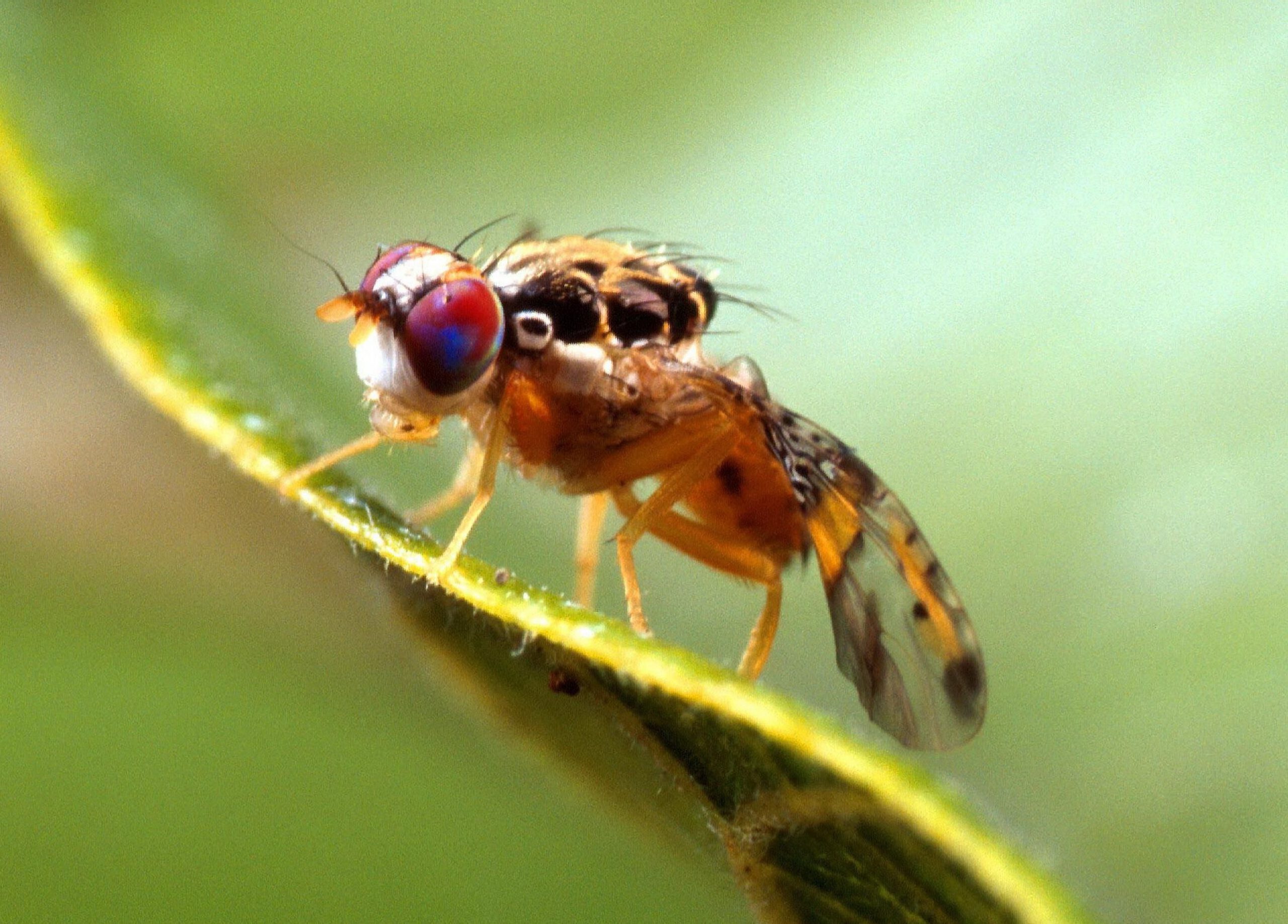
A complete fruit fly brain now controls a virtual body, walking and grooming exactly like its biological counterpart. Eon Systems announced this breakthrough on March 7, 2026, marking the first time scientists have successfully emulated an entire brain—all 139,255 neurons and 50 million synapses—to drive complex behaviors in a digital environment. Unlike AI systems that learn through training, this simulated brain uses the actual wiring from a real fly to produce natural movements.
Real Brain Architecture Drives Virtual Actions
The digital fly walks, grooms, and navigates using biological neural pathways, not programmed responses.
The achievement builds on Philip K. Shiu’s Nature study validating that specific neural connections encode behaviors with 91-95% accuracy. When researchers scrambled the brain’s wiring, behavioral accuracy dropped to just 1%—proving that the precise biological architecture, not random connections, drives actions. Your ghost-in-the-machine fantasies just became scientific reality.
The virtual fly operates through the NeuroMechFly v2 simulation platform, complete with compound eye vision and antennal sensing. This isn’t just movement replication—it’s genuine sensory-motor integration producing coordinated behaviors that emerge naturally from the connectome’s structure.
Beyond Training Algorithms
This approach differs fundamentally from AI systems that learn behaviors through repetition.
While companies like DeepMind train AI to mimic fly movements, Eon Systems copied the actual connectome from the FlyWire project—a decade-long effort mapping every neural connection in unprecedented detail. The virtual fly exhibits tripod gaits, postural corrections, and coordinated grooming sequences purely from its inherited biological programming. No reinforcement learning required.
The difference matters for your future tech. Brain-based systems could operate more efficiently than current AI, requiring less computational power while producing more natural, adaptive responses to complex environmental challenges.
Mouse Brains Are Next
Scaling to 70 million neurons could unlock applications for human brain interfaces and medical research.
“This really suggests that getting a mouse connectome will be incredibly valuable,” according to Shiu. Mouse brain emulation represents the next frontier, potentially revolutionizing drug testing and brain tissue interface development. The implications stretch from treating neurological disorders to creating more efficient AI architectures based on biological principles rather than computational brute force.
The technology positions us at an inflection point where digital consciousness moves from science fiction to laboratory reality. As Alex Wissner-Gross, Eon’s co-founder, puts it: “The Singularity has belonged exclusively to artificial minds, until now.” Your future devices might soon run on brain-inspired architectures that think more like you do.