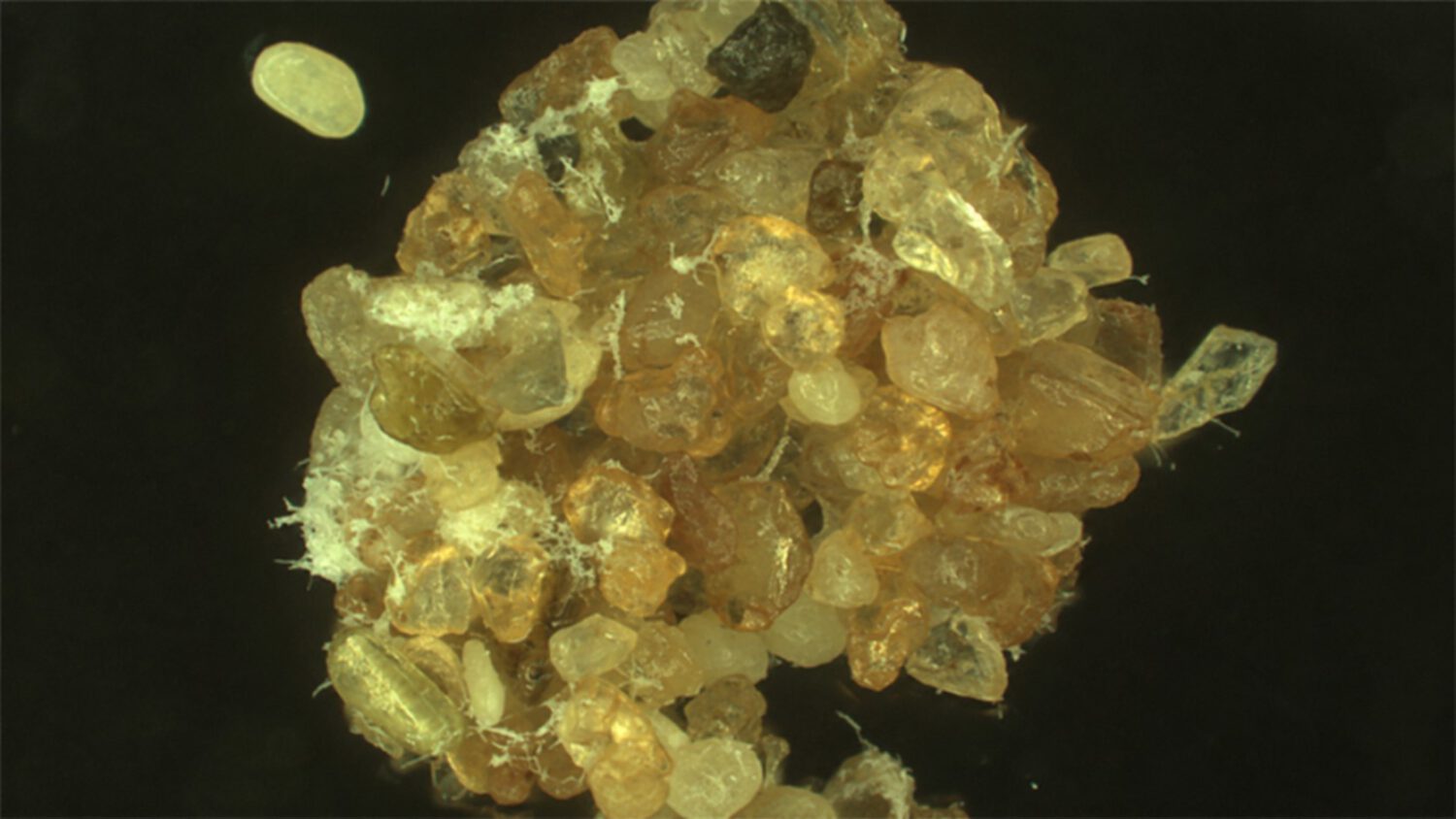
Desert sand loses water rapidly, making sustained agriculture difficult without costly, continuous irrigation. A new study published in Carbohydrate Polymers suggests bacteria and fungi could reduce that drainage, at least in a laboratory setting.
Two Institutions, Two Organisms, One Core Idea
Researchers from Empa and Khalifa University introduced selected microorganisms into sand and measured changes in cohesion and water movement.
The institutions involved are Empa (Swiss Federal Laboratories for Materials Science and Technology) and Khalifa University. The organisms studied were the cellulose-producing bacterium Komagataeibacter medellinensis and two strains of the fungus Schizophyllum commune.
Fibers Between Grains
As the microbes grew inside sand samples, they produced biopolymers that formed fiber networks between grains, adding cohesion and organic matter.
Biopolymers are materials generated by living organisms. Gustav Nyström, head of Empa’s Cellulose and Wood Materials laboratory and a study co-author, described the result as “a kind of natural composite material.”
Two Approaches, Two Sets of Results
The team tested two distinct methods, and each produced measurably different results for water movement and retention.
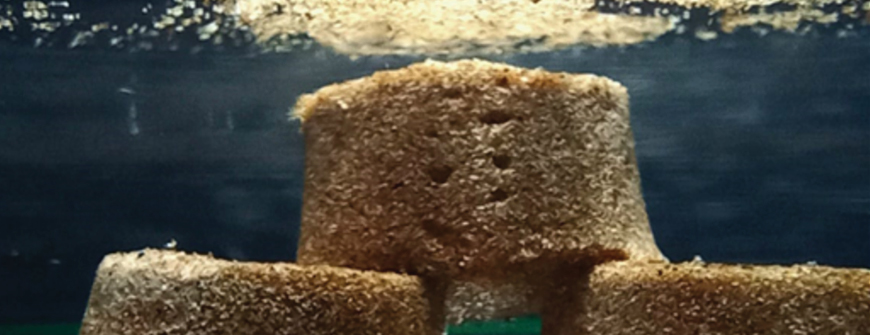
In the first approach, microbes grew directly within the sand. That treatment slowed water movement by up to roughly six times and raised water retention from about 20.2% to about 25.5%, based on secondary reporting of the study’s experimental data. In the second approach, bacterial nanocellulose was grown into thin mats and placed between sand layers. Bacterial nanocellulose is an extremely fine fiber material produced by bacteria; the mats functioned as biological geotextiles, which are fabric-like materials used to control soil and water movement. That layered approach produced the headline result: water permeability reduced by a factor of 28.
What “28 Times” Actually Means
The 28-fold figure describes reduced water permeability in layered laboratory samples, and it should not be read as a field performance guarantee.
The result does not describe a yield increase or confirm that treated sand retains water 28 times longer under real desert conditions. The layered method also requires producing the cellulose sheets separately before installation, adding labor and processing steps that the direct-growth approach avoids.
A Starting Point, Not a Finished Soil
The researchers frame microbial sand treatment as an initial step toward soil development, not a completed agricultural substrate.
The proposed sequence is incremental: use microbial treatment to introduce organic matter and structure first, then allow further biological colonization over time. As Nyström put it, “This approach allows us to introduce organic matter and water into the sand and stabilize it somewhat.”
The Limits Are Significant
The experiments were conducted entirely in a laboratory, and several critical unknowns remain before field application can be assessed.
The study did not test crop growth in treated sand. How the microbial structures perform under desert heat, UV exposure, wind, salinity, or intermittent irrigation remains unknown.
What Comes Next
The team has proposed greenhouse and controlled field trials as the required next steps.
Those field trials would examine plant growth, microbial persistence, water demand, and performance at larger scales. Potential nutrient sources for the microbes could include sugars from food waste or municipal green waste. The cost, safety, and environmental implications of supplying those inputs at scale remain unresolved.
Stabilization First, Farming Later, Maybe
The most credible near-term uses for this technology are likely soil stabilization and erosion control, not open-field food production.
The laboratory results demonstrate improved cohesion and reduced permeability, not a pathway to harvest. Whether microbial sand treatment can eventually support economically viable desert agriculture is a question the current data cannot yet answer.