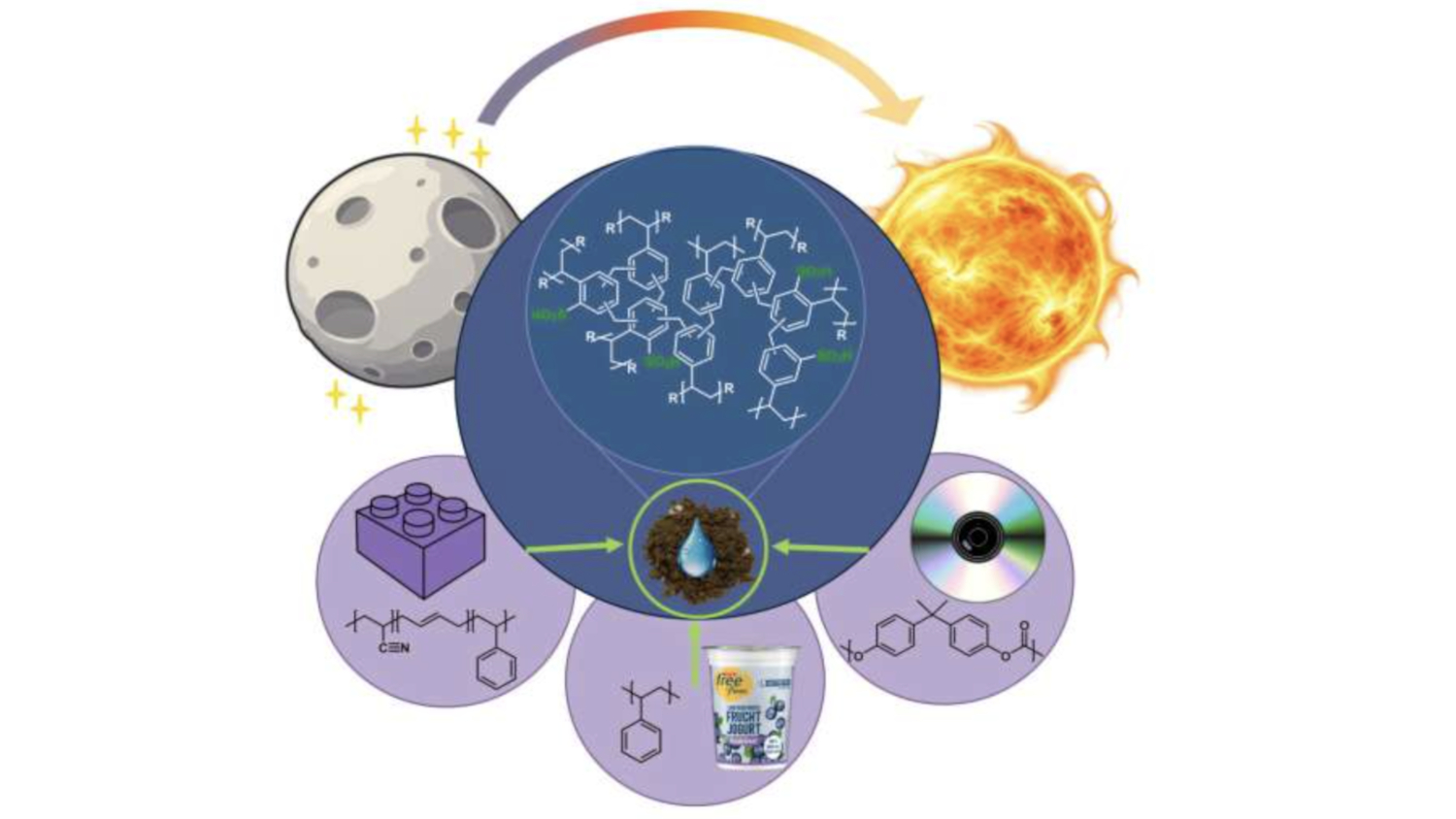
Plastic waste and water scarcity rarely land in the same sentence as a potential solution. Researchers at the University of Vienna published work in Chem Circularity on October 14, 2026, showing that common aromatic plastics can be chemically converted into porous networks capable of capturing water vapor directly from air. The feedstocks include polystyrene packaging, polycarbonate from old CDs, and ABS from LEGO bricks.
The Feedstocks Are Familiar
Polystyrene packaging, old CDs, and LEGO bricks all worked as raw material.
Materials chemists Anastasiia Naryshkina, Paul Schweng, and Robert Woodward processed four feedstocks: polystyrene packaging, polycarbonate from discarded CDs, acrylonitrile butadiene styrene (ABS) from LEGO bricks, and a mixed plastic sample. Mixed-feedstock performance matters most for real-world use, because waste plastics rarely arrive pre-sorted into single material types.
Cross-Linked Rings and Acid Treatment
The chemistry runs in two steps, and both steps determine what the final material can do.
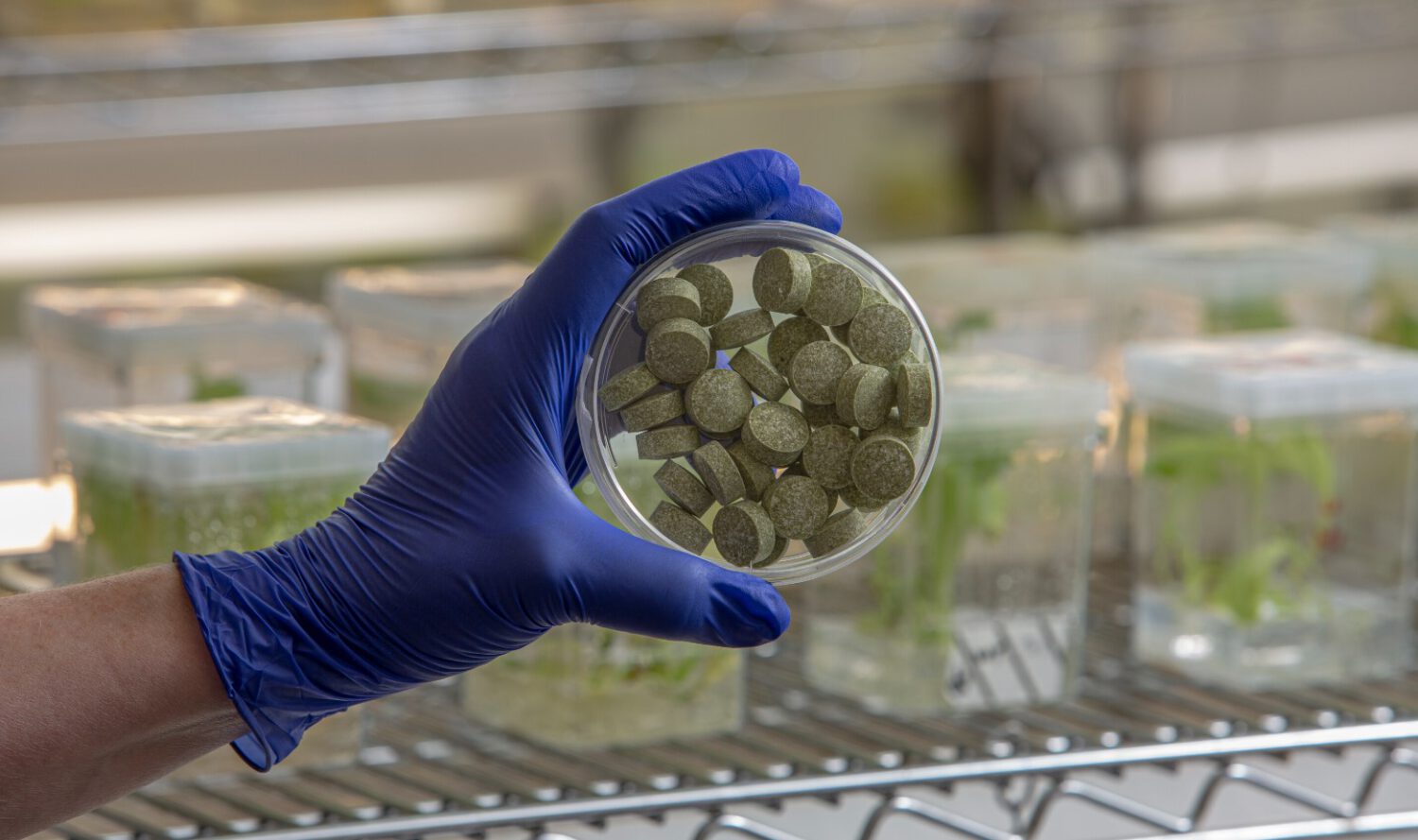
Aromatic polymers contain six-carbon rings that researchers cross-linked into a three-dimensional porous network, essentially a molecular sponge with extensive internal surface area. A subsequent sulfuric-acid treatment grafted sulfonic-acid groups onto that structure. Those groups attract water molecules, allowing the material to capture vapor even from relatively dry air.
What makes the chemistry notable is the inversion it achieves: plastics engineered to repel water get redesigned, at the molecular level, to seek it out. Here, adsorption means water molecules adhere to internal surfaces rather than saturating the material the way liquid soaks a conventional sponge.
The Numbers
Performance in humid and dry conditions was measured, and a one-hour cycle stood out.
A polystyrene-derived sponge captured nearly 60% of its own weight in water from humid air. Under dry, desert-like conditions, the same material captured approximately 20% of its own weight. Most adsorption and release occurred within roughly one hour, and mild heating, including heat from sunlight, was sufficient to release the captured water for collection. The material held up through repeated capture-and-release cycles in laboratory testing.
The Circular Economy Case
Converting waste plastic into a functional material is a different category of upcycling than producing another lower-grade plastic product.
This approach, if it scales, would convert certain waste streams into a reusable device with a defined function. Atmospheric water harvesting is most credibly positioned as a supplementary source for decentralized or off-grid applications, not a replacement for existing water use infrastructure.
What the Study Does Not Establish
The open questions are substantial enough to warrant close attention.
The Vienna team noted that further work is needed on long-term performance and overall resource requirements. Additional unresolved questions include:
- Scale: The reported laboratory uptake figures do not establish daily water production at practical scale.
- Chemical inputs: Sulfuric acid processing requires a life-cycle assessment before environmental benefits can be confirmed.
- Feedstock variability: Real-world plastic waste can carry dyes, additives, and contaminants that may affect performance or require additional processing.
- Water safety: The study assessed water uptake, not water quality. Chemical leaching and drinkability have not been evaluated and would require independent testing.
- Durability: Lab cycling results are encouraging, but long-term performance under real conditions remains unknown.
Where This Stands
Proof of concept is exactly what it says, and the science is candid about that.
The Chem Circularity study demonstrates that several common aromatic plastics can be redesigned into reusable atmospheric-water adsorbents. It does not demonstrate that those adsorbents are ready to supply clean drinking water at commercial or infrastructure scale. The researchers themselves identified long-term performance and resource requirements as the next area of investigation. That gap is not a dismissal of the work; it is simply where the science currently sits.