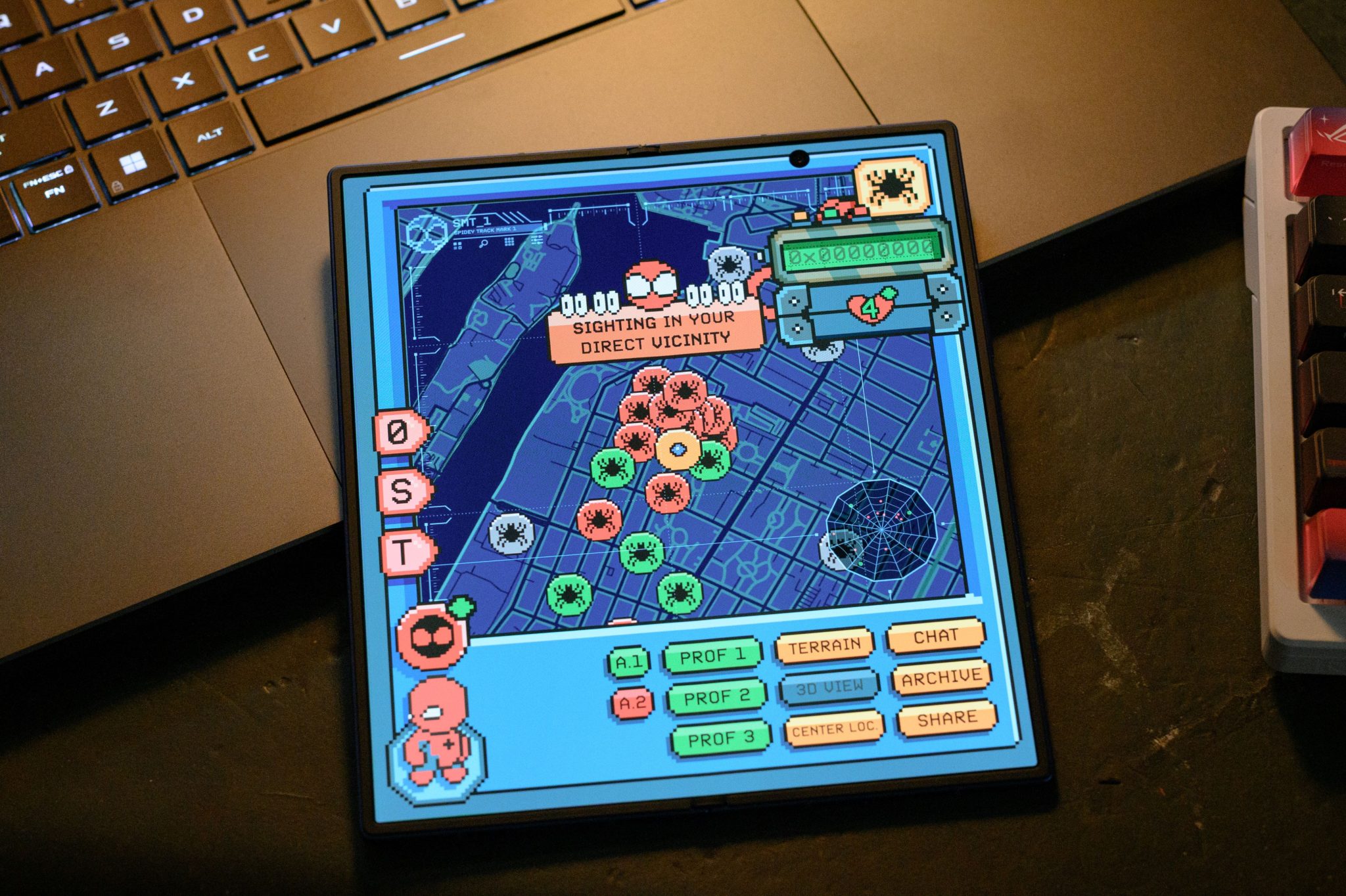
In Spider-Man: Brand New Day, Ned Leeds builds a custom website to track Spider-Man across the city. Pretty standard MCU side-character energy. What’s less standard: Samsung and Sony Pictures actually built the thing. SpideyTracker.com went live June 17 at 3 p.m. ET, timed to the film’s second trailer drop, turning a plot device into a functioning fan platform. That’s not product placement. That’s a fictional object escaping the screen and landing on your phone — and if you’re already exhausted by MCU marketing cycles, this one at least earns a second look.
What the Tracker Actually Does
Think less corporate microsite, more episodic fan hub designed for real-time participation.
According to Samsung’s official announcement, SpideyTracker.com and @SpideyTracker on X are built for ongoing engagement, not a single trailer-day sugar rush. The platform reportedly features:
- Real-time fan-submitted Spider-Man sightings
- Cast appearances, interviews, and live activations
- Hidden easter eggs and scheduled content drops
- Galaxy Z Flip visible in Spider-Man’s hands; Galaxy Z Fold and Galaxy Watch with Ned Leeds
- Availability across 35 countries at launch
Samsung says the experience is designed to “extend the film beyond the screen” — corporate language, sure, but the mechanics back it up. This is episodic by design, not a one-time reveal dressed up as community.
Product Placement That Earns Its Screen Time
Galaxy devices are written into the story, not just propped in frame.
The smartest move here isn’t the tracker itself — it’s that Samsung’s hardware is narratively justified. Ned Leeds uses a Galaxy Z Fold and Galaxy Watch to locate Spider-Man. Spider-Man carries a Galaxy Z Flip. The devices serve the plot like a chef’s knife in The Bear: functional, visible, never winking at the camera. You notice them without feeling sold to. That distinction matters more than it might seem when audiences have grown fluent in spotting logo placement from three scenes away.
The Sustainability Question
Episodic engagement promises are easy to make and considerably harder to keep.
Here’s where healthy skepticism earns its keep. Transmedia campaigns — turning movie lore into live community platforms — sound sharp on launch day. The precedent is real: The Dark Knight‘s “Why So Serious“ ARG sustained genuine fan obsession for months before the film released, setting a high bar few campaigns have matched since. The honest question is whether SpideyTracker.com delivers consistent, meaningful content between now and the film’s release, or quietly flatlines like most branded microsites after week two. Samsung says updates are coming. The follow-through matters more than the announcement.
What This Signals
Studios and tech brands are merging storytelling infrastructure with marketing in ways that could reshape franchise promotion.
If this campaign sustains momentum, it won’t stay an experiment for long. The model — fictional object becomes real platform, hardware integration serves the narrative, fans generate the content — is replicable across any franchise with an engaged enough audience. Expect major studio-brand partnerships to treat transmedia activations as standard release infrastructure rather than a novelty add-on. The Spidey Tracker isn’t just a promotional stunt. It’s a proof of concept for what co-marketing looks like when both parties actually commit to the bit.