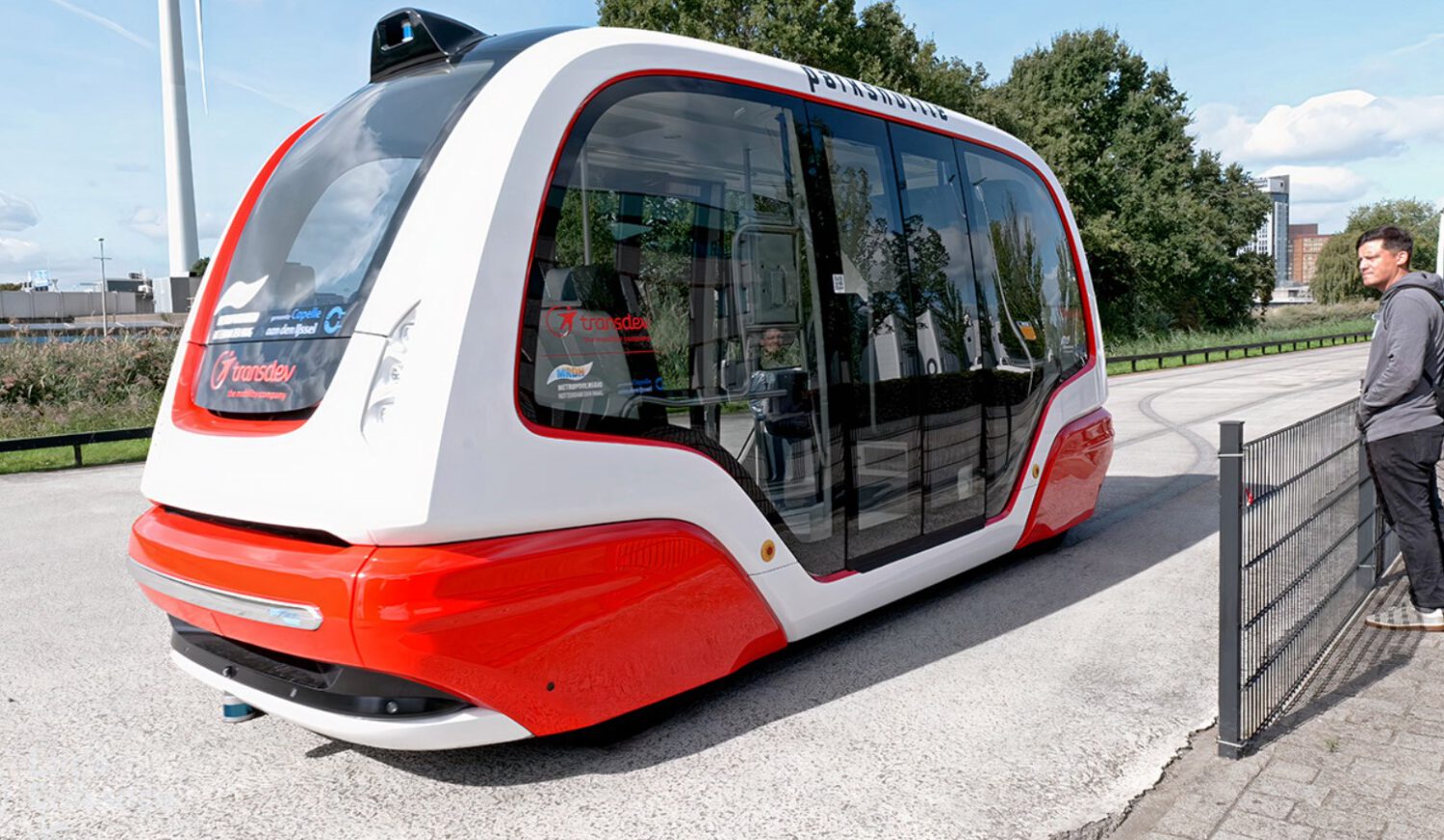
Since 1999, a small fleet of driverless electric shuttles has connected Rotterdam’s Kralingse Zoom metro station with the Rivium business district in Capelle aan den IJssel, covering approximately 1.8 kilometers per trip without anyone behind the wheel.
Six third-generation vehicles handle the service today, each carrying up to 22 passengers. Introduced from 2022 onward, the fleet represents an incremental upgrade rather than a fresh start.
A remote control-center operator supervises the system. The word “driverless” describes the vehicles, not the entire operation: human oversight remains part of the service.
Navigation relies on magnets embedded in the road surface, which serve as reference points for onboard computers. Sensors scan the surroundings continuously, and when something blocks the path, the shuttle stops automatically.
According to Transdev, the service runs approximately 6 a.m. to 9 p.m. on weekdays and carries around 1,850 passengers per day.
The system works because it was never designed to solve every problem at once. A fixed route, dedicated infrastructure, low operating speeds, and centralized human oversight reduce most of the variables that make full urban autonomy so difficult.
By contrast, companies pursuing general-purpose autonomous vehicles must handle unpredictable city streets, shifting regulations, and an effectively unlimited range of edge cases. ParkShuttle sidesteps much of that complexity by design, operating in a deliberately constrained environment where the shuttle’s task is narrow and repetitive.
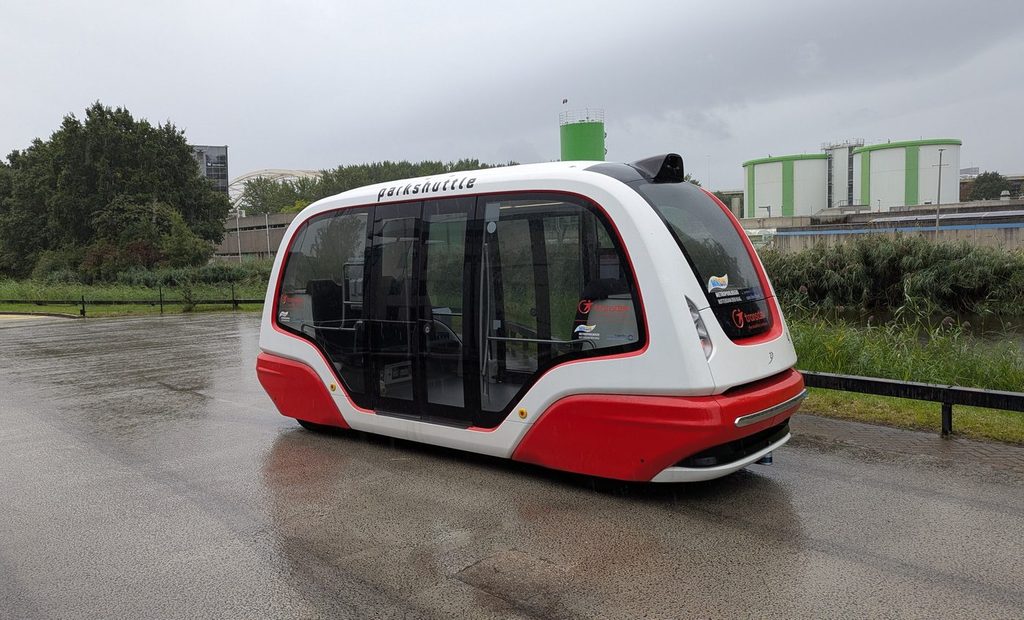
Three successive vehicle generations and roughly 26 years of operation led Transdev and its technology partners to describe ParkShuttle as a mature autonomous-transport service. That framing matters: this is an established transit line, not a pilot project still searching for a business case.
The broader point is not that every city should build a 1.8-kilometer shuttle loop. It is that driverless public transport has a credible track record when matched to a narrow, well-defined mobility problem. The technology does not need to be universal to be useful, and ParkShuttle has been making that case quietly since before most people had heard of a robotaxi.