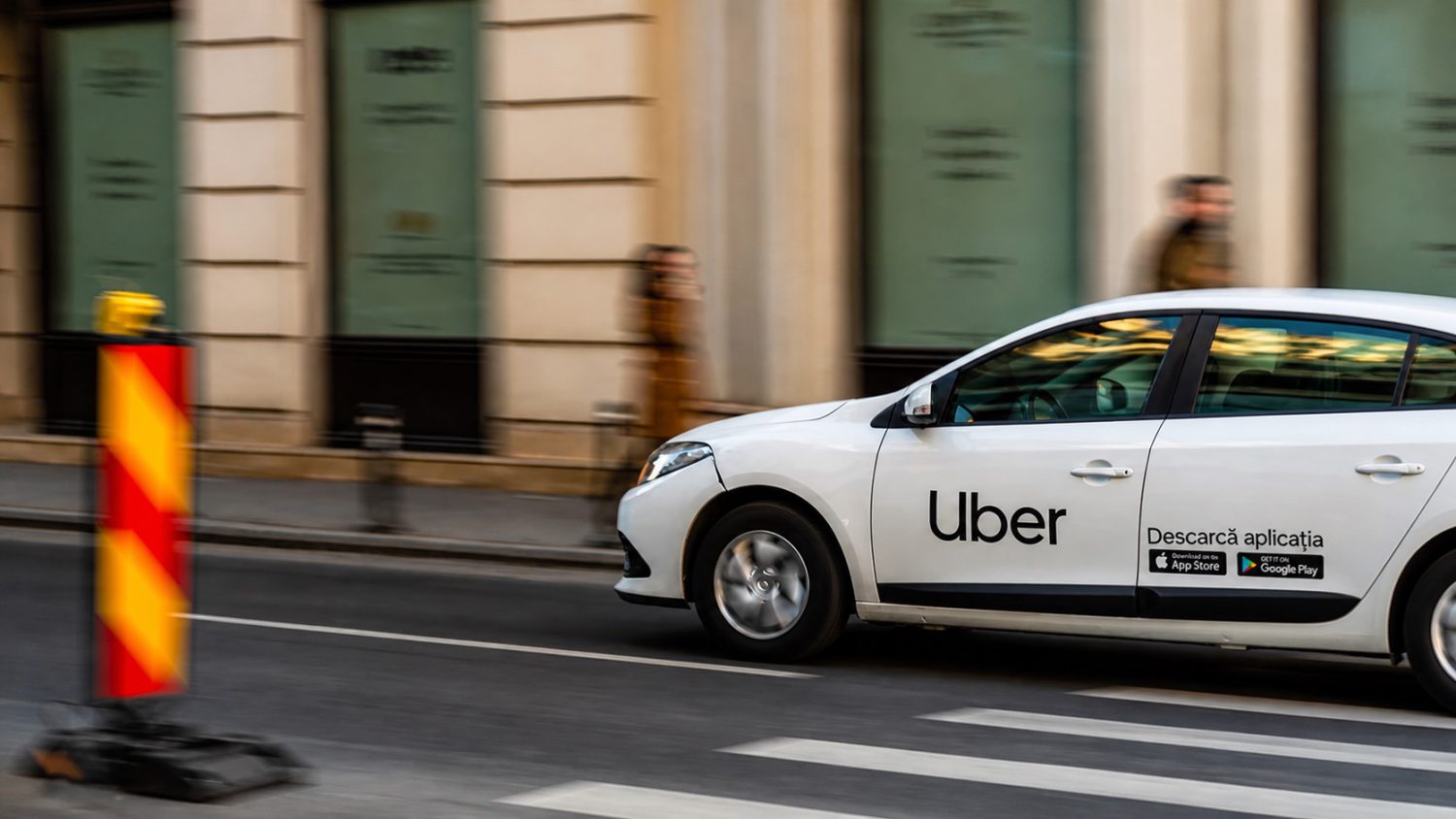
About 3,300 people lost their jobs at Uber this week. That’s roughly 10% of its 34,000-person workforce — the largest single cut since COVID gutted the company in 2020. Here’s the brutal irony: Uber’s revenue nearly tripled over the past five years. All that growth created a bureaucratic organism so dense that employees were reportedly spending more time coordinating than building. So Uber’s solution to the mess its success created is to cut a tenth of the people who built it.
Layers Out, Robots In
The structural overhaul targets deep management chains and tiny teams — while quietly ending the remote-work era for almost everyone.
The numbers are stark:
- ~3,300 roles eliminated from a workforce of ~34,000
- Employees sitting seven or more reporting layers from the CEO reduced by 20%
- “Micro-teams” with one or two direct reports cut by nearly 50%
- Fully remote roles capped at roughly 1% of all staff going forward
- HR and People division already slashed by 23% back in June 2026
That last bullet deserves a connecting thought before you move on: these aren’t isolated cost trims. They’re pieces of the same architectural decision. Meta Builds its own workforce strategy as a striking counterpoint — investing rather than cutting — making the contrast with Uber’s approach all the sharper.
CEO Dara Khosrowshahi framed it plainly in his memo, reported by Business Insider and Engadget: Uber needs to be “simpler and faster,” spending more time “building rather than coordinating.” He chose one large cut over a slow bleed of smaller ones — which is also, notably, how you control a news cycle. The structural logic isn’t entirely wrong, though. Flatter organizations do tend to move faster, and that agility matters when you’re scaling autonomous operations against dedicated robotaxi players who aren’t carrying the same organizational weight.
The Robotaxi Play
The real story isn’t the layoffs — it’s the $10 billion that replaces them.
Uber sold its in-house self-driving unit in 2020 after safety and cost problems made it untenable. Now it’s back — not building the kitchen this time, but buying the entire restaurant chain. Roughly $2.5 billion goes toward equity stakes in AV partners including Waymo, Rivian, Lucid, and Nuro. The remaining $7.5 billion targets fleet purchases and operations. Target deployment: 120,000 autonomous vehicles across at least 15 cities. BTIG analyst Walt Piecyk puts total AV exposure closer to $13 billion when all the deals are aggregated, according to Yahoo Finance.
“The benefits of sitting together, collaborating in person and solving problems as a team are clearer than ever in our post-COVID world.” — Dara Khosrowshahi
Worth sitting with: Uber is simultaneously mandating three days per week in the office for nearly all remaining staff — right after eliminating thousands of roles. Critics argue that gutting remote flexibility following mass layoffs historically accelerates voluntary attrition among the people who stayed. Supporters counter that co-location is exactly what a company scaling complex AV operations needs right now.
Your read probably depends on whether you think the robotaxi bet pays off.
The people being shown the door helped build a platform valued at over $100 billion. The autonomous systems meant to succeed them — on the road and across the org chart — haven’t been proven at anything close to this scale. A driverless Tesla robotaxi recently made headlines for all the wrong reasons, a reminder of how much ground the industry still has to cover. Even the rise of the humanoid robot illustrates how far automation must travel before it can reliably replace human judgment at scale. If the AV strategy delivers, this restructuring looks like disciplined capital allocation. If it doesn’t, it looks like a company that traded institutional knowledge for a moonshot and missed.