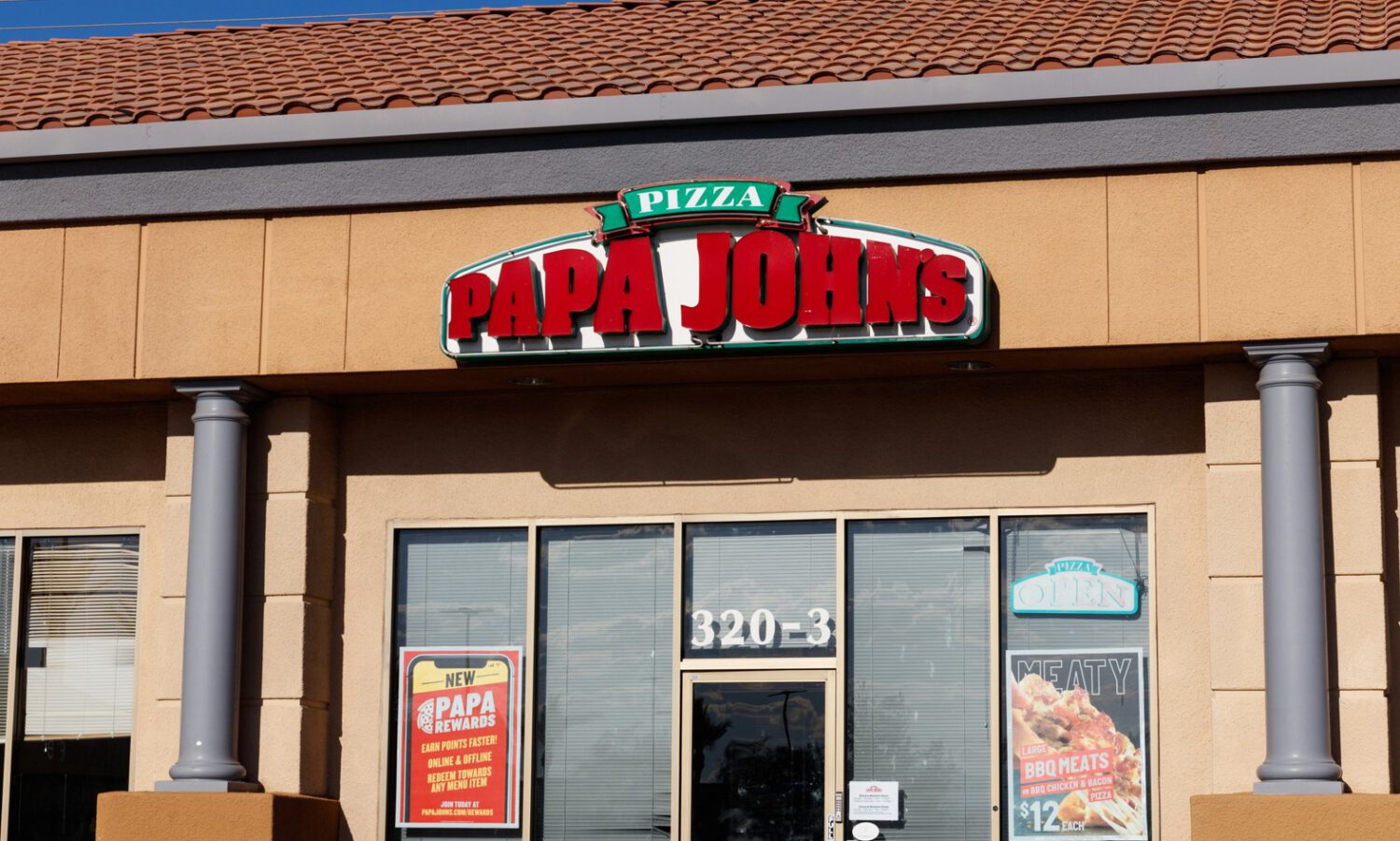
The company’s in-store AI camera system checks pizzas for burned cheese, uneven pepperoni cuts, and crust shape, but operates in only a few hundred of its approximately 6,000 locations worldwide. The customer-photo system was built in-house using AI capabilities already developed with Google Cloud, and CEO Todd Penegor described it to Reuters as relatively inexpensive to construct.
What the Promotion Actually Asks You to Do
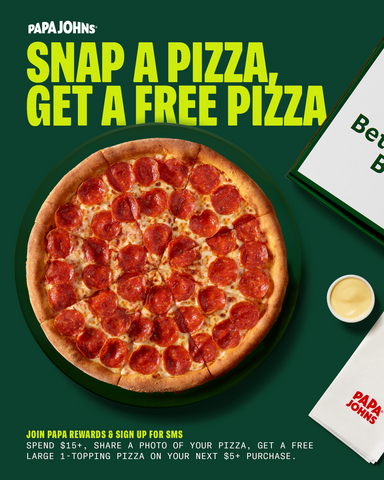
“Snap a Pizza, Get a Free Pizza” is a straightforward trade, with eligibility conditions worth reading before placing an order.
Customers needed a Papa Rewards account and an opt-in to text messages. They also needed a qualifying order of at least $15 placed through the Papa John’s app or website.
After placing the order, customers waited for a text invitation, then submitted an unedited photo along with feedback on the bake, crust, and overall experience. The reward is a free large one-topping pizza, but redeeming it requires a follow-up purchase of at least $5.
The promotion ran November 9 through November 20. Papa John’s told Reuters it received thousands of photos within the first few days.
Consistency Is the Real Target
Penegor called franchise consistency the company’s “Achilles’ heel,” and the photo campaign is designed to surface exactly where individual locations fall short.
Customer images and feedback feed a central dashboard that identifies recurring quality problems and shows franchisees where their locations are falling short, according to Reuters. The in-store camera system evaluates proper bake, cheese condition, pepperoni cuts, and crust shape; the customer-photo initiative is designed to extend similar checks using images submitted after delivery.
Customer photos can capture what a pizza looks like when it arrives, providing a view that restaurant cameras do not offer. That post-delivery perspective is part of what makes the data potentially useful to franchise operators.
Useful Data, With Real Limits
Papa John’s acknowledges that customer photos are less accurate than controlled camera footage, and that gap has real consequences for how much the company can rely on them.
Penegor acknowledged to Reuters that submissions are not yet as accurate as images captured by the in-store system. Consumer photos vary in lighting, angle, distance, and device quality, all factors that complicate automated analysis.
The company is collecting the images to improve consistency over time, though the sources do not describe the initiative as a finished quality system. How reliably the AI can interpret uncontrolled submissions will determine how useful the data ultimately becomes.
Pizza Chains Are Experimenting Beyond the Kitchen
Papa John’s approach fits a wider pattern of chains using AI and consumer participation to extend operational reach without deploying specialized hardware at every location.
Domino’s tested Boston Dynamics’ quadruped robot Spot for beach pizza deliveries in 2025, a trial that included managing interference from seagulls, according to secondary reporting. Papa John’s initiative involves a different kind of extension: recruiting customers to contribute quality data in exchange for a conditional reward.
Whether the submitted images prove accurate enough to support meaningful franchise improvements remains to be seen. Papa John’s will not have an answer until well after the promotion has ended.