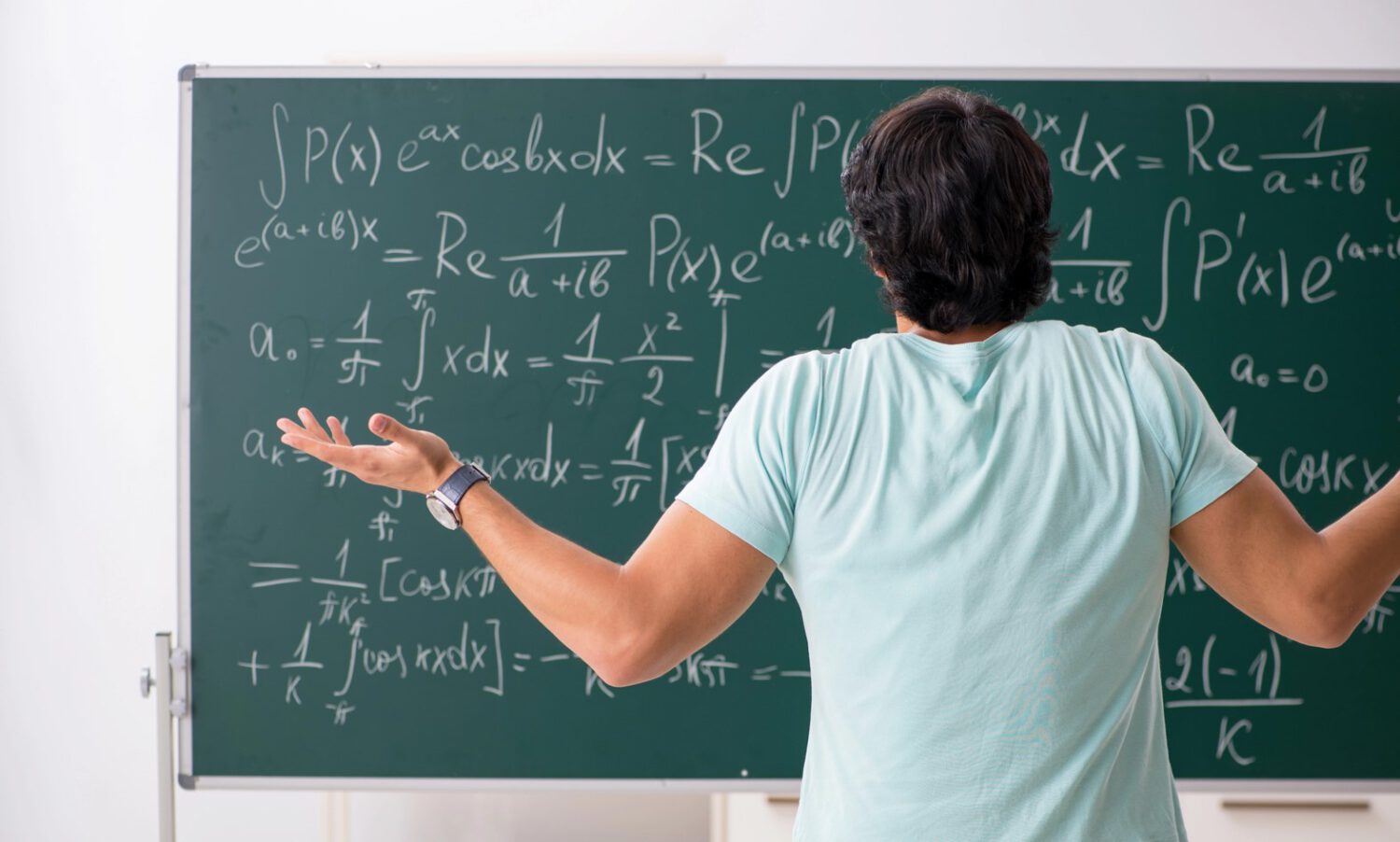
Chalk, not code. Yi Ni’s introductory mathematics lecture reportedly filled blackboard after blackboard by hand, with no projector or laptop in sight. That scene sits in direct tension with the tool now sitting in students’ pockets.
The Policy That Changed
A reported shift in one professor’s grading practice points to a broader problem in how mathematics learning is measured.
Ni is a Caltech mathematics professor who researches low-dimensional geometry and topology. According to the source article, he reportedly changed how he evaluates student work, no longer grading homework for accuracy because he cannot reliably determine whether students used AI to produce the answers, and grading instead for completion.
That reported shift, if confirmed, would signal that a core mechanism of undergraduate mathematics assessment is under serious pressure.
Why Math Is Especially Exposed
Compact, symbolic answers leave almost no visible reasoning trail for instructors to evaluate.
A worked algebra solution or a calculus derivation is compact and symbolic. It leaves little visible evidence of the reasoning behind it.
An essay can carry traces of voice, structure, and argument that suggest something about the writer’s thinking. A final mathematical answer, graded only on correctness, offers far fewer such signals about who actually did the work.
The Student Who Chose the Harder Path
One sophomore’s choice illustrates the divide between homework as training and homework as a deliverable.
Sophomore Sathvik Redrouthu reportedly avoided AI on assignments because he wanted to understand the material, according to the source article. He reportedly recognized that in-person exams would expose any gaps that outsourcing had created.
That reflects one student’s observed perspective, not a statistically representative finding. It does, however, identify the split precisely: homework as genuine practice versus homework as a deliverable to be completed by any available means. Students who rely on AI tools risk falling behind peers who develop foundational keyboard skills and other core competencies through deliberate practice.
No Single Rule at Caltech
Caltech’s institutional guidance pushes course-level policy decisions rather than a single universal rule.
Caltech does not impose a universal AI policy across every mathematics course. Its teaching resources, published through the Center for Teaching, Learning, and Outreach, push instructors to establish course-specific expectations. Those expectations include whether tools such as ChatGPT are permitted, restricted, or required to be disclosed.
Some syllabuses now reportedly carry an AI-allowed qualification, according to the source article. That signals a shift from assuming the tool can be effectively banned toward explicit, course-level policy choices.
The Real Problem Is Assessment Design
The challenge is not AI itself but assessment structures that have not kept pace with what AI can produce.
When a chatbot can generate a plausible solution to a routine exercise, the final written answer becomes weaker evidence of individual understanding. Caltech’s own guidance warns that generative-AI output can be inaccurate, incomplete, or fabricated, meaning even a correct-looking derivation still requires verification by someone who understands the mathematics. Instructors and students alike can benefit from exploring AI-Powered Websites that support genuine learning rather than bypass it.
The core difficulty is that assessment structures designed before AI tools were widely available have not yet caught up with what those tools can produce.
What Instructors Can Actually Do
Observable alternatives shift the evaluative weight from final answers to visible reasoning.
Caltech’s teaching resources point toward approaches that make a student’s reasoning visible rather than only the product of it. Those include oral explanations, staged submissions that show how an answer developed, and short in-class exercises.
Grading failed attempts and error analysis, rather than only final answers, is another option the guidance supports. Each approach requires more faculty time and raises equity questions, including unequal access to paid AI tools, as Caltech’s guidance acknowledges.
The Larger Stakes
The question now is whether course design can be rebuilt fast enough to keep pace with the tool.
Caltech’s researchers describe the relationship between mathematics and machine learning as reciprocal, according to a Caltech mathematics publication. AI can assist with difficult mathematical questions; mathematics can improve AI systems in turn.
The more urgent issue is whether course design can be rebuilt quickly enough to ensure that what students demonstrate still reflects what they actually understand.