Supersonic flight over land has always meant choosing between speed and peace. For five decades, regulators banned high-speed aircraft from crossing continents because sonic booms shattered windows and nerves alike. NASA’s X-59 Quesst changes that equation entirely—turning ear-splitting blasts into gentle thumps through aerodynamic wizardry.
Shaped Like a Flying Sword for Silent Speed
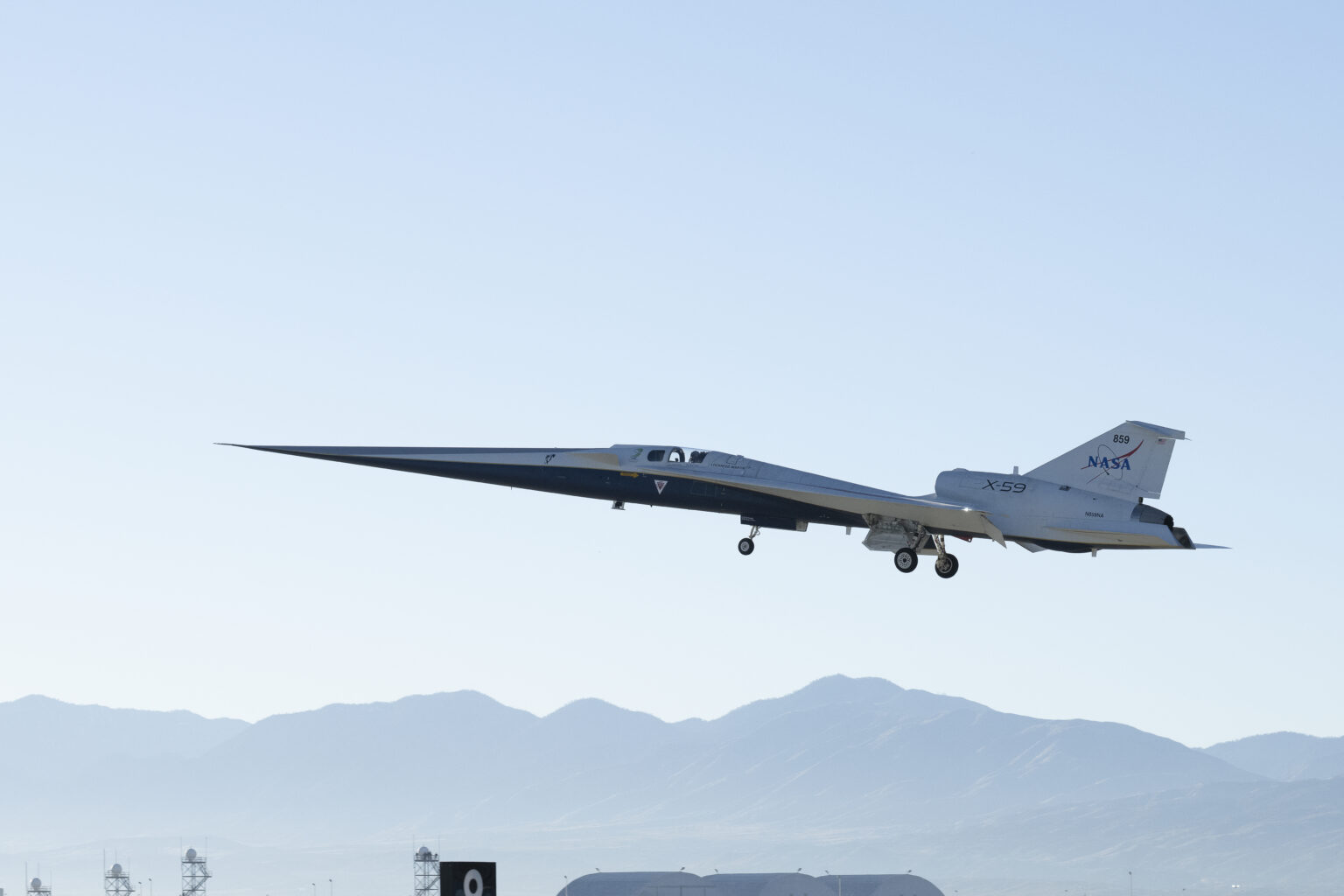
The X-59’s design looks like something from a sci-fi movie, but every curve serves sonic science. Its 99.7-foot frame features a needle nose comprising nearly one-third of the aircraft’s length, forcing shock waves to merge above the fuselage instead of hammering earth below. The top-mounted engine from an F/A-18 Super Hornet and smooth underside further disperse sound waves.
At Mach 1.4 and 55,000 feet, observers hear a muffled thump instead of the Concorde’s window-rattling crack.
Test Flights Build Toward Community Buzz Checks
After its first flight on October 28, 2025, the X-59 completed a careful second test on March 20, 2026, climbing from 230 mph to 260 mph while reaching 20,000 feet. “In this industry, there’s nothing like a first flight,” said Brad Flick, NASA Armstrong director.
The windowless cockpit relies on 4K cameras feeding an external vision system—pilot visibility through screens instead of glass. Next comes the real test: supersonic passes over American communities to measure public reaction to those promised thumps.
Skunk Works Pedigree Hints at Military Applications
Built by the same Lockheed Martin Skunk Works that created the SR-71 Blackbird and F-117 stealth fighter, the X-59 carries DNA from aviation’s most classified programs. While NASA frames this as civilian research, quiet supersonic flight solves military applications too—imagine rapid deployment without announcing your arrival.
“Once again, NASA and America are leading the way for the future of flight,” acting NASA Administrator Sean Duffy noted.
Your next transatlantic flight could take 3.5 hours instead of seven if the X-59’s community tests convince regulators to lift supersonic bans. That’s the real battlefield victory: eliminating aviation’s cruelest choice between speed and silence.