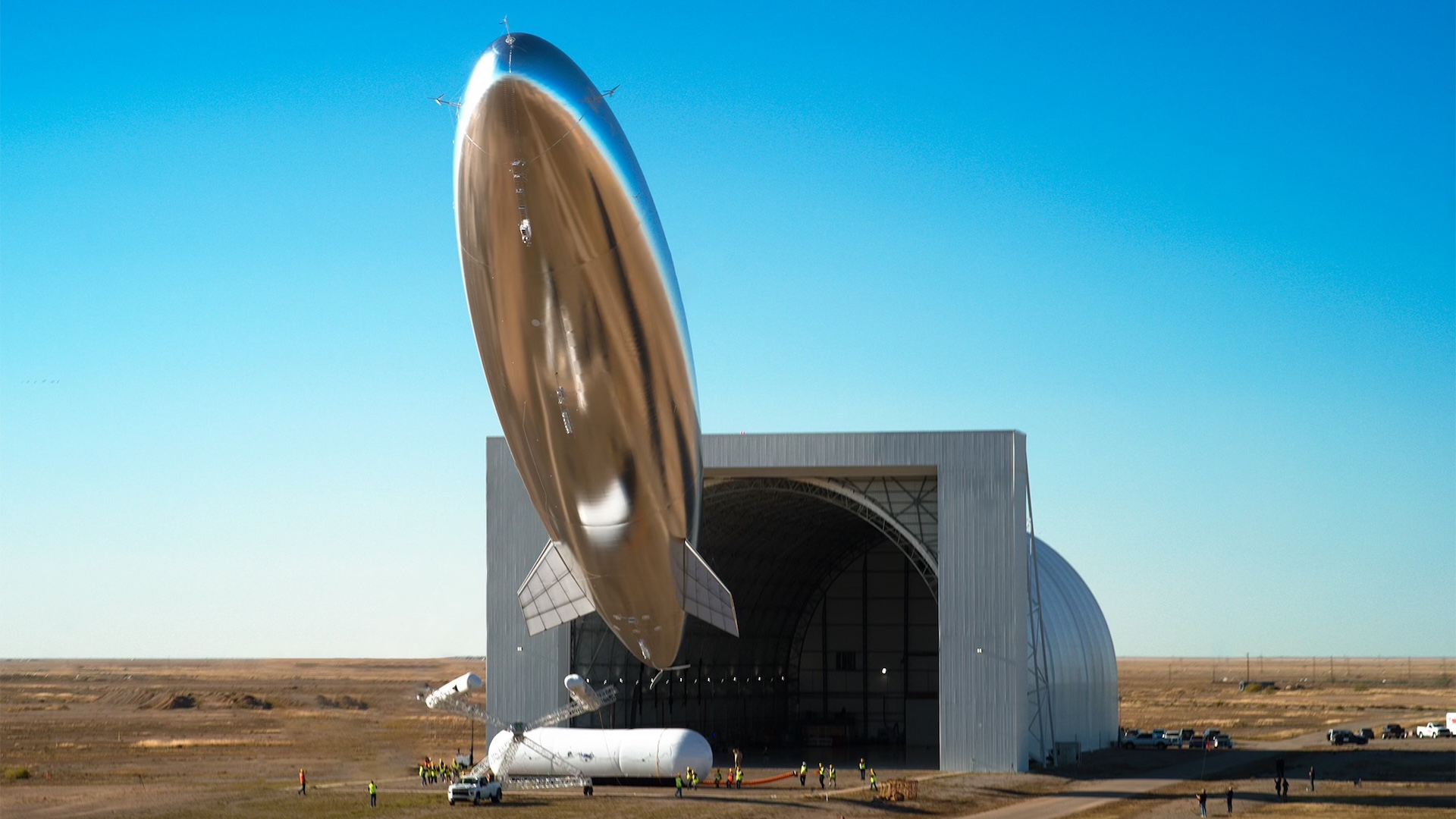
Your internet connection dies during the next hurricane, but what if backup coverage floated 10 miles overhead? Sceye’s SE2 airship just proved that’s possible, completing a historic 12-day stratospheric flight that covered 6,400 miles from New Mexico to Brazil’s coast. This solar-powered behemoth maintained altitudes above 52,000 feet—twice as high as commercial jets—while demonstrating the precision needed for persistent connectivity services.
The March 25 to April 6 test flight wasn’t just about endurance. SE2 spent over 88 hours hovering within a 1-kilometer radius over selected areas, completing full day-night power cycles that prove stratospheric platforms can actually work commercially.
Solar Power Meets Stratospheric Precision
SE2’s design reads like science fiction made practical. Solar cells cover the upper surface, feeding 425-Wh/kg lithium-sulfur batteries that power a tail-mounted electric propeller through the night. The airship successfully closed both power and pressure loops during multiple diurnal cycles—engineering speak for “it actually works when the sun goes down.”
This validates Sceye’s in-house hull manufacturing and positions the platform for months-long missions that satellite networks can’t match for precision coverage.
Your Future Emergency Hotspot
Here’s where things get interesting for your daily life. Sceye’s stratospheric platforms carry SceyeCELL antennas designed for direct-to-device connectivity during disasters.
Unlike traditional satellites that orbit overhead briefly, these airships can station-keep over hurricane zones or wildfire areas for extended periods. Think of them as cell towers that deploy themselves wherever coverage disappears—whether that’s rural Montana or post-earthquake Puerto Rico.
The Competition Heats Up
Sceye isn’t alone in this stratospheric gold rush. Airbus’s Zephyr focuses on fixed-wing designs covering 7,500 km² for persistent observation, while AeroVironment’s Sunglider targets similar altitude ranges with solar HAPS technology. But Sceye’s airship approach offers unique station-keeping advantages—imagine the difference between a helicopter that hovers versus a plane that circles.
The company’s 2024 breakthrough in sustained day-night power cycles laid groundwork for this endurance record.
Commercial Reality Check
CEO Mikkel Vestergaard Frandsen calls this flight “the defining step toward unlocking the stratosphere as a new layer of infrastructure for humanity,” according to Sceye. That’s not just executive hyperbole—the company has lined up pre-commercial testing in Japan this summer with SoftBank for backhaul services.
The stratosphere just became humanity’s newest wireless frontier. Your next internet connection might literally float on air.