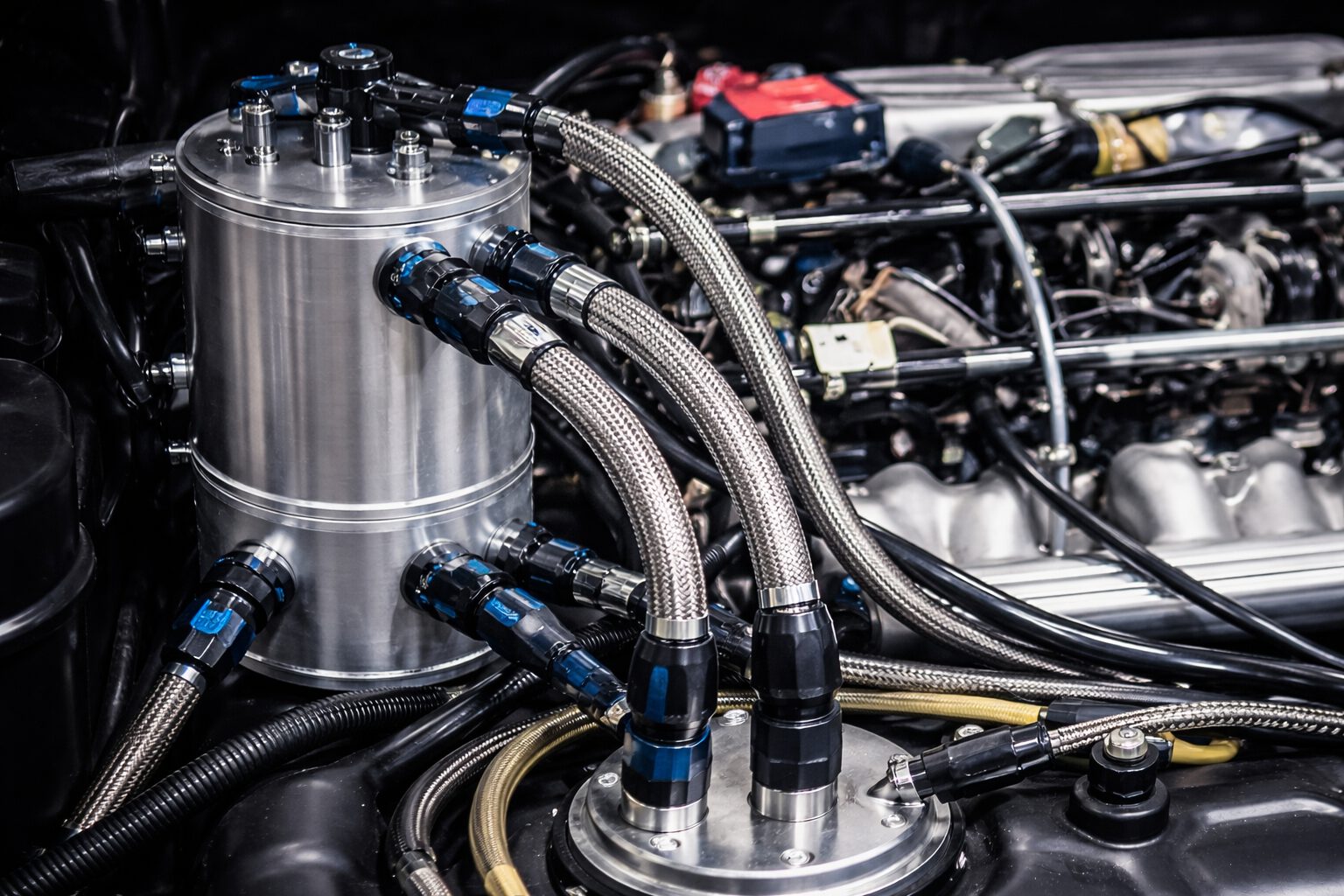
Your daily commute is bleeding money at 0 MPH, yet fuel surge tanks offer an unexpected solution to both traffic idling and performance demands. These aftermarket reservoirs don’t just prevent fuel starvation during aggressive cornering—they’re becoming relevant for anyone tired of watching their gas gauge drop while stuck in rush hour purgatory.
The Hidden Cost of Stop-and-Go Traffic
EPA data reveals urban drivers spend up to 25% of their time idling, burning cash without moving an inch.
Here’s the brutal math behind your morning crawl to work. EPA research confirms that urban schedules show 17-25% idle fractions during operating hours, with real-world telematics data pushing those numbers even higher. Your car burns 0.1-0.5 gallons per hour just sitting there, which translates to roughly $300 in annual fuel waste per driver.
That’s paying premium prices for zero forward progress—like buying concert tickets to stand in the parking lot. The numbers get worse when you factor in off-network idling like parking lot warm-ups and drive-through waits.
Engineering Solution for Everyday Problems
Fuel surge tanks maintain a constant supply, whether you’re cornering hard or crawling through construction zones.
A fuel surge tank works like a buffer between your main tank and engine, using a low-pressure pump to maintain a steady 3-liter reservoir. Behind the sleek exterior lies elegant simplicity: when fuel sloshes away from the pickup during acceleration or braking—common in stop-and-go traffic—the surge tank prevents starvation.
Excess fuel recirculates back through the pressure regulator, ensuring your high-pressure pump never runs dry. Companies like Nuke Performance and OSIAS have perfected systems that eliminate cavitation, whether you’re hitting apex turns or hitting the brakes for the fifteenth time this mile.
Installation Reality Check
Professional modification costs $200-600 but delivers long-term fuel efficiency gains beyond just performance benefits.
Don’t expect a weekend DIY project here. Surge tank installation requires modifying fuel lines, integrating pumps, and mounting the external reservoir—definitely professional installer territory. The upfront investment runs $200-600, depending on capacity and complexity, but the math works for heavy commuters facing extended idling scenarios.
Racing through highway interchanges or crawling through downtown gridlock, you’re essentially future-proofing your fuel system against both traffic inefficiency and performance demands.
Racing technology solving rush hour problems? Sometimes the best solutions come from unexpected places. For drivers spending serious time in traffic or occasional track days, surge tanks address fuel waste that traditional eco-modes can’t touch.