Every January, millions of Americans do something they swore they wouldn’t do again. They go hunting for new tax software.
It’s not a coincidence. Tax software companies have built entire business models around a predictable cycle: attract filers with a low price or a “free” badge, then collect at checkout. By the time most people realize what they’re paying, they’ve already spent an hour entering W-2 information. So they pay, grumble, and start the search all over again next year.
The fees are the story. They’re always the fees.
The Checkout Surprise That Keeps Happening
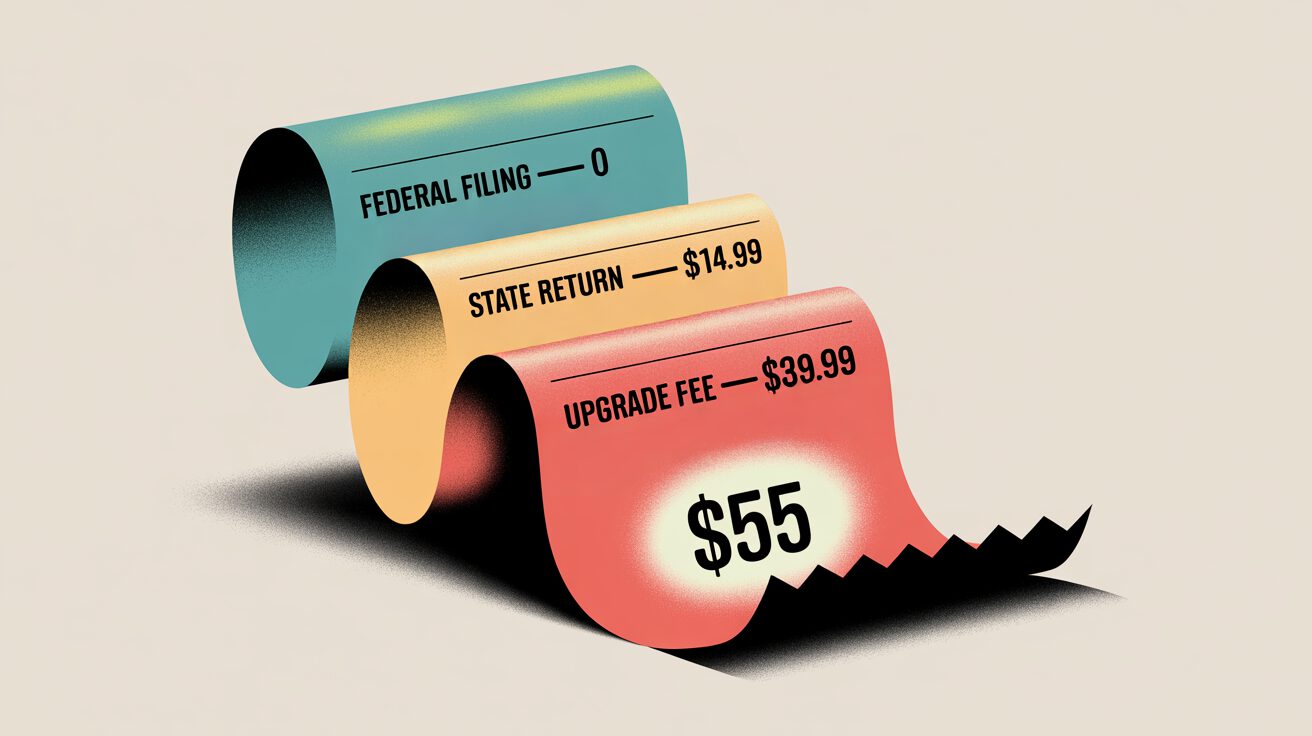
Here’s how it usually goes. Someone searches for free tax filing, finds a service that looks promising, works through their return, and hits a screen near the end that says their state return costs extra. Sometimes it’s $14.99. Sometimes it’s $39.99. Either way, it wasn’t in the headline.
This is not a bug. It’s how a lot of tax software companies structure their pricing. Federal filing is the loss leader. State filing is where the margin lives. And because most people don’t read the fine print before they start, the surprise comes at the worst possible moment: when they’re already committed and just want to be done.
A WalletHub survey found that two in three Americans describe tax preparation companies that advertise free filing as “bait-and-switch” schemes. That’s not a fringe opinion. It’s the majority experience. And it’s why cost is the number one reason people switch tax software, cited by 60% of filers who change platforms.
“Free” Doesn’t Always Mean What You Think
The word “free” does a lot of heavy lifting in tax software marketing. Most of the time, it means free federal filing. State is a separate line item, and it’s rarely small.
FreeTaxUSA is a good example. Federal returns are free, but state returns run $14.99 to $17.99, depending on when you file. That distinction gets buried in the advertising, and it catches filers off guard, just as it always has. The name itself implies it’s free, but the checkout screen tells a different story.
Meanwhile, 70% of U.S. taxpayers are eligible to file their federal taxes for free through some program or another. But according to NerdWallet’s analysis of IRS data, only 2% of eligible filers actually used IRS Free File in 2024. That gap exists largely because people can’t tell what’s actually free until they’re already deep into the process.
Not all free offers are the same. FreeTaxUSA charges up to $17.99 for state returns, meaning their ‘free’ only covers your federal filing. TurboTax’s mobile app offer covers both. That’s why TurboTax filed more than twice the number of totally free returns as FreeTaxUSA last year. That’s federal and state, for zero dollars, with no asterisk on the state side.
What Actually Free Looks Like
TurboTax’s current mobile app offer is straightforward. More than 100 million people are eligible to file both their federal and state returns for $0, guaranteed. No federal charge. No state charge. No surprise at checkout.
The offer covers filers at real levels of complexity, from investors to homeowners to people with situations that other “free” tiers routinely exclude. But, you do have to meet a few criteria to qualify:
- You switched to TurboTax or didn’t file with TurboTax last year
- You start and file in the TurboTax mobile app
- You file by February 28
- You file DIY, without an Expert product
That’s it. If those boxes are checked, the filing is free. Both returns. Guaranteed.
There’s also an early refund option. File for free and get your refund deposited to a Credit Karma Money account up to five days early.
Why This Year Might Be Different
The annual switcher cycle exists because people keep finding out too late that “free” had an asterisk. The solution isn’t complicated. It’s finding a product where the offer means what it says before you start entering information, not after.
For the more than 100 million people who qualify, TurboTax’s mobile app offer is the product this season. Free federal. Free state. No checkout surprise.
The February 28 deadline is real, so if this applies to you, it’s worth moving on it now.