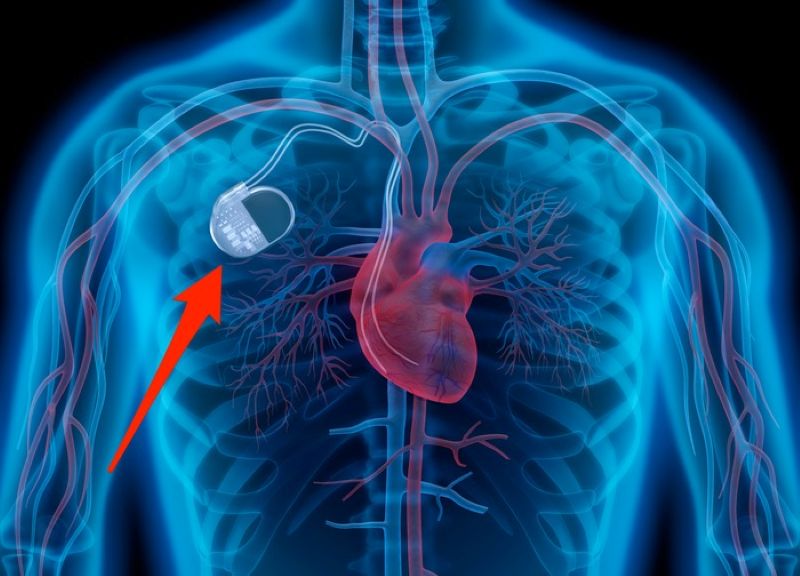
Your smartwatch tracks your steps, your phone knows where you sleep, and now we’ve learned that even your pacemaker leaves digital breadcrumbs. When 84-year-old Nancy Guthrie disappeared from her Arizona home on February 1st, investigators didn’t just search for a missing person—they hunted for her wireless pacemaker’s Bluetooth signals using helicopter-mounted “signal sniffers.” The device stopped syncing with her phone app at exactly 2:28 a.m., creating a digital timestamp that transformed a medical implant into evidence.
The New Frontier of Body-Based Evidence
Law enforcement deploys aircraft-mounted detection systems to locate missing woman through her medical device signals.
Surveillance footage shows a masked suspect disconnecting Guthrie’s doorbell camera at 1:47 a.m., then an armed individual appearing at 2:12 a.m. But the most precise evidence came from technology designed to save lives, not solve crimes. Pacemakers emit periodic Bluetooth Low Energy signals to transmit health data to companion smartphone apps.
Investigators now scan for these faint signals using specialized radio detection systems mounted on low-flying aircraft—essentially turning search helicopters into massive metal detectors hunting for invisible electronic signatures.
The Technical Limitations Everyone Should Know
Despite sophisticated technology, Bluetooth detection requires investigators to fly within 30 meters of the target.
Here’s the catch that privacy advocates and pacemaker patients need to understand: these signals are inherently short-range. Detection requires aircraft to maintain slow, low search patterns within 10 to 30 meters of the device—sometimes longer with specialized antennas, but still constraining search areas significantly.
Your pacemaker isn’t broadcasting your location like a GPS beacon; it’s more like a whisper that investigators must get uncomfortably close to hear. The Pima County Sheriff’s Department has pursued over 30,000 tips with 400 active investigators, while DNA evidence from gloves found near Guthrie’s home yielded no matches in national databases.
What This Means for Your Connected Health Devices
The Guthrie case sets precedent for how law enforcement can exploit medical device connectivity during investigations.
Every fitness tracker, continuous glucose monitor, and wireless medical implant now occupies a gray zone between healthcare and surveillance. According to former FBI special agent John Iannarelli, investigators “still have options” even when traditional evidence hits dead ends.
The case raises urgent questions about Fourth Amendment protections and whether detecting medical device signals constitutes a search requiring warrants. Sheriff Chris Nanos believes “somebody out there knows who this is,” echoing investigative strategies that solved cases like the Unabomber investigation through community recognition.
The Guthrie investigation represents more than a missing-person case—it’s the first major test of whether your body’s digital exhaust can be weaponized for surveillance. As connected health devices proliferate, the line between life-saving technology and unintended tracking grows thinner.