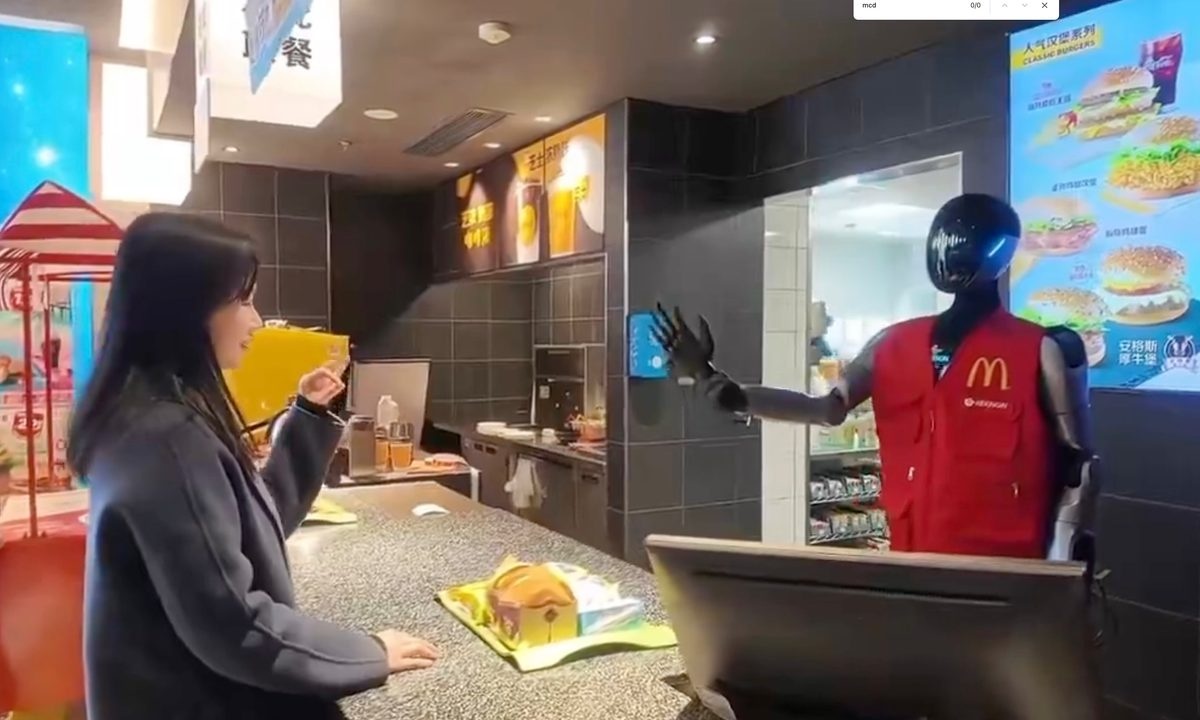
Picture walking into McDonald’s and getting greeted by a robot wearing the signature red-and-yellow uniform. That’s exactly what’s happening at one Shanghai location, where Keenon Robotics has deployed humanoid workers alongside their human counterparts.
These aren’t the clunky industrial bots you’d expect—they’re designed as cute, animal-like figures that kids absolutely lose their minds over. The XMAN-F1 humanoids handle the front-of-house charm offensive:
- Greeting customers
- Providing information
- Guiding guests to tables
Meanwhile, wheeled robots like Dinerbot and Butlerbot work behind the scenes, delivering meals and collecting trays. It’s less “robot uprising” and more “theme park dining experience” where families come as much for the novelty as the nuggets.
The Reality Behind the Robot Hype
This Shanghai pilot reveals more about experimentation than automation revolution.
Before you panic about robot overlords flipping burgers, understand what this actually represents. McDonald’s hasn’t announced expansion plans, and this remains firmly in experimental territory. The timing isn’t coincidental—China faces youth unemployment alongside an aging workforce, positioning robots as gap-fillers rather than wholesale replacements.
“It’s a showcase of how service automation is becoming a seamless part of global dining, and how technology brings more smiles to every mealtime,” according to Keenon Robotics. That cheerful messaging masks legitimate concerns about job displacement, echoing Amazon’s warehouse automation that slowly reduced human roles while boosting efficiency.
Current technology limits these bots to specific, repetitive tasks. They can’t handle complex orders, resolve payment issues, or deal with that customer demanding fresh fries after waiting two minutes.
What This Means for Your Dining Future
Hybrid human-robot service models are coming, but full automation remains years away.
Your local McDonald’s won’t suddenly sprout robot workers next month. This Shanghai pilot signals growing public acceptance of bots in daily life, particularly in China where robotics leadership drives cultural adoption.
Expect more hybrid setups where robots handle predictable tasks while humans manage everything requiring judgment, creativity, or emotional intelligence. The real shift isn’t technological—it’s psychological. Once you’ve had a robot deliver your McNuggets without batting an eye, the future of service work looks distinctly different.