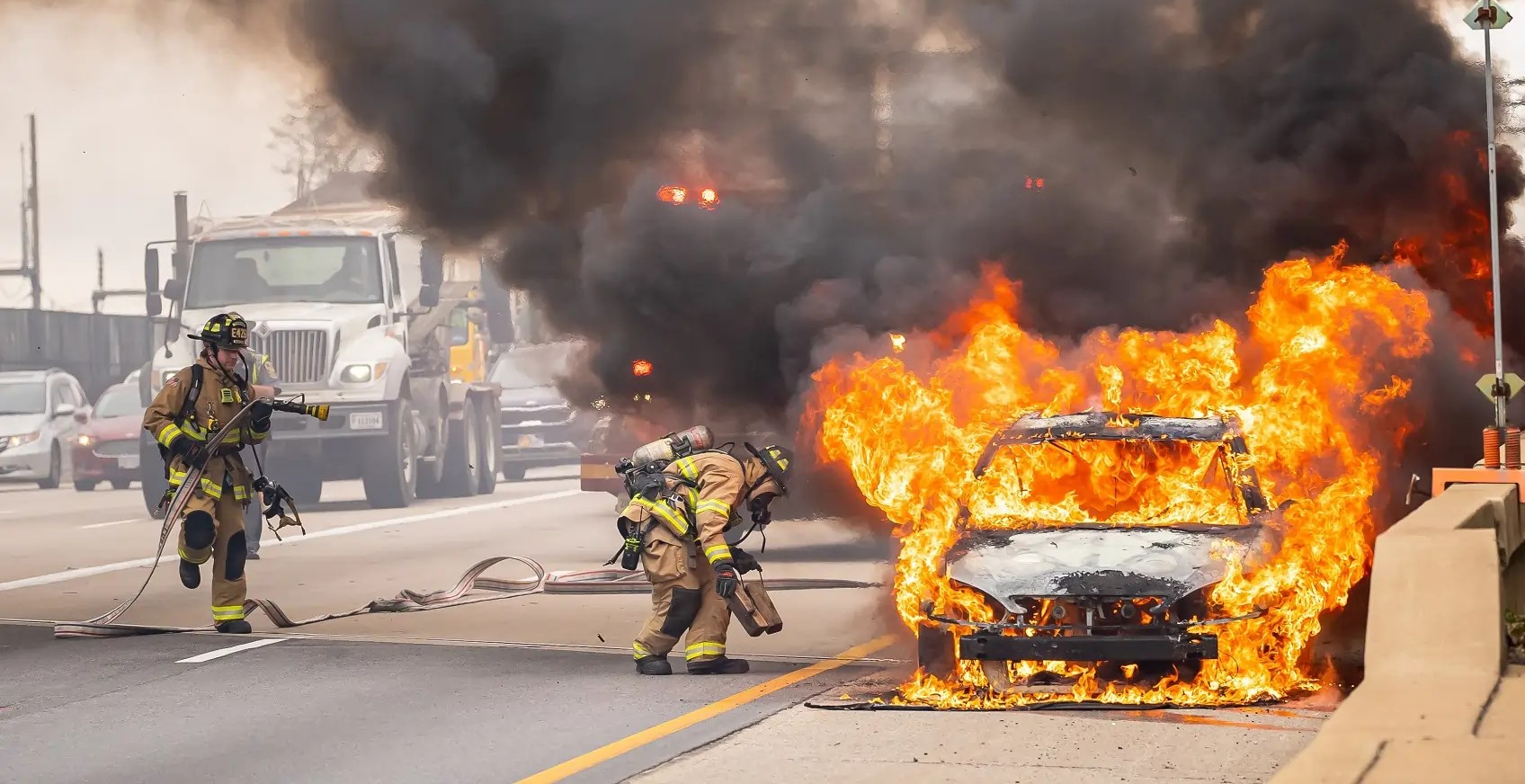
That burning Lucid Gravity at New Hampshire’s Bedford toll plaza this week wasn’t just another car fire. Firefighters needed over 6,000 gallons of water to extinguish the 2026 electric SUV—roughly ten times what a typical gasoline vehicle fires requires. The difference reveals a growing challenge as EVs flood American roads: emergency responders are still learning how to handle battery fires that behave nothing like traditional vehicle blazes.
The thermal runaway problem isn’t going away, and your local fire department might not be ready.
When 8,000 Battery Cells Go Rogue
Thermal runaway creates a domino effect that water struggles to stop.
“Thermal runaway starts a chain reaction that moves through the batteries, overheating them until they combust,” explains Litchfield Fire Chief Doug Nicoll. The Lucid Gravity’s massive battery pack—containing approximately 8,000 individual cells—turned a simple crash into a sustained inferno.
Unlike gasoline that burns and extinguishes, lithium-ion batteries enter a self-perpetuating cycle where each overheated cell triggers its neighbors to combust. State Fire Marshal Sean Toomey puts the water requirement bluntly: “With an electric vehicle, you’re easily talking a few thousand gallons.”
Fire Blankets and Specialized Hoses Enter the Chat
First responders adapt their tactics for battery fires that smolder for weeks.
Emergency crews initially deployed a fire blanket—a relatively new tool designed to smother EV fires by cutting off oxygen. The technique worked temporarily, but batteries can reignite unexpectedly. The Gravity now sits at Bailey’s Towing under a blanket, where officials expect it may smolder for weeks.
Progressive departments like Litchfield’s have invested in specialized hoses that target the vehicle’s underbody, cooling batteries with multi-directional water streams rather than fighting flames from above.
What This Means for Your EV Purchase Decision
Infrastructure and insurance costs will likely reflect these new realities.
While EV fires remain statistically rare compared to gasoline vehicle fires, incidents like Bedford expose gaps between rapid EV adoption and emergency response readiness. Your local fire department might lack the 6,000-gallon capacity or specialized equipment needed for effective suppression.
Insurance companies are watching these developments closely—extended suppression efforts and weeks-long storage requirements translate to higher claim costs. As Toomey notes, each incident requires case-by-case assessment since standard protocols often fall short.
The Bedford incident won’t slow EV adoption, but it highlights that buying electric means entering an ecosystem still adapting to new risks. Your town’s fire department is probably figuring this out as they go—just like you are.