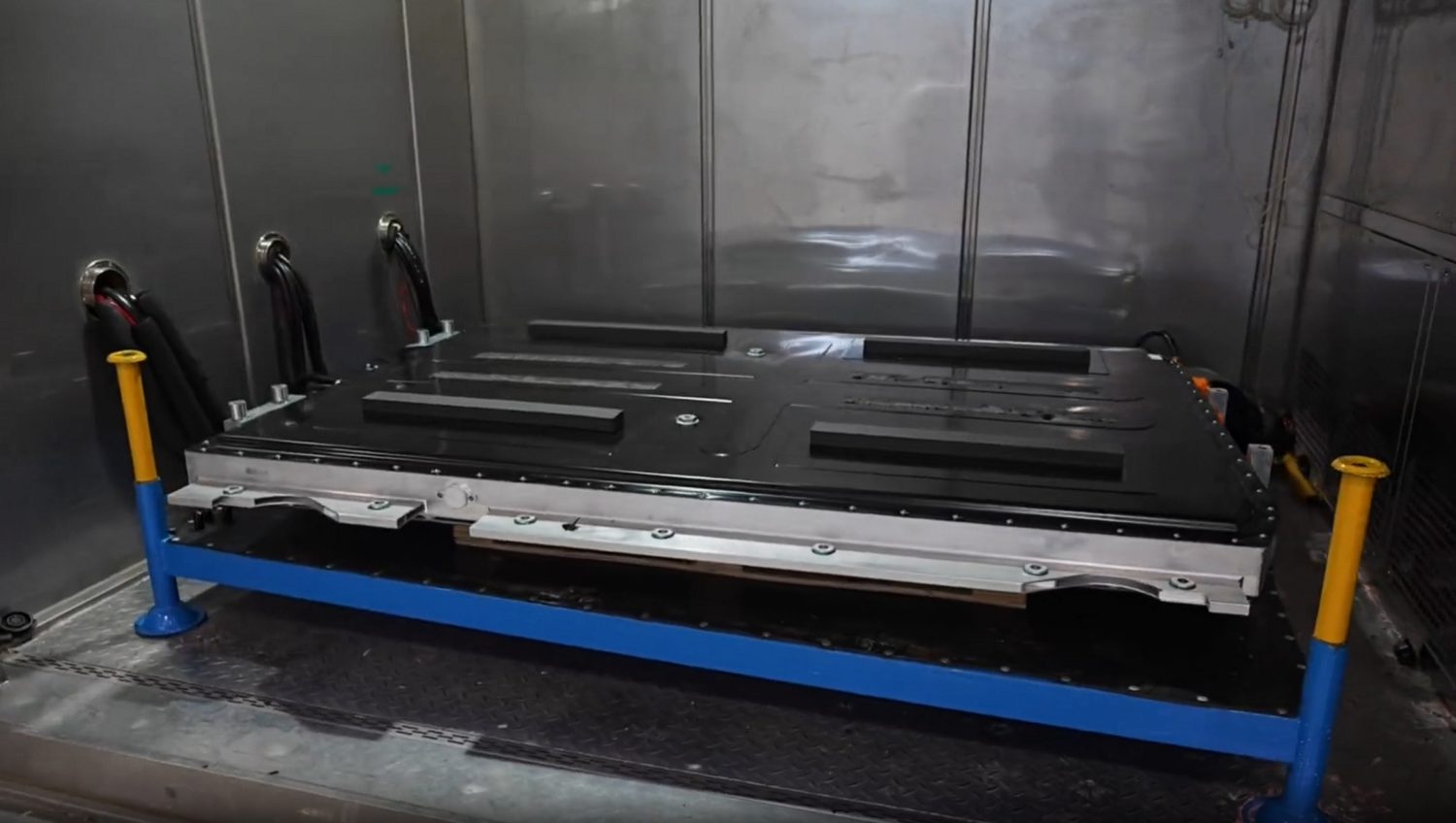
Three minutes and 41 seconds. That’s supposedly how long FAW Group’s Hongqi brand needs to push a battery from 10% to 70% charge — roughly the time you spend deciding what to order at a drive-through. The claim, reported by CarNewsChina, lands squarely in the middle of a Chinese fast-charging arms race that’s compressing years of battery progress into months. For EV watchers, the number is striking. For everyone else, the caveat matters just as much as the milestone.
What Hongqi Says the Numbers Look Like
The prototype specs are aggressive, even by China’s current standards.
- 10% to 70% state of charge: 3 minutes and 41 seconds
- 10% to 97%: 8 minutes and 3 seconds
- Peak charging rate: 12C (meaning the battery can theoretically accept twelve times its capacity per hour)
- Test temperature: a controlled 25°C lab environment
- Developed jointly with Lishen Battery
- Thermal management holds temperature variance across the pack within 3°C using liquid cooling
Hongqi says its prototype completed charging from 10% to 70% in 3 minutes and 41 seconds under controlled test conditions, according to CarNewsChina.
The chemistry behind those numbers involves a custom electrolyte engineered to speed ion movement (low-desolvation) and a composite carbon-coated anode, both designed to slash internal resistance. An adaptive charging strategy monitors cell temperature, voltage, and capacity in real time, throttling output to avoid overcharging. The battery charges fast — and actively tries not to cook itself doing it.
A Crowded Fast Lane
Hongqi isn’t running this race alone — BYD and CATL are right there pushing the same limits.
Context matters here. BYD’s second-generation Blade Battery reportedly manages 10% to 70% in about 5 minutes. CATL’s third-generation Shenxing claims 10% to 80% in 3 minutes and 44 seconds, with 10% to 98% in just 6 minutes and 27 seconds. This is the EV equivalent of the streaming wars, except the prize is your Tuesday commute instead of your Friday night.
Still, Hongqi’s battery remains a prototype. There is no production timeline. No independent validation. No cold-weather data — and 25°C is a perfect lab day, not a Minnesota January. Cycle-life figures are missing entirely, which matters enormously for long-term consumer trust. The gap between a press announcement and a battery you can actually charge at a highway rest stop remains enormous.
The engineering milestone is real. The car you can buy with it is not — yet. Until these numbers survive production realities, frozen parking lots, and independent scrutiny, your road-trip planning stays the same.