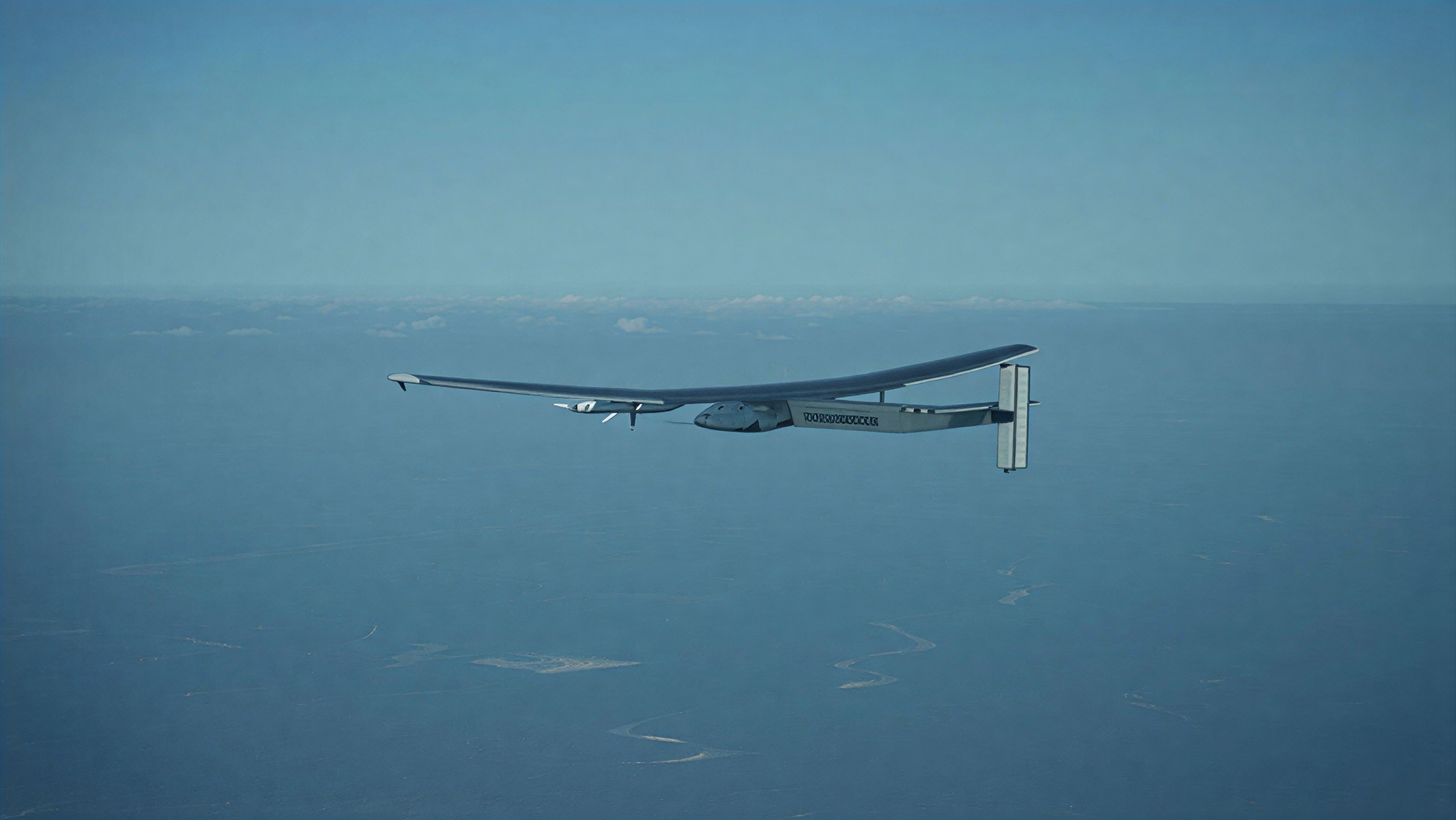
The aircraft that proved solar power could circle the Earth just lost power forever. Solar Impulse 2—the pioneering plane that completed aviation’s first solar-powered circumnavigation in 2016—crashed into the Gulf of Mexico on May 4, 2026, during an autonomous test flight. The irony cuts deep: an aircraft celebrated for harnessing infinite solar energy died from electrical failure.
From Environmental Icon to Military Asset
The world-record aircraft underwent a radical transformation after changing hands in 2019.
Solar Impulse 2’s original achievement remains staggering. The carbon-fiber aircraft stretched 232 feet wing-tip to wing-tip—wider than a Boeing 747—yet weighed only 5,100 pounds. Its 17,248 solar cells generated 66 kilowatts of peak power, enabling Bertrand Piccard and André Borschberg to alternate piloting duties across 42,000 kilometers over 16.5 months. At cruising speeds between 31 and 62 mph, the aircraft moved more slowly during nighttime battery-powered segments than most highway traffic.
The Solar Impulse Foundation sold the aircraft to Skydweller Aero in 2019, marking a dramatic mission shift from renewable energy advocacy to military surveillance. Like a Tesla Model S getting converted into an armored personnel carrier, the transformation felt jarring to those who remembered its original peaceful purpose.
Final Flight Into Oblivion
Electrical power failure doomed the unmanned aircraft during routine testing operations.
Skydweller had successfully converted Solar Impulse 2 for autonomous operation, completing its first uncrewed flight in Mississippi in 2024. The company planned to equip the platform with radar, electronic optics, and telecommunications interception systems—turning the environmental symbol into a spy plane. Their ambitious goal: creating fleets of solar-powered surveillance aircraft as cost-effective satellite alternatives for military and commercial contracts.
But at 06:22 local time on May 4, during another autonomous test flight near Bay St. Louis, the aircraft suffered catastrophic electrical power loss. Without sustained power, the historic plane descended into the Gulf of Mexico. The aircraft operated unmanned, preventing casualties, but the impact destroyed it completely.
Legacy Survives the Wreckage
Original creators mourn the loss while the broader technological achievement endures.
“The Solar Impulse team is saddened by the loss of an important technological flagship,” Bertrand Piccard and André Borschberg said in a statement to Popular Science. The NTSB investigation continues, but the crash terminates an extraordinary chapter in aviation history.
The aircraft was contractually destined for permanent display at Switzerland’s Museum of Transport—a fitting retirement for humanity’s solar aviation pioneer. Instead, it rests on the Gulf floor. Yet Solar Impulse 2’s fundamental proof remains intact: solar power can sustain flight indefinitely. The aircraft may be gone, but the sky it opened stays limitless.