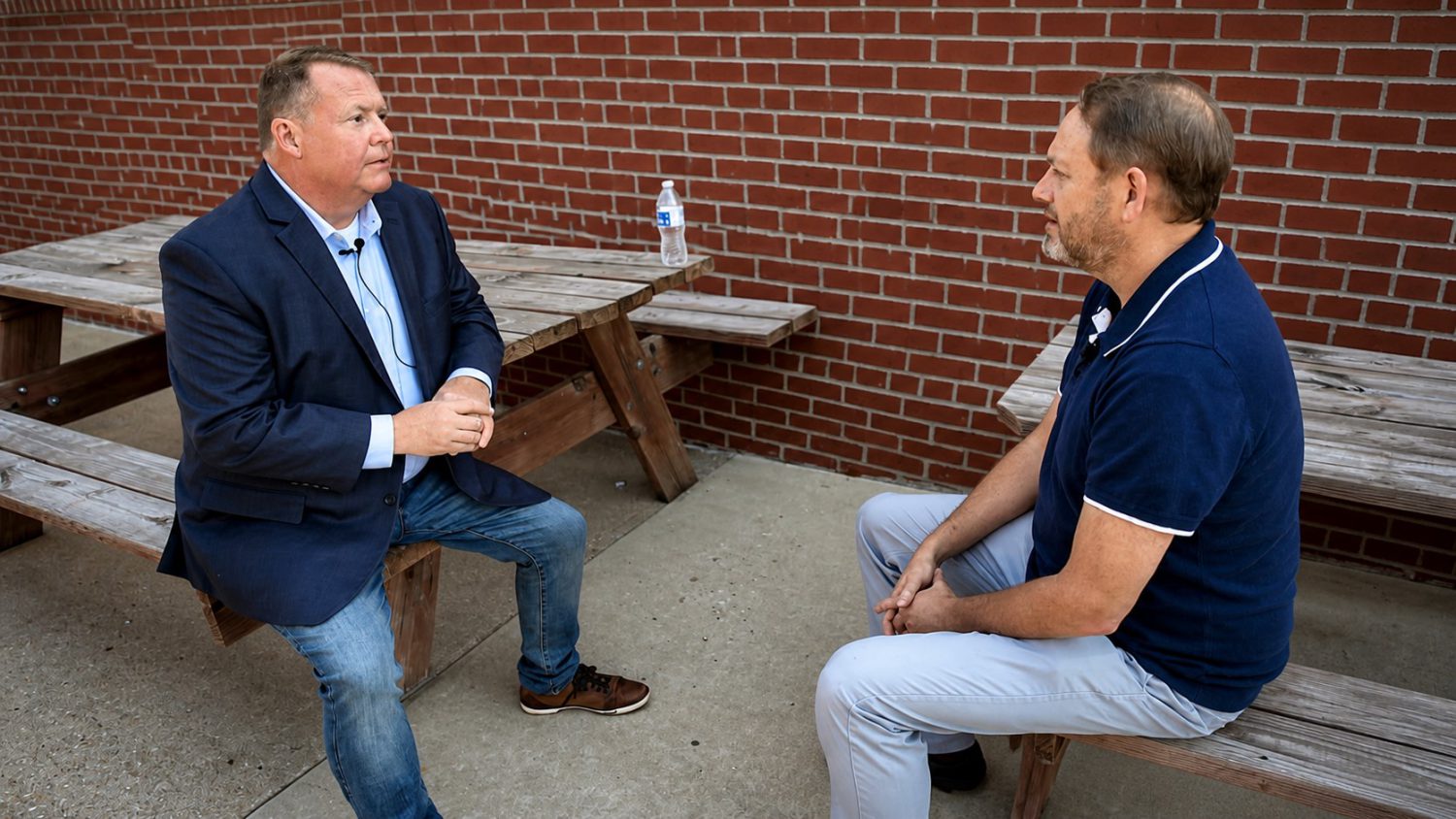
One March vote — yes on a package of $6.2 billion in tax breaks, a 90% property tax abatement, and roughly $150 billion in bonds for a Dutch company’s AI data center — cost John Perkins a political career he’d spent a decade building. On September 1, roughly 68% of District 1 voters in Independence, Missouri recalled him. Not squeaked out. Gone.
Elected officials eyeing the next big tech deal now have a concrete cautionary case in front of them.
One Vote, One Way Out
How 1,214 signatures ended a 10-year tenure in 30 days.
Perkins voted with the 5-2 council majority in March to approve Nebius’s planned hyperscale “AI factory” — a 2.1-million-square-foot facility on 400 acres near Little Blue Parkway. Within weeks, residents filed a recall petition. They had 30 days to collect 1,104 validated signatures. They submitted 1,214, across 190 pages.
Perkins filed a lawsuit to stop the election. A Jackson County circuit court judge dismissed it as moot. The recall proceeded September 1. His term, originally running through 2028, ends at certification.
One Facebook commenter captured the mood: “This is democracy in action.”
Perkins doesn’t see it that way. In a Kansas City Star op-ed, he wrote: “You can disagree with that call, and I respect that. However, disagreement isn’t a crime.” Fair point. Recall elections aren’t criminal courts. They’re something blunter.
The incentive package that triggered it all:
- A 90% property tax abatement for 20 years
- $6.2–6.6 billion in total tax breaks
- Roughly $150 billion in city-authorized bonds
- A 2.1-million-square-foot facility on approximately 400 acres
- No independent environmental impact study completed before the vote
The Bigger Warning Signal
Three electoral losses, one project, and a Facebook group larger than the city itself.
Perkins isn’t even the full story. Council members Bridget McCandless and Jared Fears — both “yes” votes — lost their April races too. McCandless’s mayoral bid failed. Fears lost his council seat. Three consecutive electoral casualties tied to one incentive package.
The opposition organized largely through a Facebook group called “Stop the AI Data Center in Independence,” which reportedly swelled to around 115,000 members. Independence has approximately 121,000 residents. The group essentially became a parallel city, built on frustration with decisions made at City Hall.
Meanwhile, on Truth Social, Donald Trump urged communities to embrace data centers or risk ending up “backwards and poor.” That framing — national political figures demanding local compliance on AI infrastructure — is precisely the dynamic producing this backlash. When the directive comes from above and the environmental review doesn’t materialize, residents reach for the petition forms.
This isn’t purely a Missouri problem. Across the country, data-center opposition is shaping local and federal midterm races, pushing candidates to choose between promised tax revenue and constituent trust.
What Nebius and Everyone Watching Should Understand
Community consent has moved from courtesy to site-selection requirement.
The Nebius project may still get built. But the political wreckage surrounding it signals that hyperscale operators can no longer treat local governments as rubber stamps. The playbook of massive incentives, municipal enthusiasm, and community concerns handled as an afterthought — a pattern seen in battles from Amazon HQ2 to various Google and Meta data center fights — keeps generating the same friction.
For AI companies planning their next facility, the permit process is no longer the hardest part. Earning the trust of the people who live next door is.